








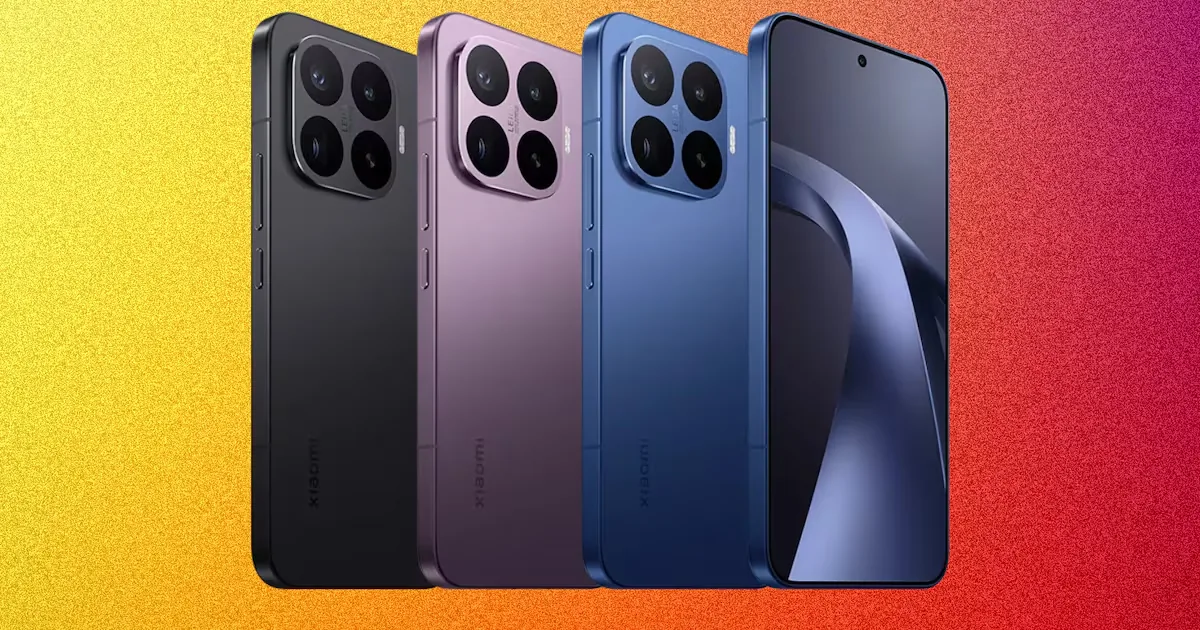
In the Andes mountain range, marketing ends. The climate and hostile geographical conditions are relentless judges for consumer technology. Low temperatures and constant exposure mercilessly punish batteries and processors. Perhaps that is why we went up to Valle Nevado, exactly 3,025 meters above sea level, to test the new Xiaomi 17T Pro.
Read more The death toll rises to nine and the injured to 28 from a Russian ballistic missile attack on Kiev
The idea, although ambitious, was simple: to push the hardware to the limit in a hostile environment for a device designed for mass consumption.
On paper, Xiaomi’s latest phone boasts impressive numbers for its striking price of $799,990. Its engine is the MediaTek Dimensity 9500, a processor that sets the standard in the mobile industry. It has a mix of improvements over its predecessor, for example, its CPU cluster has 29% higher single-core performance and 16% higher multi-core performance, while consuming 37% less power, according to an analysis by CNET.
That energy efficiency measured by the specialized press was exactly what we experienced in the snow. Extreme cold usually drains phone batteries within hours. But the Xiaomi 17T Pro withstood the low temperatures and the cold, dry air outstandingly.
After a day recording high-resolution video clips, taking photos, and trying to ski, the device’s autonomy—powered by a 7,000 mAh battery with 100 W fast charging—allowed us to “descend” to Santiago with enough charge and remarkable app fluidity (maps, cameras, text and image editors, social networks, and messaging) almost half a day later.
To top it off, the main attraction of the Xiaomi 17T Pro in this mountain scenario is its photographic system. The rear module incorporates three lenses co-created with the German firm Leica, with a 50 MP main sensor (with OIS), a 12 MP ultra-wide angle, and a 50 MP telephoto lens.
This optical partnership yields its best results outdoors. When capturing the vastness of the snowy valley, the main camera respects the fidelity of the white color of the snow and neutralizes the bluish or overexposed tones that usually ruin mountain photos. Although the processing adds a bit of artificial sharpness in the deepest shadows, the result is a natural photo.
The additional lenses offer tremendous versatility to capture skiers in motion or compress the snowy backgrounds with a level of detail that surprises at 1x, but when placed in a demanding night photo situation, in the case of the ultra-wide (0.6x), it is only acceptable.
The image processing of the MediaTek Dimensity 9500 also plays a fundamental role here, allowing fast shutter speeds and precise focus even with the blinding reflection of the sun on the snow.
Read more With Alberto Fuguet and Francisco Ortega: Planeta de Autores Fest lands in Concepción
Additionally, the device feels robust and its construction seals out moisture, an important detail, for example, when handling it with wet gloves. Its IP68 protection makes it resistant to dust and water, giving it robustness and peace of mind against accidents (such as a skiing fall) or adverse weather.
The last point to highlight is its 6.83-inch AMOLED screen with a resolution of 2772×1280, a refresh rate of 144 Hz, and a maximum brightness reaching 3500 nits, which saved the experience because it works perfectly outdoors in direct sunlight and white backgrounds like the snowy ones.
Among the downsides, one must insist on one of the Asian brand’s Achilles’ heels: bloatware. Historically, Xiaomi’s customization layers—even HyperOS—include pre-installed applications—be they games, banking apps, or stores—or a certain visual saturation that is not to the liking of Android purists.
They are also very conservative devices in design. Although the materials are premium, the aesthetic leap compared to previous generations is usually not disruptive in the T series.
The Xiaomi 17T Pro is a top-level photographic tool and a workhorse for those who need a reliable device in adverse weather conditions. Although it is also true that Xiaomi’s catalog offers devices with even more resistance, such as the Redmi Note 15 Pro reinforced for drops (with REDMI Titan case, Gorilla Glass Victus 2 protection, and IP66/IP68/IP69/IP69K certifications) and there is the HONOR Magic8 Lite in the competition.
The 17T Pro demonstrates in practice that the maturity of current processors and collaboration with historic brands like Leica achieve outstanding photographic results at any latitude and altitude. Besides having the coolest watermark on photos in the market.
While the most interesting in our tests were the versatility of its lenses and price, as a note, the video mode captures up to 8K at 30 fps and 4K up to 120 fps (ideal for high-fidelity slow motion). It supports HDR10+ and a Movie mode that allows recording up to 4K at 60 fps with a natural background bokeh effect that seems taken from higher-end ranges.
Read more Spider-Man: A New Day conquers critics and breaks records in Chile