



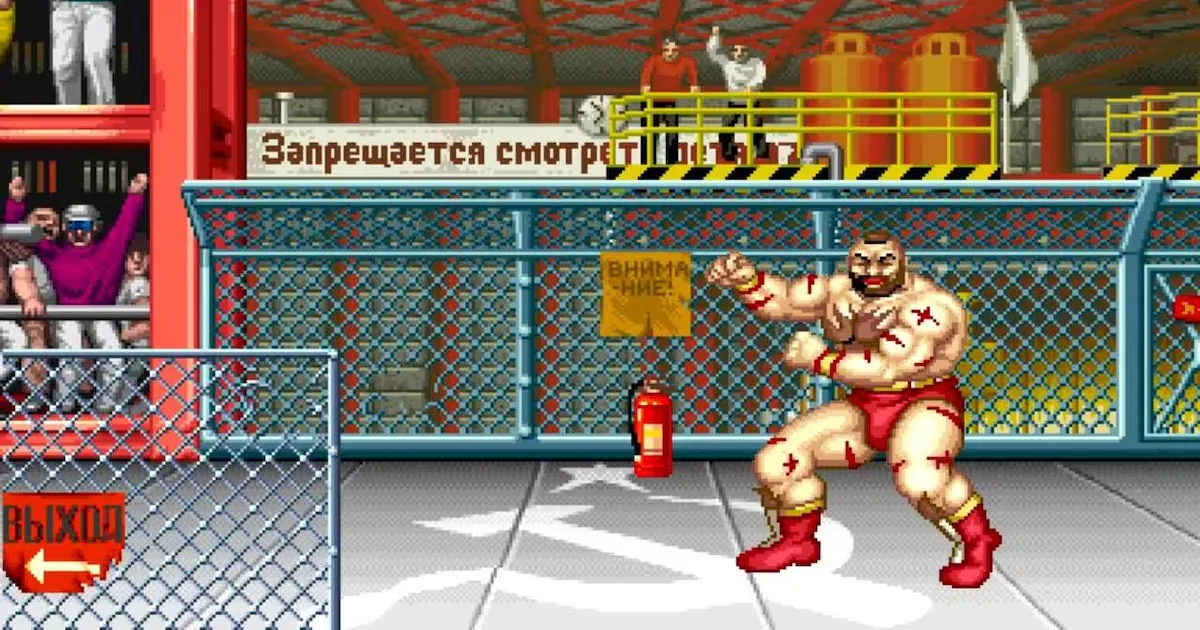
In March 1991, Japanese developer Capcom released Street Fighter II: The World Warrior for arcade. The game was not only a pioneer in proposing a direct and, at the same time, ambitious system: after inserting a coin, the player chose one of eight fighters and faced the rest of the characters in one-on-one battles in 99-second rounds. The best of three rounds won, but there was still more.
Read more Samsung Galaxy Z Fold8 Ultra: what the experts say
After defeating the first seven opponents, it was time to face four final villains.
Balrog, the first, was a boxer perhaps strangely similar to Mike Tyson, while Vega played a masked Spanish bullfighter, followed by Sagat, a Muay Thai fighter and former final boss of the first Street Fighter, and M. Bison, the leader of a criminal organization called Shadaloo.
Each fight was a ritual in the darkness of the neighborhood’s video game arcades. Choosing Ryu or Guile represented adopting a different strategy and stance against the adversary.
Those characters were lonely individuals seeking their place in a world filtered through the sieve of the Cold War: Zangief, the Russian fighter, fights in a huge factory with the symbols of the Soviet Union (see main photo), Guile, one of the American characters, is an air force member seeking to avenge the death of his best friend, and Chun-Li, the Chinese fighter, is a high-ranking Interpol agent.
Through battles on different continents, from the Brazilian Amazon to a Japanese sumo sauna and a luxurious Maharaja’s palace in India, and after dominating arcade halls throughout the West, it was inevitable that Street Fighter II would land on the console that dominated those years: Super Nintendo.
Technically, the transition of Street Fighter II: The World Warrior from arcade to Nintendo’s home console, the SNES, in 1992, is one of the most famous and important ports in history due to the enormous technical challenge it represented.
In addition to keeping the essence of the original game intact, porting Street Fighter II meant a technical challenge that ranged from control response to sound effects.
The original arcade board – Capcom’s CP System – was technically far superior: it had faster processors and much more memory than the Nintendo console.
For the game to fit into a 16-megabit SNES cartridge, developers had to make sacrifices: they reduced the size of the characters, eliminated some animation frames, simplified backgrounds, and compressed voices and what brings us here: the music.
Precisely, if there was one vital element that sustained the tension of each combat and gave identity to each character, it was the game’s music.
Japanese composer Yoko Shimomura was the mastermind behind that soundtrack.
Graduating from Osaka College of Music as a classical pianist, her arrival at Capcom implied a clash of worlds. In an interview with Red Bull Music Academy, Shimomura confessed that during her first days at the company, she felt she didn’t understand video game music and doubted her own creative ability.
“When I joined Capcom, I knew nothing about composing, especially digital and video game music. I was a complete amateur and relied on courage and praising myself, saying and doing what I could, trying to convince them of my passion for the work,” she confessed.
Shimomura listened to her colleagues’ work on other projects and questioned whether she belonged in that industry.
As she told the Berlin-based outlet, “I ended up working on Street Fighter II by chance, rather than being excited to do it. I was free, I had to choose between a couple of projects and I just went for SF2. When I think about it now, I was incredibly lucky.”
For Street Fighter II, she adopted a methodical approach. She moved away from conventional action sounds and decided to give each of the eight initial fighters their own soundscape, anchored to their geographical origins and personalities.
The hardware challenge was enormous. The original arcade board operated under the CPS-1 system, which had robust sound resources for the time.
When porting the game to the Super Nintendo, the Capcom team came face to face with the console’s sound processor. This chip, known as SPC700 and designed by Ken Kutaragi of Sony, was an eight-channel piece that imposed strict memory limitations (read the story of David Wise and the music of Donkey Kong Country here).
Read more The Odyssey surpasses 200,000 viewers in Chile and ignites fervor for the IMAX format
Shimomura and the sound programmers had to compress, adjust, and reprogram the melodies to work on the cramped cartridge without losing their rhythmic force.
The result was an exercise in technical optimization that spilled over into the artistic side: Ryu’s stage theme mixes traditional Japanese percussive elements with a heroic base. In Chun-Li’s case, the composition integrates Asian textures with a dynamic pop rhythm.
Blanka received a layer of percussion, while Guile’s track fused rock and jazz into a marching anthem.
“When it was decided that I would participate in SF2, it was mainly the producer who explained what kind of songs they wanted,” Shimomura told RBMA. “He gave me a kind of list. As far as I remember, he just told me they wanted character theme songs,” she added.
“At first I had a list, and when we talked about the type of songs I should compose, there were scenes from different countries, but I thought: ‘The real India is not like that.’ It’s like the image foreigners have of Japan: geishas and kabuki. That mysterious and distorted vision of the world was funny to me,” she confessed.
“We talked about the idea of, instead of theme songs for each character, creating background music that reflected the essence of each country. For example, for India, I wouldn’t make authentic Indian music, but what I imagined it would be. When I suggested that creating world music with a comedic touch could be fun, they liked it and we went ahead with the idea,” she said.
Shimomura’s work is widely recognized as foundational. Historical reviews in outlets like GameSpot highlight that Street Fighter II features a superb soundtrack, where each character has a unique background theme that perfectly matches their visual style and origin.
Before this work, music in the fighting genre was usually functional and took a backseat to the sounds of punches. Shimomura elevated the compositions to the same level of prominence as the fighters themselves.
For Blanka’s song, the rhythm of the theme appeared to her on a train car. “It came to me very quickly. The rhythm was practically ready, but I couldn’t find a melody, even in the final stages of development. I was worried I wouldn’t be able to create a melody that fit well,” Shimomura told RBMA.
One day on her way to Capcom’s offices, on the morning train, she thought that if she didn’t finish Blanka’s song soon, there would be problems, that she wouldn’t make it on time. “I was standing near a door, and I looked at the shelf above where luggage is placed when sitting. There was a yellowish-green paper bag on top, which as soon as I saw it, I thought of Blanka’s color, and the melody just came to my head. After that, I was humming all the time on the train,” she recalled.
As soon as she arrived, she went straight to her seat to write down what ended up being one of Street Fighter II‘s most popular arrangements.
“Blanka’s theme has some really unusual parts. That’s why, when an arrangement is made, people often end up correcting those parts. The rhythm of Blanka’s theme is in a major key, but the melody is in a minor key. Basically, you hear an A natural and an A flat at the same time. It’s something that should be corrected, but if I did, it would become a completely different song. That strange, headache-inducing feeling is what made the song special to me. At the time, people said the music was wrong, but if so many people tell me now that they love it, then I don’t think it’s wrong,” the Japanese composer said.
“For the music that plays when you have a third of energy left and are fighting to get ahead, I suggested it be faster and more desperate,” she confessed in RBMA.
Yoko Shimomura graduated in 1988, and her original plan was to become a piano teacher. However, because she loved video games so much, she decided to send some samples of her compositions to different companies that were recruiting at her university.
Capcom hired her that same year, and although her family and professors weren’t thrilled because video game music wasn’t very respected back then, that decision led her to compose the legendary soundtrack for Street Fighter II shortly after.
Shimomura continued her career creating melodies for high-profile franchises like Kingdom Hearts. But that gray Super Nintendo cartridge retains the echo of her first global impact: it sold 6.3 million copies. It demonstrated that different genres and rhythms could coexist on a 16-bit processor and set the pulse for an entire generation of fighters.
On the other hand, despite technical limitations, Capcom managed to make the physics, gameplay, and music feel almost identical to the arcade version. The port was so good that it massively boosted Super Nintendo sales, and Street Fighter II: The World Warrior became one of the highest-grossing games in history (selling over 200,000 original arcade machines worldwide), rubbing shoulders with titans like Pac-Man and Space Invaders, but that’s another story.
Read more Pedro Pascal will receive his star on the Walk of Fame in 2027