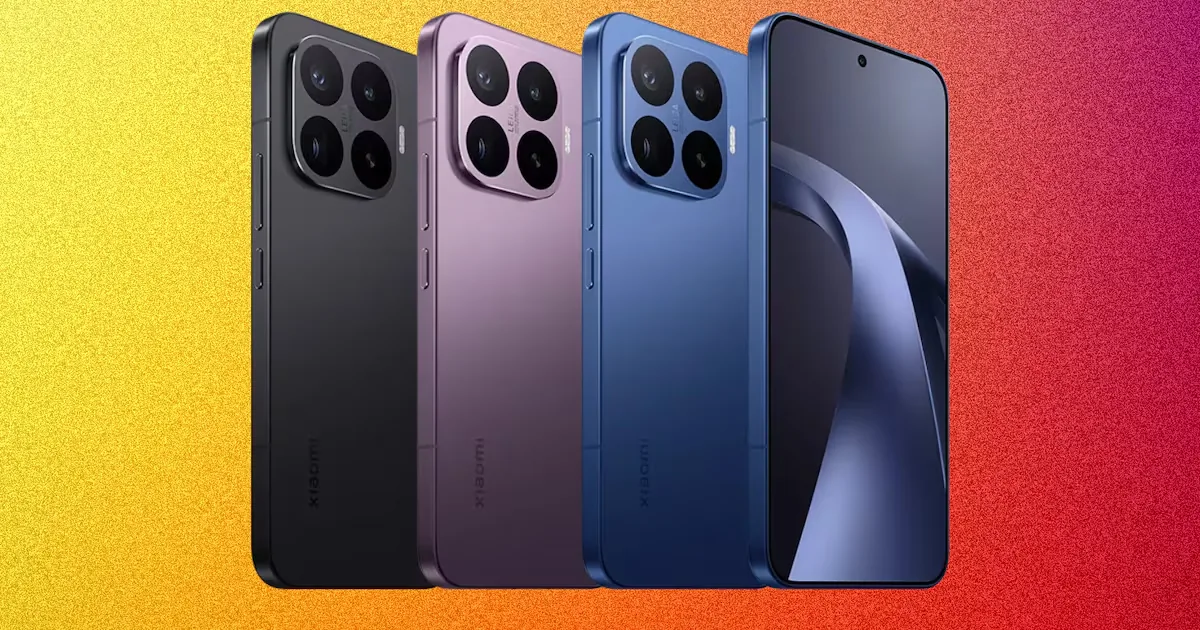








Are we ready for a post-smartphone world? That is the question Lisa Eadicicco, technology editor at CNN, asks this week, in light of the avalanche of smart devices coming.
Read more Review of the Xiaomi 17T Pro: power and Leica cameras tested at the heights of Valle Nevado
The future will be a true wave of pins, bracelets, and glasses, warns Eadicicco, which will be able to record and analyze our environments and conversations with office colleagues, friends, or family. “This is the future that tech companies envision in the AI era, whether consumers like it or not,” she states in her column.
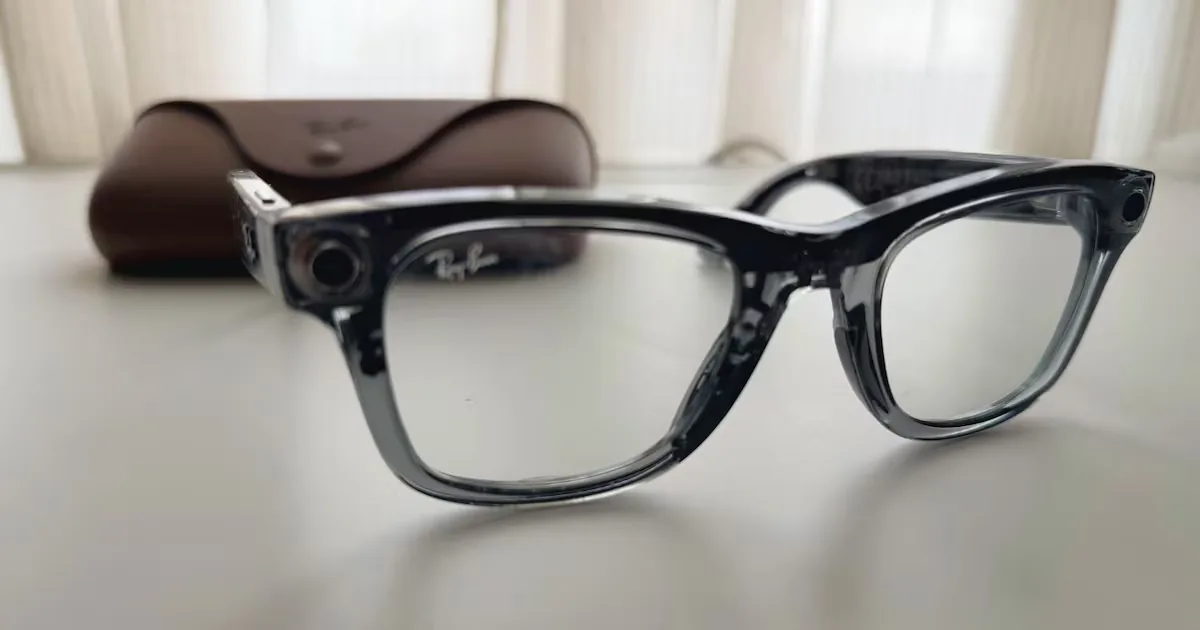
For a couple of weeks now, at La Tercera we have been testing what may currently be the most advanced of these devices. We are talking about the second generation of Ray-Ban Meta, the smart glasses that have just unleashed their full potential in Chile, but we will see what that means.
On October 17, 2023, the first generation of Meta’s smart glasses, the company of Mark Zuckerberg, and EssilorLuxottica, manufacturers and owners of the Ray-Ban brand, went on sale in the United States at a price of 299 dollars.
They were called Ray-Ban Meta and sold like hotcakes.
The formula? Hardware and software as light as they are fascinating. On the outside, the current Ray-Ban Meta Gen 2 resemble the Wayfarer, Skyler, and Headliner models of the well-known sunglasses, but their acetate frames house batteries, cameras, microphones, speakers, and Qualcomm’s Snapdragon AR1 Gen 1 processor, made specifically for lightweight wearable devices.
If the thermal design prevents the frame from heating up over the ears, the hardware is capable of processing artificial intelligence. This allows the device to execute voice commands and process images locally much faster.
On the right eye, the Ray-Ban Meta have a 12-megapixel ultra-wide-angle sensor (a notable advance over the 5MP of the first generation), a lens capable of stabilizing head movement very effectively, recording vertical videos in 1080p that compete directly with mid-range phone cameras.
Storage includes 32 GB of flash memory. In practice, this space allows storing more than 500 photos or around 100 short videos before requiring synchronization with the phone. It also has five microphones to capture spatial audio and isolate noise, and directional speakers located on the temples.
But there was one feature—perhaps a competitive advantage—that, for those of us who had the glasses with a Chilean Meta account, we could not use at least officially in Chile: the artificial intelligence software to see and describe what you are seeing in the real world, a kind of AI assistant similar to Samantha from Spike Jonze’s movie Her.
That is what changes—besides the prices—with the official arrival of the glasses in countries like Chile.
The Ray-Ban Meta can be used to scan famous places, translate languages, or identify coffee preparations or the amount of water to water a plant, among other tasks.
To use the AI software, users only have to say “Hey, Meta”, followed by an instruction, such as “Look and tell me what I’m seeing.” Then, the AI responds with a robotic but friendly voice—similar to ChatGPT, Gemini, or Claude—that plays through the small speakers of the glasses.
We used the glasses for a whole morning in the office bombarding the AI with questions and instructions.
This started more or less early with something like: “Hey Meta, what am I looking at?”
Immediately, the AI responds by voice but also leaves a written record in the Meta AI app, which can be checked on the phone:
Correct, it recognized the place as a café and even the brand.
“Hey Meta, what am I seeing?”
Correct, it is the latercera.com site. “And now?”
Although it did not recognize the current La Tercera logo, it did interpret that we are in Sanhattan.
As it is a technology still in progress, the artificial intelligence is not always precise in naming certain elements, but according to Meta, feedback improves the glasses over time.
We continued: “hey Meta, what am I seeing?”
Hmm. “And here?”
Although the descriptions are accurate, it did not recognize filmmaker Raúl Ruiz (photo by Pin Campaña for Paula) nor actress Leonor Varela (photo by Nancy Coste for Paula) and her cigarette.
When I asked again about the identities of these two Chilean artists, the AI was decisive:
Now, the really strangest part of the experiment was talking to an AI assistant near other colleagues and office workers in the building, who pretended not to hear me when they saw me talking alone (Thanks!).
After a couple of rounds, as it was already lunchtime, I joined colleagues from La Cuarta on one of their weekly trips to the MUT.
Read more The death toll rises to nine and the injured to 28 from a Russian ballistic missile attack on Kiev
This instruction was on the move: “hey Meta, what am I seeing?”
Since these devices are capable of taking photos and videos, it is also important to talk about privacy.
(A tech parenthesis.
It should be noted that the Ray-Ban Meta lens offers a wide field of view that mimics the natural perspective of the human eye.
To use the camera, the user has two mechanisms. The first is a physical capture button located on the right temple of the glasses, where a short press takes a photo and a long press starts a video.
In the second case, the internal processor crops and stabilizes the image to generate videos in vertical format. The glasses record videos up to three minutes long, achieving resolutions up to 3K.
The other way is completely hands-free and works using voice commands through the Meta AI assistant with phrases like “Hey Meta, record a video.” For this article, all images were made this way.)
Of course, having a practically hidden camera in plain sight on a pair of glasses immediately raised alarms about third-party privacy.
To address this, Meta implemented a visual warning system impossible to overlook. On the hinge opposite the camera is the so-called “Capture LED,” a powerful white light that briefly blinks when taking a photo and stays on continuously while recording a video.
It is important to understand that the Capture LED cannot be turned off. And although on sites like Amazon or Temu there are accessories that promise to cover it, the truth is that—from July 2026—Meta temporarily blocks the camera if it detects the light is covered, or blocks it if the system detects physical damage or modifications to the LED.
We continue with our experiment. “Hey Meta, what am I seeing?”
Meta’s AI still lacks more Chilean knowledge: it did not recognize a complete Italian sandwich, nor two of the classic soda fountain condiments, mustard and chili.
And how about pop culture?
Precise in description, although insufficient in identifying the place and object.
Brief but correct.
I think it answered in English here because of the British edition of the book.
Other users have also agreed in praising the AI’s accuracy for some details.
Daniel Silva, science and technology journalist at Mega, is a user of the Ray-Ban Meta and more recently the Oakley Meta. “I love them because they record well, they are very sensitive to things like volume modification, if you want to skip the song forward or backward. The truth is that the arms of the glasses are sensitive, let’s say, with the touch panel. That is important. The volume is perfect. It’s neither too loud nor too quiet. It also lets you hear your surroundings,” he tells La Tercera.
“The camera and voice activation of the AI work perfectly. When you ask it things, when you ask it to look and tell you where you are, the truth is that the AI has clearly been improving. Because I used it in the United States and I have used it here and the truth is that its response capacity has been improving,” he assures.
In his experience, calls are another strong point of the device. “I love that you can make video calls with WhatsApp. Especially when you are shopping or outside or want to show what you are doing. The ability to stream with the glasses I find very, very interesting. Maybe there is a connectivity issue sometimes that you don’t see in great quality when you do live streaming. But the quality when you record video or take photos has improved a lot. I already have the version that has 3K, the Oakley ones too, which record super, super well.”
About the low points of the glasses, Silva says, “they have the problem of pixelation when you are doing live videos or sometimes it doesn’t connect well with the Instagram app. I think it’s around there and the lack of videos maybe in slow motion or horizontal.”
Meta’s AI glasses are finally available in Chile with their full potential, although it is also true that they offer a taste of a future that seems dystopian and, at the same time, not so far away.
Their flaws highlight the limitations and challenges of this type of device. For example, it could better recognize a book and its author. Or a renowned artist.
It may be the author’s problem, but it is still uncomfortable to talk to an AI assistant in public. Will it ever feel normal to talk alone and listen to an AI assistant in your ear?
Now, when it did work, it did well and we had fun. The fact that Meta’s AI can describe environments with several details and elements, just by looking at a photo, shows how far technology has come.
Read more With Alberto Fuguet and Francisco Ortega: Planeta de Autores Fest lands in Concepción