






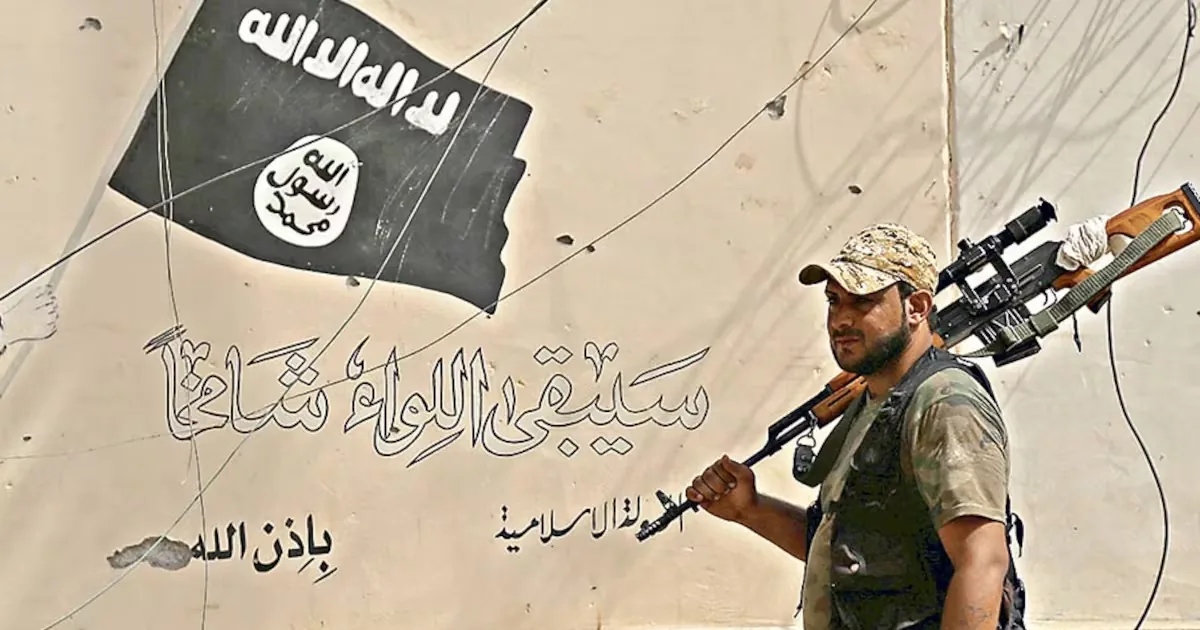
More than a decade ago, the Islamic State released a video in which it drowned men locked in a cage inside a pool. That footage now circulates on TikTok transformed into a SpongeBob cartoon, with fish dressed in orange overalls inside the cage while the character submerges the container in the water.
The clip is part of what a new report from the Institute for Strategic Dialogue (ISD) called “Slop Jihad.” The document, shared exclusively with the American magazine Wired, describes a trend in which young supporters of the Islamic State and Al Qaeda use generative artificial intelligence to produce montages, cartoons, and memes aimed at attracting a new generation of followers on the internet.
“This shift marks a fundamental transformation in the aesthetics of jihadist propaganda on the internet,” concluded the ISD report.
Adam Hadley, CEO of Tech Against Terrorism, a UN-backed anti-terrorism organization, agreed with the assessment. “The main concern is the growing volume and diversity of this material,” he said. According to him, AI-generated content facilitates young audiences’ access to extremist material and reduces the visibility of the traditional image of terrorism.
“Users can come across content glorifying perpetrators without looking for it, such as fan edits, cartoons, memes, and other entertainment formats. By interacting with that content, the algorithm can start recommending related and increasingly explicit propaganda,” warned Hadley.
Islamic terrorist groups have demonstrated their ability to adapt to new media environments for recruitment and decentralized propaganda. This pattern was observed in the “Alt Jihad” movement of the early 2020s, which incorporated the aesthetics of the American far right into Islamic terrorism.
The use of AI by these groups is not new either. In 2024, the news program News Harvest, affiliated with the Islamic State, began using AI-generated presenters to disseminate propaganda videos more quickly and cheaply. However, the appearance of current content is different from that first cycle.
“It is a new phenomenon and continues to grow; it is still far from reaching its peak. There has always been very low-quality content, but before we did not see things like SpongeBob turned into Islamic State propaganda,” said Moustafa Ayad, a global Islamism researcher at ISD.
The aesthetics generated rejection among some of the more traditional followers. “There is some antipathy towards it because they do not believe that the creators of this AI garbage are true believers,” Ayad noted. “But some accounts that previously shared official propaganda are now also reposting these videos. That shows there is an ambivalent relationship with Slop Jihad content,” he added.
Read more Russia announces the shooting down of nearly 400 drones launched by Ukraine
TikTok has been key in the communication strategy of Islamic terrorist groups, which take advantage of the platform’s algorithmic recommendations. A report from the Organization for Economic Cooperation and Development (OECD) placed TikTok among the top 10 platforms used to spread terrorist and extremist content.
Ayad found a limited number of Slop Jihad videos on Instagram and Facebook. The vast majority were concentrated on TikTok, where he identified 150 clips from 71 accounts, with more than 5.4 million views. He attributed this concentration to the “For You” page algorithm, which he described as “hyper-targeted to users’ interests,” and to “a deeply rooted ecosystem of jihadist support on the platform.”
TikTok questioned the report’s conclusions. “This document reaches unfounded conclusions and does not reflect how people use our platform. We prohibit the presence of violent and hate-inciting organizations, and we employ advanced moderation technology, security teams, and collaborations to proactively detect and remove content that violates the rules. All content referenced in this report has been removed from TikTok,” a social network spokesperson told Wired.
Dozens of the clips identified by the ISD were removed after the publication shared them with TikTok.
The American media shared the report with specialists who study how these groups use social networks to radicalize followers. The majority agreed with its conclusions. “The most striking thing is how easily generative AI allows a much broader and decentralized group of users to remix jihadist figures and images. That content can circulate through communities attracted not only by jihadist ideology but also by violence or the pursuit of notoriety,” explained Aaron Zelin, a researcher at the Washington Institute for Near East Policy.
Ayad admitted that some of the most extreme content is difficult to identify as terrorist, although much explicitly supports these groups. TikTok removed some accounts it monitored, but many have backup profiles already announced to their followers.
The researcher concluded that some of this content remains active for months and continues to evade moderation systems, including AI models designed to detect terrorist material.
Read more Iran announces the shooting down of a US Army Predator drone over waters of the Strait of Hormuz