





German political scientist Nicolas Spohn is an expert on the politics of the eastern German states.
Read more Colombia will authorize police entry to public universities amid violent protests
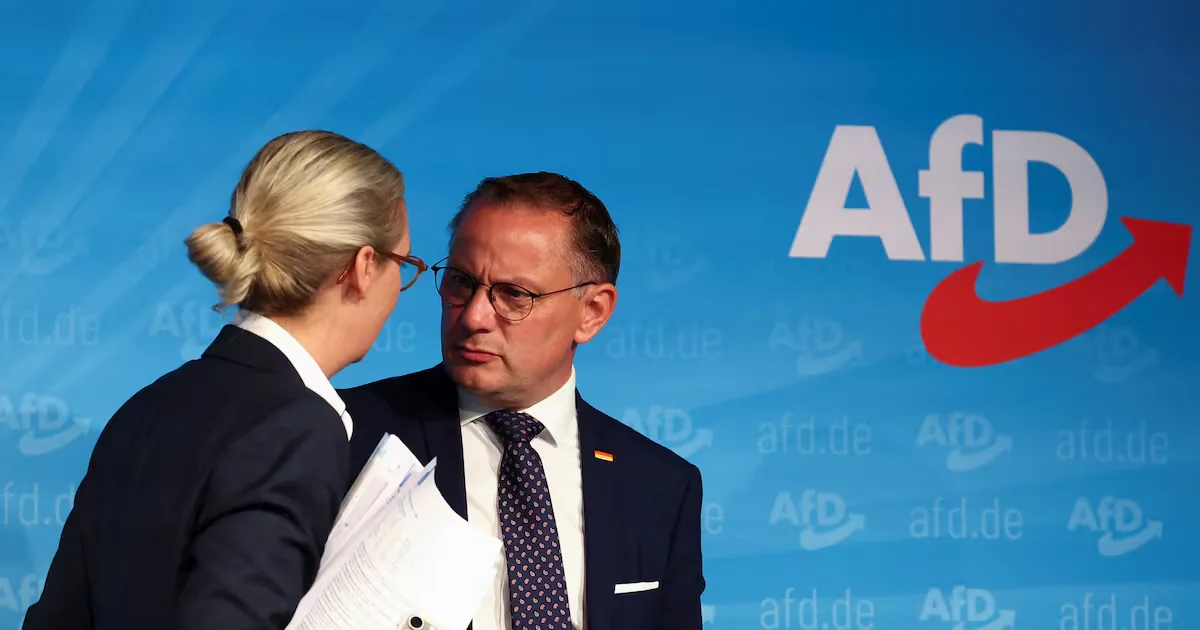
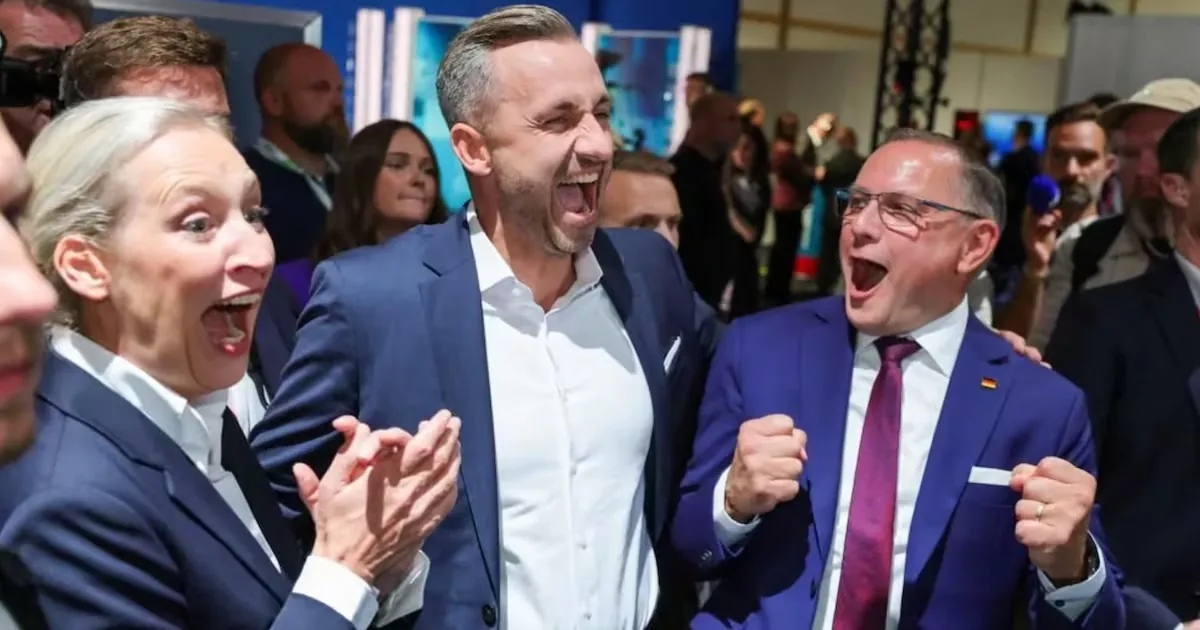
The academic from the University of Magdeburg in Saxony-Anhalt spoke with La Tercera about the victory of the far-right party Alternative for Germany (AfD) in the elections of that region last September 6.
What are the reasons that led to the victory of Alternative for Germany in the recent elections in Saxony-Anhalt?
The first thing is to know whether the support is genuine for Alternative for Germany (AfD) or if they are protest voters. And the second is whether people here in Saxony-Anhalt are more right-wing than in other German states. I do believe it is genuine support for the AfD, but not for the AfD’s agenda, rather for their image of doing everything differently. Maybe I can explain it by giving you an impression of Saxony-Anhalt. We had German reunification in 1990 and since then the state has had the largest population decline of all German states. So we lost 25% of our population. And this population decline is mainly seen in rural areas.
For example, the city of Wolfen, which was the former center of the chemical industry, lost 75% of its population in the last 35 years. In 1990 they had 45,035 and today they have 15,000. So three out of four people left the city and mostly they are young people. And with them also went the schools, sports clubs, and all parts of civil life.
Still, people living in Berlin have a positive identification with their hometown. They are proud to have been a former center of the chemical industry and of the work they did in life. But this is not reflected when they look out the window, they see a city that is economically disadvantaged. And there are structural problems.
Schools have to consolidate because there are not enough young children, etc. And this frustration is the main explanation for the AfD’s victory here in Saxony-Anhalt. So people believe in the AfD’s image that everything is possible. This was the main slogan of the AfD: everything is possible. It also means that everything can be different, and people long for the idea of having a different development in Saxony-Anhalt. Then we had the last 35 years. And when you enter the supermarket, people tell you: ‘Everything we tried in the last decades, eh, it didn’t work for us. But the AfD never had responsibility, so let’s try it.’ So this is the main narrative of the people. And this is the explanation for the AfD’s success. It’s not that people are more right-wing. They are simply more frustrated.
How responsible are the governments of Angela Merkel and Olaf Scholz for implementing policies of greater prosperity in these regions?
The tragic thing is that it was not directly the fault of the last government. It is more of a structural problem. So we had reunification in 1990, which was unequal. The western part of Germany was, so to speak, the winner of reunification. They had the stronger system. It was a capitalist system. The eastern part of Germany until 1990 had the socialist system. It was the economically weaker system. So when reunification happened, life was more prosperous in West Germany than in East Germany.
And the people of East Germany or the socialist system did not give them the opportunity to build wealth. People in West Germany were more affluent, so they bought all these companies here in Saxony-Anhalt. They made a lot of profits, but the people who worked here lost their jobs. So they went to West Germany and it was a decline for decades. Therefore, when I do the same work in Hamburg, Cologne, Munich or somewhere, I get about 30% more money for it and it’s not that everything there is 30% more expensive. You can get more money for the same work in West Germany, and that’s why young people keep going there, the universities there are better known in Germany.
So when you get your degree at a university in West Germany, you are more likely to get a more important job, in a bigger company, for example. So your professional opportunities remain better in West Germany. It is more of a demographic problem in these rural areas, due to this population decline. The tragic part is that the main CDU candidate here in Saxony-Anhalt before the elections was Sven Schulze, former Minister of Economy in Saxony-Anhalt. He didn’t do the best job, but it was okay.
There is an emerging industry in the south of Saxony-Anhalt, which is sustainable development. It is an energy resource and solar energy is an important part of the economy here. So these are jobs for highly trained people from all over Germany who come here, have good employment and earn money and the older generation that stayed after reunification is not part of this economic development in Saxony-Anhalt. So I wouldn’t say any government would have changed this development in the last 30 years. It is a structural problem in Germany.
On September 20 there are two elections in Germany in Mecklenburg-Western Pomerania and Berlin, what are the chances that AfD can win?
One election is in Mecklenburg-Western Pomerania and another in Berlin. Mecklenburg-Western Pomerania is also in East Germany and has practically the same development as Saxony-Anhalt. So, in my opinion, we see that AfD is the strongest party in the elections. Maybe the strongest remains the main candidate of the Social Democratic Party (SPD), Manuela Schwesig, who has been Minister-President for the last 10 years in the state. And she has the extra of being popular in society.
So I think the gap between the SPD and the AfD in Western Pomerania will not be as large as the one between the CDU (Christian Democratic Union of Germany) and the AfD here in Saxony-Anhalt. Still, I think the AfD will be the strongest party after the elections. They have the same structural problems there.
Berlin is a bit different. It is a very prosperous part of Germany and it is a very pluralistic city. So all parties are almost equal there. Therefore, I don’t think there will be a clear victory for the AfD, in my opinion, because Berlin is very pluralistic as a city. So there are some parts of the city where the AfD has about 70% of the votes. And then there are other parts of the city where the AfD has 10%.
Do you think parties like the CDU, the SPD, are in crisis right now?
I think they are in crisis, but not in the sense that it is a crisis of the center parties. Throughout Europe, and now also in Germany, we have an emerging right-wing populism in the political system. So, in all European states, right-wing populists are getting stronger. And Germany has just joined this group of countries with very strong right-wing populism. Maybe we were a bit resistant to right-wing populism because of our history. But I think the time has passed, people are frustrated and their populist parties are gaining many votes.
This is basically not the fault of the CDU and SPD. It is more of a change in the political system as a whole. And we have this change not only in Germany, but also in other European countries. But one thing I think is that the biggest gain of voters for the AfD is not that they are strong in Saxony-Anhalt or Mecklenburg-Western Pomerania, but that Chancellor Friedrich Merz at the national level has very low approval. I think he has 9% approval in Saxony-Anhalt and across Germany his approval is around 15%.
I think he is the most unpopular chancellor since reunification. He promised different things and the economy is worse. Not everything is his fault. We have this crisis with Russia. We have the war in Iran. And energy prices are rising. Last Monday I heard Thorsten Frei, who is the CDU leader in the Bundestag, say that there will be no national consequences for either the chancellor or the CDU. And that frustrates people.
So they send a warning that the CDU is unpopular right now. And the CDU leader in the Bundestag said, one day after the elections, that there will be no consequences. Therefore, if these warnings continue to be ignored, then in two years or two and a half years, when we have the next national elections, AfD could be the strongest party.
What is the situation of the left in Germany?
I think that is also a bit special here in East Germany because of our history. In the GDR we had the Socialist Unity Party of Germany (SED), but the party that came out or was formed from them was the Party of Democratic Socialism (PDS) and later, in 2007, it was called The Left (Die Linke). So there is a historical identification of East Germany with the left because of our history in the city and the GDR. It is the reason why the left is always stronger in East Germany than in West Germany. They had about 15% of the votes four weeks before the elections.
Then, everyone saw that if the Greens and the SPD did not manage to enter Parliament, the AfD would have an absolute majority over the 5% threshold. If you don’t pass the 5% threshold and only 3 or 4 parties enter Parliament, all parties in the Legislature get a bit more mandate than they have. To avoid that, there was a tactical voting campaign here in Saxony-Anhalt. And they said you have to vote for the Greens or the SPD. And many voters oriented to The Left who would normally vote for that sector, voted for the Greens and SPD instead.
So there was a voter shift to make it possible for each of these three parties to enter Parliament. But from an honest perspective, The Left is much more popular than the SPD or the Greens. People long for change. I thought so before. And the left party, just like the AfD, was never in government before. And that was the main argument in favor of voting for The Left. They say: “We want something different. So we vote for a party that never had government responsibility before.”
Read more PDI carries out investigations for fire in nursing home in Pitrufquén