








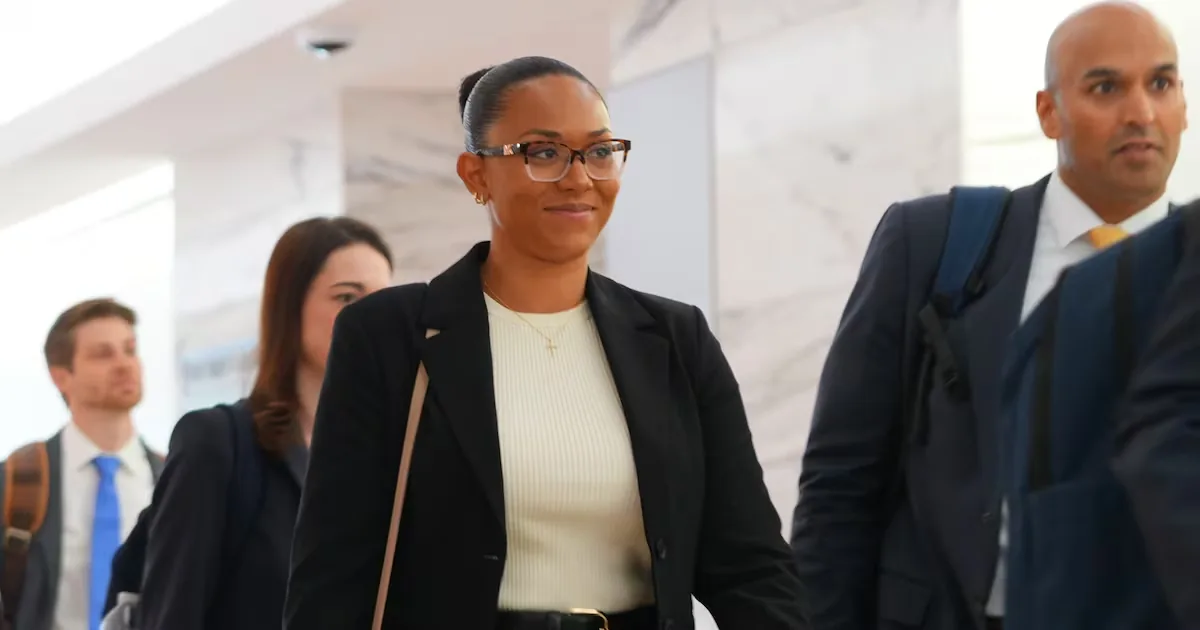
A legal contract, a flight to Texas, the intervention of conservative politicians, two opposing court decisions… A woman who signed a surrogacy contract has gone to the Supreme Court to gain custody of the baby she carried, in a case that could mark a turning point for so-called surrogate wombs.
McKenna West signed a surrogacy contract with a couple from California, Omar Ahmed and Nausheen Gilkar, but when she was 20 weeks pregnant, doctors detected a severe heart defect in the baby she was carrying, left ventricular hypoplastic syndrome.
The biological parents agreed with the recommendation to terminate the pregnancy and scheduled an abortion, “after heartbreaking consultations with medical professionals and their own research on the suffering and quality of life experienced by babies with this condition,” according to official documents from the couple’s lawyers.
However, although she initially agreed, West changed her mind and did not show up for the appointment scheduled for the termination of the pregnancy, three weeks after the diagnosis.
Instead, she left Alaska, where she lived, for Texas, a state where anti-abortion laws allow few exceptions, with the support of religious and conservative political leaders, including Attorney General and Senate candidate Ken Paxton.
The biological parents of the child reported that the woman had broken the surrogacy contract, signed through the company Worldwide Surrogacy Specialists, LLC in 2025.
Paxton proposed that the baby be treated in Texas and the conservative organization Alliance Defending Freedom took on West’s legal defense.
The baby, whom West calls Gabriel, while the biological parents refer to him as Rumi, was born in August and had to undergo immediate surgery.
That has not eased his condition and he remains in serious condition, with the prospect of having to undergo further interventions, including a heart transplant, according to the Centers for Disease Control and Prevention (CDC) in such cases.
Even if he survives, he is likely to suffer serious health consequences as a result of the heart defect.
West was initially favored by Paxton’s intervention, who obtained a Texas court’s approval of an emergency appeal to prevent the baby from being removed from the state.
Omar and Nausheen, the biological parents, accused the attorney general of turning a family tragedy into “political theater.”
“West is harming Rumi by moving to Texas, which forces him to be born in Texas, away from his parents and the specialized cardiac team in Los Angeles that will provide lifelong care,” argued the couple’s legal representation in a court document. “Her actions are forcing Rumi to begin treatment (including critical heart surgery) in one state and be transferred to another.”
The couple’s claims were not enough at that time, but on September 2, a California judge recognized Omar and Nausheen as the child’s parents, granting them parental authority.
The couple then obtained a restraining order against West, which was issued by a Texas court that upheld the California court’s decision.
Now, McKenna has filed an emergency appeal, seeking to have the Supreme Court overturn the California court order and recognize her parental rights over the four-week-old baby.
The woman bases her request on the presumption that the biological parents plan to place the child in palliative care in California, rather than perform surgery that could save his life.
Surrogacy motherhood is not federally regulated and each state has its own laws on the matter.
But the Supreme Court has already asserted its conservative majority in other cases, such as the 2022 decision to overturn the historic Roe v. Wade ruling, which enshrined abortion as a constitutional right, after which legislation on the matter returned to the jurisdiction of each state.
Read more Nepal raises to about 1,400 the dead from the devastating floods on the border with China