







The official Pentagon oversight body published a special report on the Iran war this Monday, constituting the first official Department of Defense accounting of the losses of U.S. equipment and facilities suffered during the so-called ‘Epic Fury’ (OFE) operation, highlighting a cost of nearly 33.4 billion dollars, along with “strategic deficits” in the ammunition inventory and “bottlenecks” in their resupply.
This was indicated by the Office of the Inspector General of the Department of Defense in an extensive 44-page report reviewed by Europa Press which states that the “estimated cost” by the department is “33.4 billion dollars (about 31.9 trillion Chilean pesos) as of June 29,” that is, not including operations carried out during most of the northern hemisphere summer.
Of this amount, more than two-thirds – 22.3 billion dollars – derive from “ammunition consumed.”
However, the report acknowledges “challenges” in calculating the funds allocated to this war, since “Congress did not specifically appropriate funds.”
“The absence of a specific budget line for the OFE makes it difficult to calculate the total cost of this operation,” it points out.
Additionally, it notes that the cost estimate does not include those derived from “repairing damaged infrastructure,” since the department “has not yet defined what its future posture in the region will be, how it will build its bases, or what percentage of construction costs will be borne by allies and partners.”
“It also does not consider broader economic repercussions, such as the increase in fuel prices resulting from the closure of the Strait of Hormuz by Iran,” added the inspector’s office.
Likewise, the document recalls that the White House submitted to Congress on June 24 a request for 87.6 billion dollars (almost 84.1 trillion Chilean pesos) in supplemental funds, including 67.1 billion dollars for the Pentagon “primarily intended to cover the needs of the OFE.”
Less than a month later, Secretary of Defense Pete Hegseth declared before Congress that without supplemental funds, the Department of War (DoW) could face critical deficits that would threaten its ability to pay members of the Armed Forces, replenish some of the equipment and ammunition consumed during contingency operations, and maintain vital global operations.
Meanwhile, the inspector added the 113 million dollars (about $108 billion) in expenses reported by the State Department as of June 2, including 79.2 million dollars in “contingencies arising from the conflict, such as evacuation expenses for Department personnel and their families, U.S. citizens, and nationals of third countries who met the requirements.”
Added to this is an “estimated cost” of 184 million dollars in damages to U.S. diplomatic facilities in Iraq, Kuwait, Saudi Arabia, and the United Arab Emirates.
All in all, the Pentagon oversight body highlights the high proportion of funds allocated to ammunition, whose availability has been one of the main problems attributed to U.S. forces during the ‘Epic Fury’ operation, although on the eve the head of U.S. Central Command (CENTCOM), Brad Cooper, assured that he “is not at all worried” about a possible shortage.
The Inspector General’s report, however, cites the Office of the Under Secretary of Defense for Acquisition and Sustainment (OUSWAS) stating that “ammunition consumption during the OFE has caused strategic deficits in the inventory and has revealed bottlenecks in the industrial base for ammunition resupply.”
Despite this, it noted that the Department “is working to streamline acquisition processes and reduce production lead times, as well as to stockpile reserves of critical materials, components, and selected ammunition.”
Outside of spending on operations linked to the offensive against Iran, the report also records losses suffered during the war, which include 18 military deaths and more than 400 wounded, as well as damage to or, directly, the destruction of dozens of aircraft and hundreds of buildings at U.S. bases in the Middle East.
“The Department of War has reported that, between February 28 and June 30, seven members of the U.S. Armed Forces died in combat and another seven died in non-hostile incidents during OFE combat operations,” the document states, adding that “another four military personnel died in combat in July.” It also adds that “417 military personnel were wounded in combat” through June 30.
The office estimates that “more than 50,000” members of the Armed Forces were deployed in support of the operation and “throughout the area of responsibility” of U.S. Central Command (CENTCOM), a decision made to “reduce troop vulnerability and maintain combat capability.”
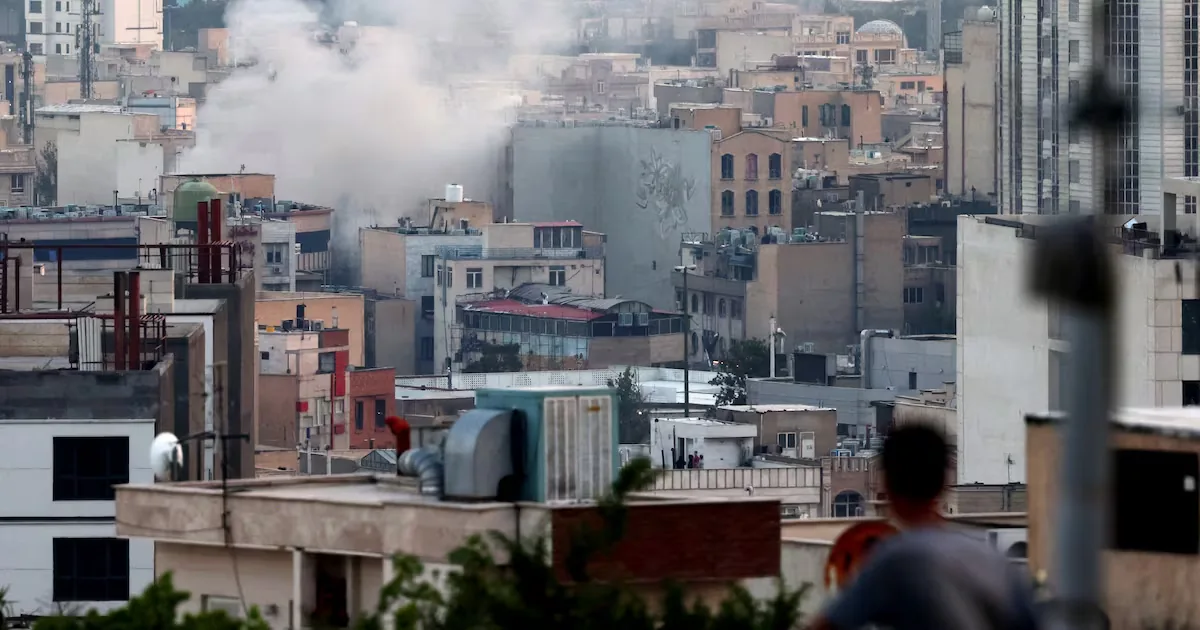
Regarding material damage, the text in question indicates, citing CENTCOM, that “during the conflict, Iranian attacks damaged and destroyed hundreds of buildings and structures at U.S. bases located in Kuwait, Bahrain, Qatar, the United Arab Emirates, Saudi Arabia, Iraq, Oman, and Jordan.”
“Additionally, dozens of U.S. aircraft were destroyed or damaged during the operation,” the Pentagon inspector general adds, then specifying a figure of 57 aircraft, more than half of them MQ-9 ISR drones, a frequent target of shootdowns claimed by Iranian forces.