








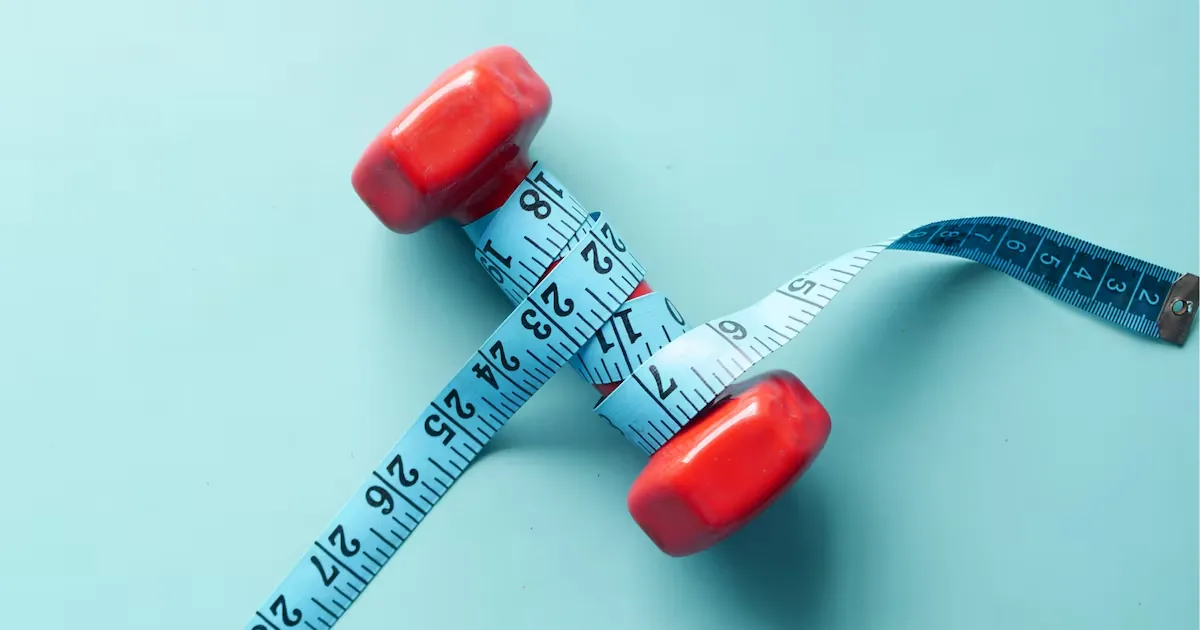
There are ideas we learn from a young age and hear so many times that they end up seeming like absolute truths. One of them is that exercising is always healthy. We know that movement has benefits for physical and mental health, but over time that evidence ended up becoming a mandate. If someone trains every day, we assume they are taking care of themselves. If they say they don’t like to exercise, the response is almost always the same: they lack discipline to be able to form the habit.
Read more Trump points out that the United States will be like Ceuta “within three years” if the Democrats win
But what if the problem isn’t discipline?
As a nutritionist, I work every day with patients who have a poor relationship with food and their bodies. I see people who train while injured, with a fever, or completely exhausted; who feel guilty if they rest for a day; who believe they have to “burn off” what they ate, or who think they only earned the right to eat a dessert after exercising. From the outside, it looks like discipline. For many people, in reality, it is a prison.
Compulsive exercise is a common symptom in many eating disorders (ED). I’m not talking about someone who enjoys moving and staying active, but about someone who feels that if they don’t do it, they will gain weight or lose their “progress.” That feeling is very hard to disappear because exercise, in those cases, often calms anxiety or guilt. The brain quickly learns that association and starts demanding it over and over, until it reaches a point where it no longer seems like a choice but an obligation.
To recover from this relationship, it is not necessary to give up exercise forever. Over time, movement can become part of life again, as long as it stops being a way to compensate for what was eaten, punish oneself, or try to change physical appearance at any cost.
But even putting aside ED, I wonder how much of our relationship with exercise we really choose and how much we learned simply because we were told it was “healthy.”
Because it’s hard to build a healthy relationship with movement when from childhood we were taught to experience it differently.
At school, we were rarely taught that staying active could be fun and something we enjoyed. In Physical Education, everything was about performance, comparison, and grades. In that same class, many times we were weighed and measured at the beginning of the year, as if body size was also part of the evaluation. Exercise, moreover, often appeared as a punishment. “Run five laps around the field,” “do fifty sit-ups because you talked.” That’s how we learned that moving was a rather uncomfortable sanction and not a source of well-being.
Later, many gyms reinforced that same logic. When signing up, they gave you a “wellness evaluation,” measured you, weighed you, asked how many kilos you wanted to lose, and gave you a generic routine that barely fit your needs. Exercise was reduced to a tool to lose weight and change our appearance.
Read more They estimate 60,000 migrants have entered Ceuta from Morocco and raise the death toll to 41
But why do we assume that going to the gym is the only way to be healthy? You can perfectly practice a sport, do yoga, martial arts, dance, jog, swim, bike, skate, or simply walk. Any form of movement can provide benefits if you really enjoy doing it.
And there lies the point we often overlook.
Exercise, by itself, is not bad at all; on the contrary. What completely changes the experience is when it stops being a choice and becomes a permanent debt to the body. When we feel we have to train to compensate for what we ate, to earn the right to enjoy a dessert, or to relieve guilt, movement stops being a tool for well-being and becomes another source of stress. Paradoxically, what was supposed to improve our health ends up deteriorating our relationship with our body, food, and ourselves.
Health does not depend solely on what we do, but also on the place from which we do it. Two people can do exactly the same routine every day. One can do it because they enjoy feeling strong, because it clears their mind, or simply because they have fun. The other may do it driven by constant fear of gaining weight or guilt for having eaten “too much.” From the outside, both seem equally healthy, but inside the experience is completely different.
When I hear someone say they don’t want to exercise, it bothers me that they are automatically told they lack discipline. What do we know about that person’s history with movement? We have no idea if they were mocked in Physical Education, if they learned to use exercise as punishment, or if they simply never found an activity they truly enjoyed.
Many people end up signing up for a gym because “this year I’m really going on a diet,” because they want to lose weight, or because they feel it’s the right thing to do. However, once there, they get bored, have a hard time, get frustrated, and end up believing they lack discipline, when maybe they were simply trying to maintain an activity they never enjoyed.
Movement brings countless benefits for physical and mental health, and the evidence for that is overwhelming. However, those benefits do not appear simply by moving the body, because the relationship we build with that activity also matters. If exercising means living with guilt, anxiety, fear of resting, or feeling it’s never enough, something has stopped being healthy.
For years we were taught that moving the body was an obligation, a way to change it or to earn the right to eat. Maybe the challenge is not to exercise more, but to recover a relationship with movement where rest, enjoyment, and the freedom to choose also exist, regardless of our body size. Because when movement comes from pleasure and not punishment, it stops being an obligation and can finally become a true way to take care of ourselves.