








Although the Argentine Foreign Ministry tried to tone down the controversy, assuring that Javier Milei’s government “reaffirms its commitment to the bilateral relationship with Chile,” the administration of José Antonio Kast responded to the statements made by the head of the Chilean Air Force, Gustavo Javier Valverde, who referred to sovereignty over the Strait of Magellan. “It is indisputably Chilean,” emphasized both the biminister of the Interior and the General Secretariat of Government, Claudio Alvarado, and the foreign minister Francisco Pérez Mackenna, whose department announced that a note of protest would be sent to Argentina regarding the statements of the Chilean military officer.
Read more Trump says the Strait of Hormuz is free of mines and warns Iran of attacks if it places them again
“The Argentine position regarding the Strait of Magellan is that established by the 1881 Boundary Treaty and the 1984 Peace and Friendship Treaty,” they stressed from Argentina following the stance shown by the Chief of the General Staff of the Air Force of that country, Brigadier General Gustavo Javier Valverde, who on Sunday, during an interview on the YouTube channel “La Fábrica del Podcast,” stated: “And the other very important thing we have, as you said, Magellan, the south, the (Drake Passage), all of that is sovereignty, it must be maintained there, presence must be made because that is a bioceanic key, Atlantic Pacific and as I tell you, that can alert you to a lot of things.”
In response to his statements, the Chilean Foreign Ministry reiterated “its commitment to the bilateral relationship with Chile and to addressing all matters of common interest through the institutional channels established between both governments.”
Brigadier Valverde, 59 years old, had been appointed by Milei’s government at the end of November 2024 as Chief of the General Staff of the Argentine Air Force, replacing Fernando Luis Mengo, who was removed from office after misuse of military aircraft was detected, used for personal purposes, along with a series of complaints of workplace harassment and abuse of authority.
On that occasion, highlights the newspaper Mendoza Today, he was the only one Milei left in the top command of the Armed Forces, “marking an exception to the total renewal ordered by the libertarian government.”
Citing official sources, the media highlighted at that time that the continuity underscores “a recognition of his career,” but above all “his highly technical profile within military aviation, which is valued in the current management of the Ministry of Defense,” which until his ratification was headed by another Mendoza native, now national deputy for Mendoza, Luis Petri.
And although he is originally from Buenos Aires, Valverde is strongly linked to the province of Mendoza through his training and professional performance. In fact, at the IV Air Brigade of El Plumerillo, in Mendoza, he participated in various military aviator and combat courses, a central area in his career.
Petri personally took charge of defining who would replace Mengo, the newspaper Perfil reported then. The then Chief of the Joint General Staff, Brigadier General Xavier Julián Isaac, “proposed two or three names and the minister chose Valverde. He made the decision because he is a person of integrity, because he trusts him and he does a good job. Also, the other proposed candidates who had more seniority had already been working with Mengo and appointing one of them would have been continuing the same,” explained the Ministry of Defense to that media outlet.
Valverde’s military training began in the province of Mendoza, where he completed his secondary studies at the General Espejo Military High School, located in the Sixth Section, recalls Mendoza Today.
He graduated from that institution in 1984, a step that marked the beginning of his service career. Later, he consolidated his path by graduating from the Military Aviation School in 1989, which made him a military aviator specialized as a combat pilot and later allowed him to obtain a Bachelor’s degree in Air and Aerospace Systems, laying the foundation for his current “highly technical” profile that would lead him to the top of the Argentine Air Force.
According to official sources cited by the Mendoza newspaper, the brigadier is recognized by Milei for “his vast experience in the world of aviation.” And indeed it is so: in the military field, everyone recognizes his abilities as a fighter pilot and flight instructor.
He has piloted A-4B, A4-C, and A4-R aircraft, and was a flight instructor at the Fighter School in Spain, where he flew F-5 weapons systems.
His experience in radar operation was key to his appointment. Valverde led the implementation of a new radar in Santa Fe, which allowed the detection and tracking of a drug trafficking plane, culminating in the seizure of 500 kilos of cocaine. This achievement was highlighted by then Minister Petri.
Additionally, he also has international experience. In 2020, he was Defense Attaché in Spain, with extension in Morocco and the Netherlands. He was also head of the Operations Development Department of the Joint Aerospace Command during the G-20 held in Argentina.
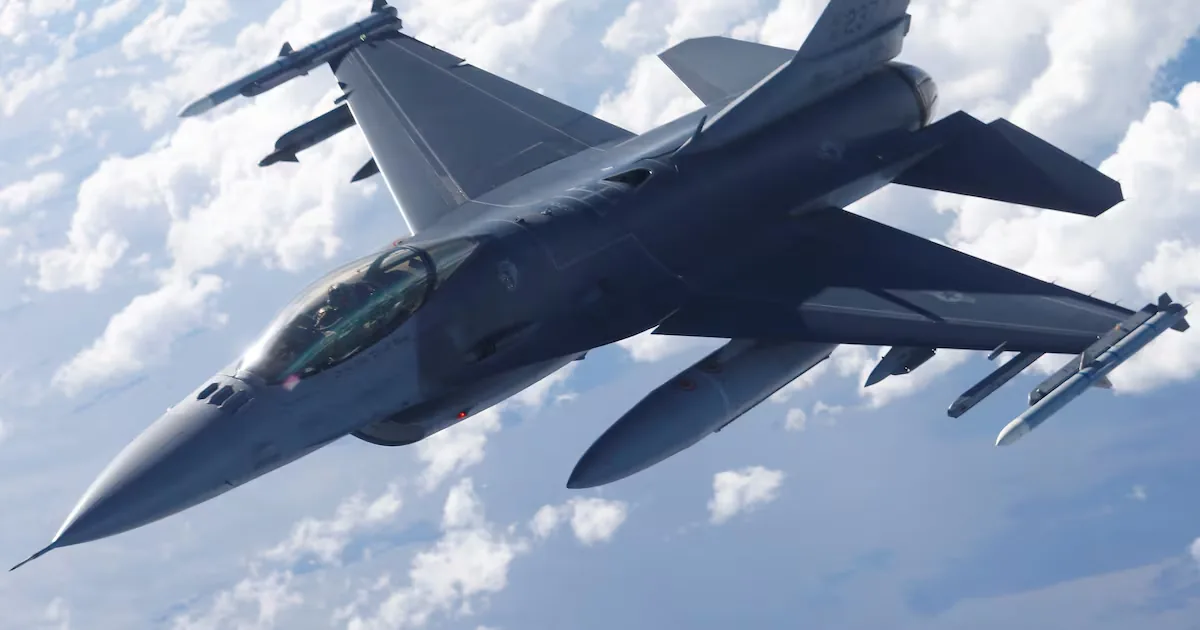
During his ministerial tenure, Petri praised the Air Force chief on social media and in public statements on several occasions. For example, in the context of acquiring F-16 aircraft, Petri stated that the Air Force “not only guards the skies but also guards the future.”
“His significant career in the world of aviation guarantees that, from his new role, he will enhance our Air Force, taking advantage of the historic investment the government is making to recover the capabilities of our pilots, such as the purchase of F-16 aircraft,” indicated sources from the Argentine Ministry of Defense in 2024.
In his speech upon taking office, Valverde stated that the institution faces two challenges. The first “is that we quickly have to make a course correction, change direction, adopt an upward attitude and give full power at first. I will provide the course correction, direction, and attitude, but I need the power of that engine to be at full and for this aircraft to project itself into the future,” he mentioned.
He added as a second challenge “the incorporation of the F-16 Weapons System,” which was fulfilled last April after implementing the aircraft acquired from Denmark.
Despite the controversy sparked by his statements that Magellan and the southernmost area are Chilean sovereignty, Valverde’s statements are not the first recent episode in which an Argentine authority has made statements about the situation of the Strait of Magellan.
In April of this year, the head of the Argentine Naval Hydrography Service, Rear Admiral Hernán Montero, stated in a podcast originally broadcast in January 2026 that the Strait of Magellan was Chilean, but made an exception regarding its eastern entrance.
“The mouth of Magellan is Argentine,” he said, referring to the sector between Cape Vírgenes and Punta Dungeness.
The statements went viral in April and generated various reactions in the Chilean Congress, and an immediate request to the Foreign Ministry to defend national sovereignty and recall the existing treaties.