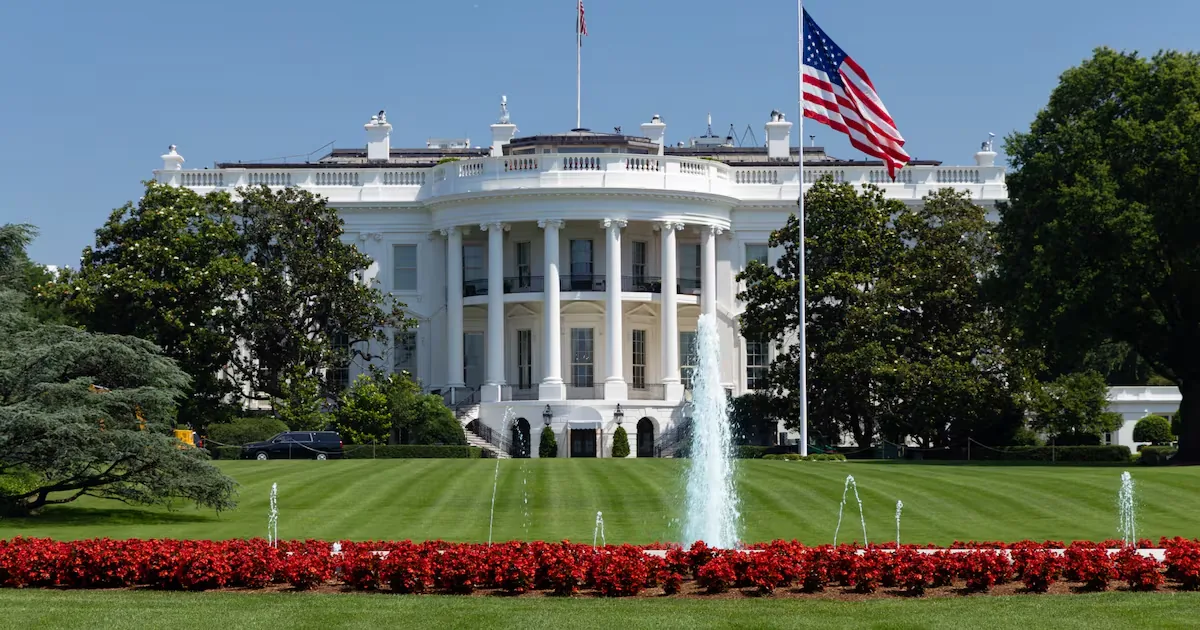
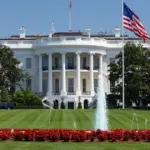



The President of the United States, Donald Trump, signed a memorandum extending the embargo against Cuba for one more year, that is, until September 2027, arguing that the decision serves the “national interest” of the North American country.
Read more Trump proposes changing the name of Lake Ontario to Lake America amid trade clash with Canada
These economic, commercial, and financial measures against Havana are framed within the United States Trading with the Enemy Act, dating back to 1917.
However, sanctions against the island began under the presidency of the 34th U.S. president, Dwight Eisenhower, in the 1960s.
Although the official document, consulted by Europa Press, was made public this Tuesday, it was signed on August 20, decreeing the extension of the embargo until September 14, 2027.
From the Cuban leadership, the Cuban Foreign Minister, Bruno Rodríguez, spoke out, condemning “in the strongest terms” the mentioned extension, assuring that it proves Washington “persists in its purpose” to “asphyxiate” the “entire” nation.
“Cuba condemns in the strongest terms the one-year extension of the economic, commercial, and financial blockade imposed by the United States government, a genocidal policy that has been maintained against our people for more than six decades,” said the senior official in a message on social media.
According to the Caribbean official, this extension by the White House “is not a minor administrative act” but “the confirmation” that Washington “persists in its purpose to asphyxiate an entire nation” in what he denounced as “the cruelest moment of the U.S. offensive against Cuba in recent years.”
Read more Let’s talk about love: guilt cannot be our home
It is worth remembering that U.S. pressures against the island have intensified especially during this last Trump term in the form of sanctions against the Cuban Executive Chief himself, Miguel Díaz-Canel, or his predecessor in office, Raúl Castro.
Regarding the blockade, Díaz-Canel spoke out this week, questioning why the U.S. blocks the country if they are “so clumsy, incapable, inefficient” and could “fall” on their own.
“They know that Cuba, blocked, has managed to solve problems that are not resolved today in the United States in terms of social justice,” the president asserted in an interview with the Brazilian newspaper ‘Folha’.
In that same interview, the Caribbean leader stated that the country is not “on the brink of collapse” but “in a complex situation, but with enormous creativity that adds to the heroic capacity of resistance of the Cuban people.”
“There are blackouts, but no blackout has extinguished the hope of the Cuban people. There are shortages, but no shortage has broken the capacity to grow,” insisted Díaz-Canel, claiming the “capacity to function” of his country despite the crisis in which the island is immersed.
Read more Dolly Parton, country music legend, dies at 80 years old