




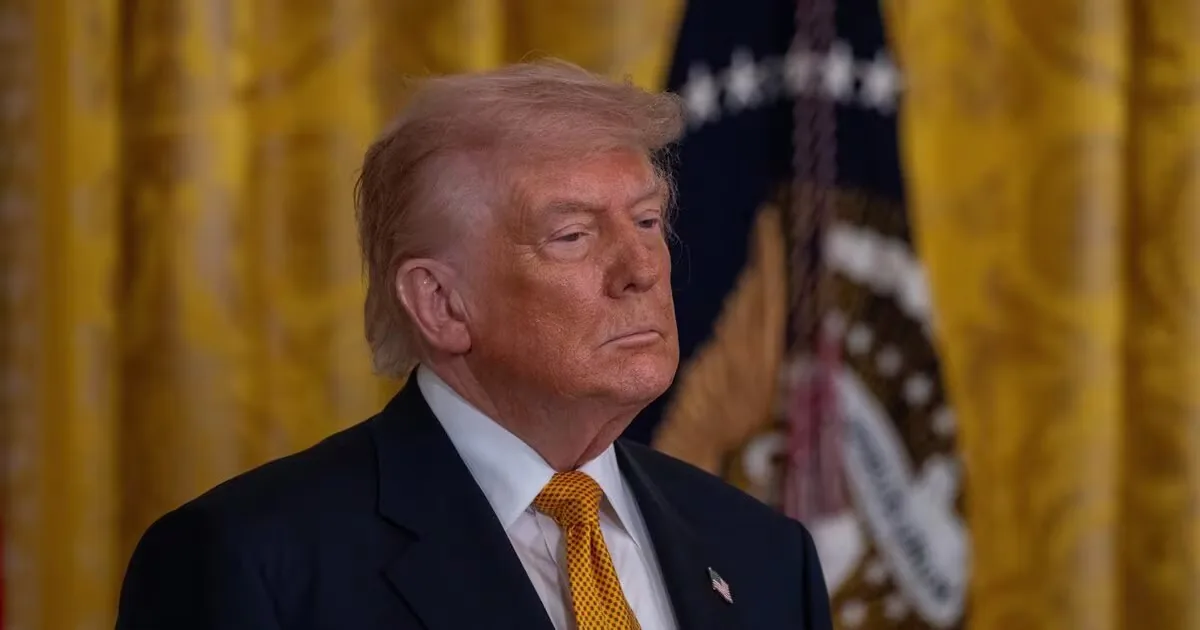
The President of the United States, Donald Trump, stated this Wednesday that he is facing the “decision” in the context of the Iran war to reach an agreement or choose to “do it the other way,” suggesting a large-scale military intervention that “would end everything” and put an end to “the talks” and “the nonsense.”
After pointing out that the military offensive has been very successful, the White House chief emphasized that he has a decision on the table. “Now I have to make a decision: do we sign an agreement or do it the other way? And it’s not a pleasant way,” he warned in statements on conservative journalist Miranda Devine’s podcast.
In this way, Trump issued a warning about the scenario now opening in Iran if the authorities do not accept an agreement with Washington. In his view, the alternative to the agreement would provide “certainty” and “everything would end.”
“There would be no nonsense. There would be no talks. There would be no delays,” he said, concluding that he prefers “to do it the nice way, from a humanitarian point of view.”
Trump considered it “likely” that he would meet with Iran’s supreme leader, Ayatollah Mojtaba Khamenei, depending on “how things develop” in reference to a possible agreement with Tehran to cease hostilities.
“I would like to meet him. I would like to meet everyone. We will probably meet at some point, depending on how things develop,” he assured.
In the interview, the American leader defended the success of the United States in its offensive in Iran, emphasizing that the ultimate result is that Tehran does not have nuclear weapons and that this is something the Islamic Republic has already accepted. “Regardless of how well we are doing, we cannot allow them to have a nuclear weapon. And they have already accepted that they will not have a nuclear weapon,” he assured.
“They have accepted that. They can change their mind now, but that was one of the things they had to accept. They have accepted it,” added the U.S. president, who dissociated the offensive from the electoral calendar with the midterm elections in November on the horizon, assuring that the attack on Iran had to be done earlier to prevent Iran from having the nuclear weapon.
“This is too important. If I had not done that, they would have had a nuclear weapon. So they would have had a nuclear weapon two weeks after the B-2 bombers attacked,” he said.
In recent days, the United States and Iran have exchanged attacks amid mutual accusations of violations of the April ceasefire and the stalemate in open negotiations to try to achieve a peace agreement.