





U.S. President Donald Trump promised on Monday new attacks against Iran following the first retaliatory offensives in a month, as a conflict that had recently become an economic confrontation threatened to escalate again into open combat.
Read more Dan Driscoll resigns from the U.S. Army Secretary after months of tensions with Pete Hegseth
The president told Fox News chief foreign affairs correspondent Trey Yingst that the United States will respond to Iran’s attack on U.S. military bases in Jordan.
“We are going to hit them hard,” a Fox News journalist quoted Trump. “There will be a response,” he added, after the Jordanian army confirmed having intercepted eight missiles early in the morning.
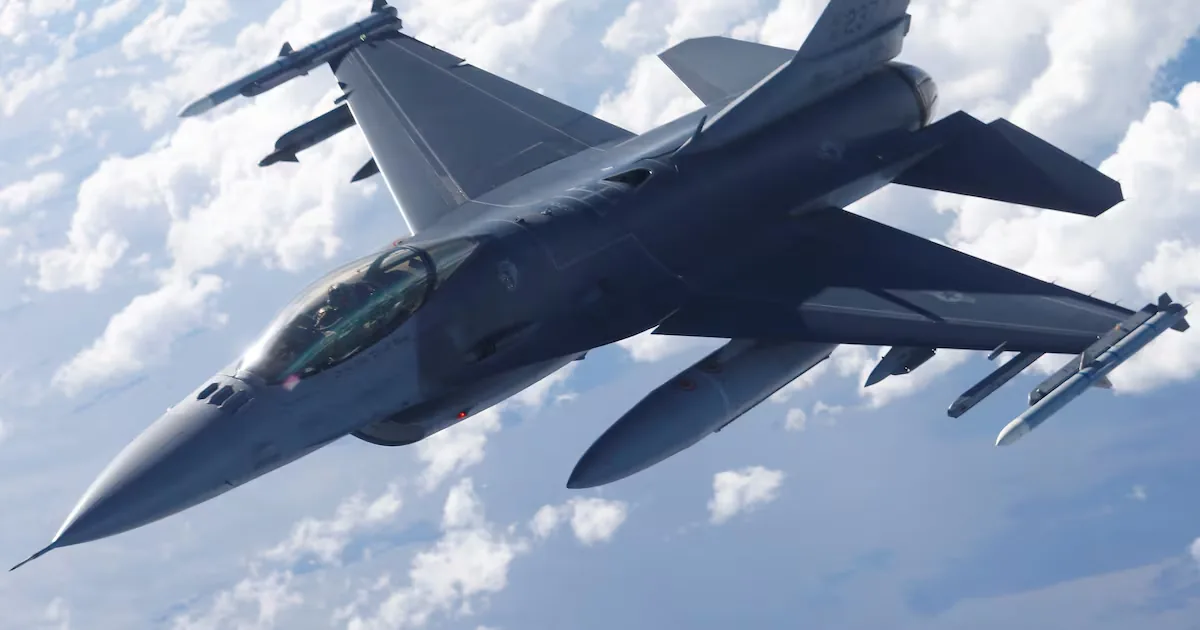
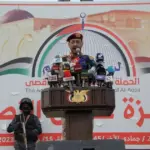
In response to the U.S. attack on Larak Island late Sunday, the Islamic Revolutionary Guard Corps “attacked with ballistic missiles the technical infrastructure, maintenance facilities, and enemy combat aircraft positions at the King Hussein and al-Azraq air bases, operated by the United States in Jordan,” causing “serious damage,” according to state television.
Three people died in the U.S. attack, according to the Tasnim news agency. The state media Nournews indicated that two of the victims were identified as members of the Revolutionary Guard Navy.
A senior Iranian source, speaking to Reuters, described the nighttime hostilities between the U.S. and Iran, the first since late July, as a “limited and contained confrontation,” but added that Tehran would give a harsh response if attacked again.
Trump also claimed that U.S. air defenses had shot down all Iranian missiles that could have caused any damage and that the new and tough U.S. economic sanctions against Iran were having a great impact, according to Fox News.
Washington has recently intensified its efforts to punish Tehran and its trading partners with costly secondary sanctions, at a time of diplomatic stalemate six months after the start of a war that began with U.S. and Israeli attacks against Iran.
U.S. Treasury Secretary Scott Bessent, echoing Trump’s words, said on Monday that the resumption of exchanges of fire showed that Iran was “reacting violently” now because the new sanctions were having a strong impact on its already battered economy.
“They are taking it very seriously… they are shocked by the state of their economy,” Bessent told reporters at a meeting of G20 finance ministers and central bank governors in North Carolina. “I think they are reacting strongly because they are suffering economic losses.”
Bessent told Reuters on Sunday that new secondary sanctions would likely be announced weekly in an effort to pressure Iran, initially focusing on banks.
On the other hand, Vice President JD Vance indicated that Trump sent a message to Iran with his social media post about Kharg Island.
“The president likes to vary a bit on social media. He would be the first to say he does not make announcements about military actions on social media, but I think he is sending a message to the Iranians,” Vance said when asked about Trump’s post.
Trump’s brief social media post on Sunday was accompanied by an AI-generated video clip showing fake U.S. army attacks.
Read more Europe protests after Washington invites a Russian minister to the G20 finance meeting
A U.S. official said on Monday that the military had not attacked Kharg Island in the nighttime bombings. An Iranian official called Trump’s post “ridiculous.”
Amid this context, several U.S. military leaders have warned Defense Secretary Pete Hegseth that prolonging large-scale operations against Iran is unsustainable and risks weakening their ability to deal with threats elsewhere, including U.S. territory.
This was revealed by close sources who spoke to The Washington Post and pointed out that the warnings—detailed for Hegseth by the chiefs of the Army, Navy, and Air Force, as well as four-star commanders overseeing U.S. operations in Europe, Asia, and Latin America—appear in the August 14 edition of the Secretary of Defense Order Book (SDOB). These sources described the assessment to The Washington Post on condition of anonymity, given that the document is classified.
The SDOB, which is generally published twice a month, details the global availability of U.S. warships, aircraft, personnel, and weapons systems. It reflects the president’s priorities for the armed forces, which are executed by the Secretary of Defense, and includes the opinions of the highest-ranking generals and admirals in the army, which serve as the basis for directives issued by the Pentagon.
According to sources familiar with the document, the August 14 order book mandates that some troops deployed in the Middle East remain there until September and others until 2027. The possibility of further extending the deployment of these forces prompted military leaders to express their concern.
While President Trump pressures Tehran to reopen the Strait of Hormuz and accept various U.S. proposals to end the stalled conflict, he insists that all options remain available to him, including new military actions.
Since mid-July, the United States has reinstated the military blockade of Iranian ports and sanctions on Iran’s oil trade. Meanwhile, the U.S. military has worked tirelessly to clear maritime routes and protect merchant ships transiting the strait. The result has been an effective blockade of Iranian oil shipments, with a recovery of global shipments and notable energy price stability. Bloomberg reported this week that the flow of oil through the strait has recovered to two-thirds of pre-war levels.
According to an analysis by CNN, this means that the pressure now falls on Iran, not the United States. And if Iran loses the ability to hold the strait hostage, its influence will dissipate.
“The attack on Larak reveals that Washington’s strategy has shifted from trying to destroy the Iranian army to imposing a more concrete objective: keeping the Strait of Hormuz operational. CENTCOM attacked two Revolutionary Guard launchers after detecting preparations to fire rocket mines toward the strait. Mines can generate enormous costs without Iran having to defeat the Navy. Therefore, Washington defends the maritime route, not defeats the adversary. But this also constitutes a strategic concession. Six months after the start of the war, the United States is deploying military power to prevent Iran from regaining its influence over the world’s strategic energy point. The objective has become denial: keeping the Strait of Hormuz open without ending the war,” explained Richard Pape, a University of Chicago academic, on the Substack network.
According to the International Monetary Fund, the Iranian economy is expected to contract by more than 5% this year, with inflation close to 70%. The value of the Iranian currency has dropped drastically. Commodity prices have soared. An official from the Iranian Ministry of Labor recently estimated that more than one million jobs were lost in just the first three months of the war.
“Tehran might try to get out of this predicament by force. Its strategy during the first three acts was clear: threaten trade in the strait, raise global energy prices and gasoline prices in the United States, increase global economic pressure, and ultimately force Trump to give in, especially with the midterm elections approaching,” CNN stated.
“The United States’ objective should be equally well defined. Iran must abandon its claims over the strait and give up its nuclear enrichment program. Until then, this will be the new statu quo. And that statu quo—perhaps for the first time since the war began—now favors Washington, not Tehran,” the network concluded.
Read more Aurora’s intimate plates: images of a Chile that no longer exists