





Peru, the last stop on U.S. Secretary of State Marco Rubio’s tour, arrived in Peru from Ecuador, after previously visiting Colombia, on a trip designed to strengthen Washington’s relations with three governments considered strategic partners of the Donald Trump Administration.
His visit to Lima also has a symbolic component: it takes place as Peru and the United States commemorate 200 years of diplomatic relations and just weeks after Keiko Fujimori assumed the Presidency.
The Secretary of State meets with Fujimori for the first time since the start of her term, in a meeting where both governments seek to present a closer bilateral relationship focused on concrete issues: security, defense, trade, investments, combating organized crime, and technological cooperation.
But behind that bilateral agenda there is a broader issue: the place Peru wants to occupy in the growing influence dispute between the United States and China in Latin America.
One of the main political outcomes of the visit was already announced before Rubio landed in Lima: Peru will join the “Shield of the Americas,” the alliance against transnational organized crime promoted by Trump.
The initiative brings together Latin American governments close to Washington and aims to strengthen cooperation in intelligence, security, and the fight against criminal organizations operating beyond borders.
For Fujimori, joining comes at a time when combating organized crime has become one of her priorities.
Peru is not experiencing a situation comparable to Latin American countries with higher levels of criminal violence, but in recent years organizations linked to illegal mining and extortion networks threatening companies and small businesses have gained ground.
U.S. cooperation can translate into greater exchange of information and intelligence capabilities and closer coordination between the security agencies of both countries.
A recent example of that collaboration was the capture in Bolivia of Jhonsson Cruz Torres, alias “Jhonsson Pulpo,” identified as the leader of the Peruvian gang “Los Pulpos,” in an operation supported by the FBI and DEA.
If security is one of the pillars of the official agenda, China is the major strategic issue overshadowing the visit.
Peru has become one of the Latin American countries where Chinese economic expansion is most visible.
The main symbol is the port of Chancay, built with a Chinese investment of about 1.3 billion dollars and controlled by Cosco Shipping, a Chinese state-owned company.
For Beijing, Chancay is a strategic infrastructure to expand its commercial connections with South America. For Washington, it is part of a broader phenomenon considered potentially problematic: the growing Chinese presence in strategic sectors of Latin American economies.
Rubio made the U.S. position clear even before arriving in Lima. In a column published in the Peruvian newspaper El Comercio, he accused projects backed by the Chinese Communist Party of overlooking Peruvian legal frameworks and posing risks to transparency and data security.
The Chinese reaction was immediate. The Asian giant’s Embassy in Lima rejected the accusations and defended the legality and transparency of its investments. Beijing also reminded that Latin American countries have the right to freely choose their partners and warned against the idea of considering Latin America as the “backyard” of a power.
The verbal exchange reflects a dispute that goes far beyond the port of Chancay: Washington wants its Latin American partners to consider the strategic implications of their economic ties with the Xi Jinping Administration, while China asserts its right to compete for investments and influence in the region.
The rapprochement between Lima and Washington is not limited to diplomacy. Peru has been analyzing the modernization of its military capabilities for months, a process in which the United States has pressured the country to opt for U.S. equipment.
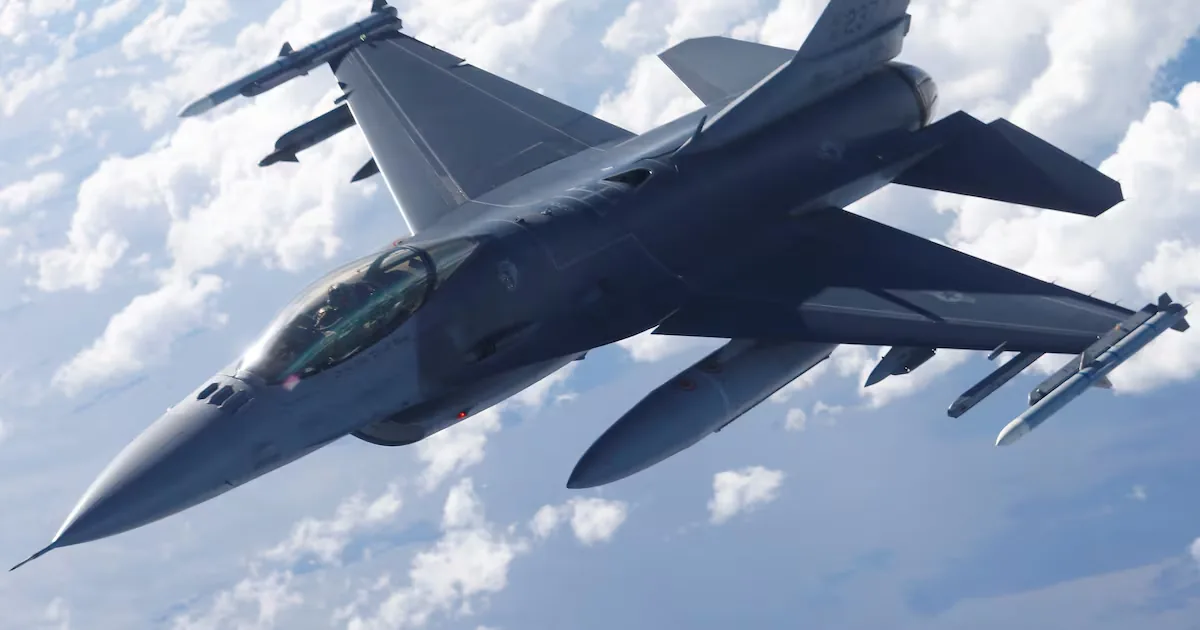
Among the operations under discussion is the possible acquisition of 12 F-16 Block 70 aircraft for about 2 billion dollars, intended to renew the Peruvian combat fleet.
Read more OAS agency report analyzes the phenomenon of “tuci” and warns of the challenges for drug policy
The U.S. planes compete with other international alternatives, including the French Rafale and the Swedish Gripen.
Added to this is a project of about 3 billion dollars to modernize the naval base of Callao, the main facility of the Peruvian Navy.
Defense agreements are relevant not only for their economic dimension. For Washington, expanding military interoperability with Peru also means strengthening a network of strategic partners in South America.
The rapprochement between the two countries has also reached a much newer area: artificial intelligence.
This week, the Fujimori government signed a memorandum of understanding with the United States that includes the adoption of U.S. technology and the connection of U.S. AI providers with the Peruvian public and private sectors.
The agreement has an economic reading, but also a geopolitical one.
The U.S. ambassador in Lima, Bernie Navarro, urged Peru to “choose its technological partners wisely” and warned of the risks that, in Washington’s view, AI developed and controlled by “extra-hemispheric” providers poses, an implicit reference to China.
Thus, the influence dispute is no longer limited to ports, roads, energy, or mining. It also extends to data, digital infrastructures, and technologies that Latin American states will use in the coming years.
The closing of Rubio’s tour in Lima allows a clearer view of the U.S. strategy.
Washington seeks to consolidate Latin American governments willing to cooperate on three major fronts.
The first is security, through joint operations, intelligence, and the fight against drug trafficking and organized crime.
The second is defense, with agreements that bring the region’s countries militarily closer to the United States and open opportunities for the U.S. industry.
And the third, increasingly important, is competition with China, not only in trade but also in infrastructure, energy, technology, and data.
Peru brings together all three elements. It is a partner with a strategic location on the Pacific, maintains important economic relations with China, and at the same time is tightening its political, military, and technological ties with Washington.
The meeting between Rubio and Fujimori, therefore, has a greater scope than a bilateral visit. The Peruvian president has sent several signals of alignment with the Trump Administration: from her decision to join the “Shield of the Americas” to the rapprochement in technology, defense, and security.
For Rubio, Peru also represents an opportunity to close his tour by showing that Washington can offer its Latin American partners a comprehensive alternative to the growing Chinese presence: cooperation against crime, military equipment, investment, technology, and access to the U.S. market.
The question will be to what extent Lima can deepen that relationship without giving up its economic ties with Beijing.
That is, ultimately, the message left by Rubio’s trip: The United States not only wants to combat organized crime in Latin America; it also wants to regain ground in a region where China has gained economic influence that Washington now considers a strategic challenge.