



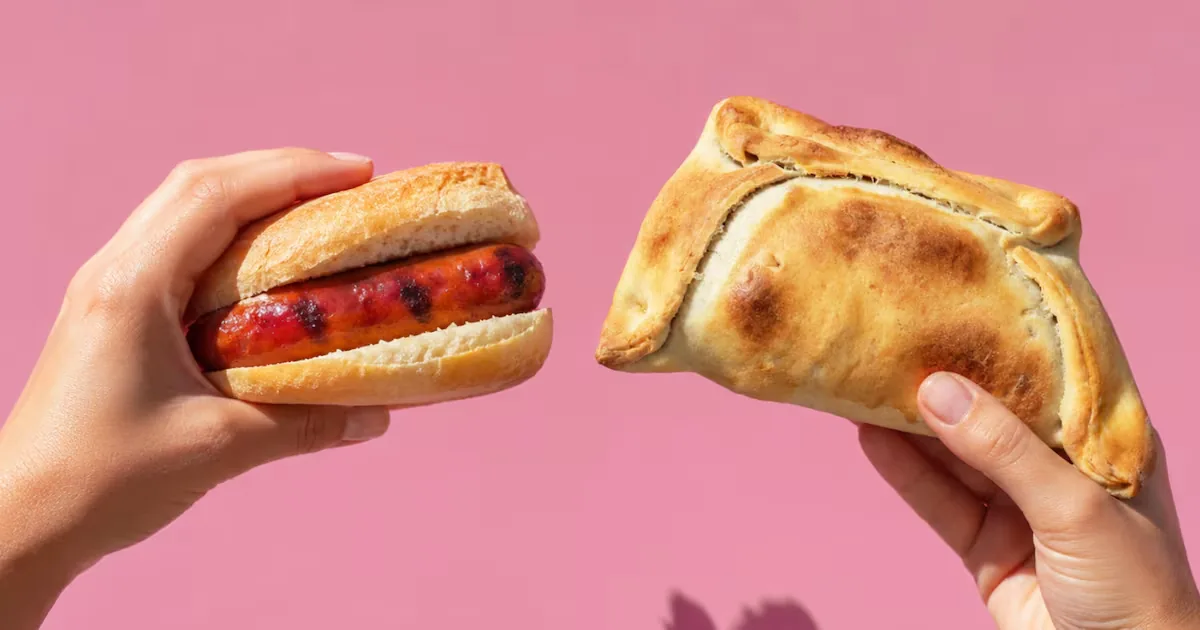
Before specializing in Eating Disorders (ED), when I still had a more traditional approach, I saw the same thing every year after the 18th. New patients would come to me saying they had eaten everything during the celebrations, that they needed to “detox,” lose what they had gained, and that they had already signed up at the gym to start the “summer operation.” As if enjoying those days was a disorder that had to be corrected as soon as the National Holidays ended.
Read more Mois Navon: “Autonomous weapons will make war cleaner, faster, and more efficient”
Years have passed and the pattern remains the same. Every September the same advice appears on how to “take care” during the National Holidays: how many calories a choripán has, what to eat or not at a barbecue, how many cueca dances you need to burn what you ate, and so on.
On one hand, they tell us to enjoy and celebrate, but at the same time warn us to be careful with what we eat so we don’t gain weight. Then come the whole wheat empanadas, the “fit” mote, the “healthy” barbecue, and many versions designed to eat with less guilt. If someone prefers them because they like them or for some medical reason, perfect. The issue is when we stop eating something we enjoy or feel we have to modify it just out of fear of gaining weight.
In consultations, I have also seen people who feel they have to eat as much as they can because they will start a diet right after. Who hasn’t said at some point, “this weekend I’ll eat everything, after all, I start the diet on Monday”? This is known as the “last supper syndrome.” When we know that soon certain foods will no longer be allowed, an urgency to eat them before the restriction arrives can appear.
It’s not the same to eat an anticucho knowing I can eat it again whenever I want as it is to eat it thinking it will be forbidden in four days. That’s when the “whatever” attitude appears. I ate something I shouldn’t have, so it doesn’t matter if I keep eating even if I’m no longer hungry. After all, everything will be fixed starting Monday. It’s the same all-or-nothing as always: follow the diet perfectly without eating any “forbidden” food or feel like you’ve already ruined it, and if you’ve already ruined it, why stop now?
That’s why it’s common to end up eating much more than the body asked for and then feel physical discomfort and guilt. And with guilt often comes compensation, like skipping meals, over-exercising, having a “detox” juice on the morning of the 20th, or signing up at a gym as soon as the celebrations end.
Remember years ago when they told us a mega earthquake could come and the phrase “stock up on water” became popular because we could be left without basic services? People rushed to supermarkets and emptied the shelves to prepare for a shortage that never actually came. Something similar can happen with food. If we think that after the 18th certain foods will be forbidden, it’s quite expected that an urgency to eat them while we still “can” will appear.
The idea is not to arrive at the 18th saying goodbye to food nor to finish the celebrations thinking we have to compensate for what we ate. Empanadas, anticuchos, and mote with huesillo will continue to exist after the National Holidays. We can eat a choripán in October, have a barbecue in November, and keep eating as we usually do, without having to “take advantage” now or compensate later. If after the 18th the prohibition doesn’t start, we also don’t need to live these days as if they were our last chance to eat.
And this is exactly what I want to highlight. Eating goes far beyond meeting nutritional needs because food is also part of our celebrations, memories, bonds, and culture. Enjoying all of that is not a disorder we have to correct afterward. Because those foods that some call “empty calories” can also be full of love, memories, and happiness.
Read more Anthropic dismantles an AI campaign to influence public opinion on the Sudan war


