




The first ministers of the three autonomous nations of the United Kingdom signed a memorandum of understanding on Monday in which they asked the British government to begin preparing for a constitutional reform and argued that Westminster can no longer ignore the growing support for independence and Irish reunification.
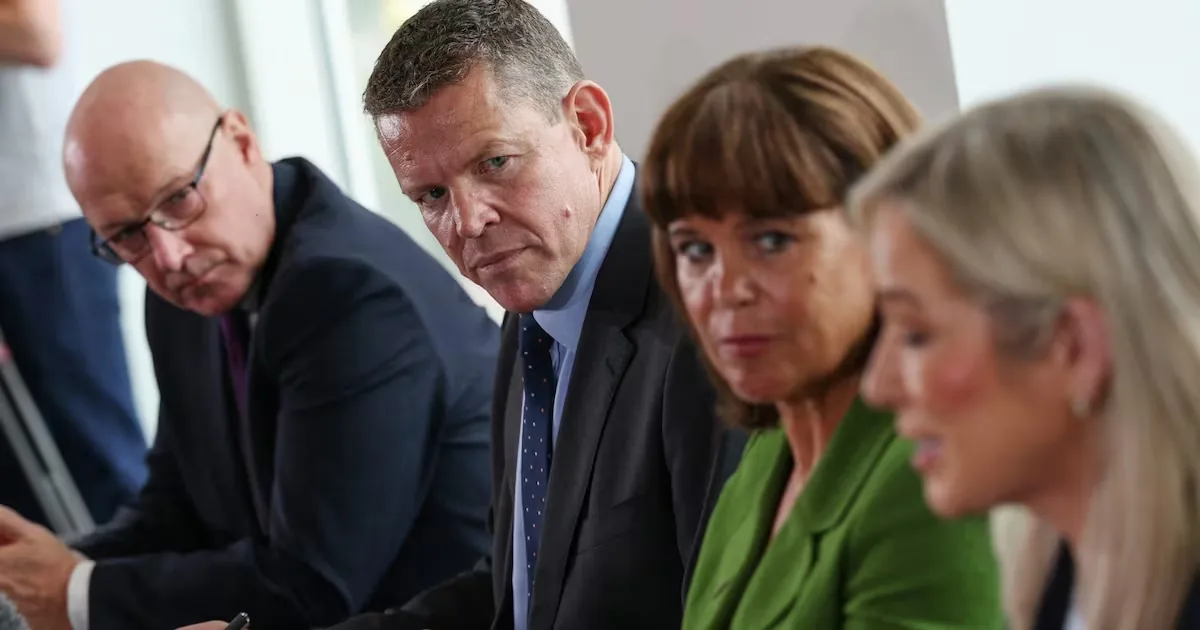
At a meeting held in Cardiff, the capital of Wales, the Scottish first minister, John Swinney; the Welsh first minister, Rhun ap Iorwerth, and the Northern Ireland first minister, Michelle O’Neill, signed a joint memorandum of understanding along with Sinn Féin president Mary Lou McDonald.
The summit, explained The Guardian newspaper, was the first face-to-face meeting between the political collectives of the three nations since the Welsh separatist party Plaid Cymru won the Senedd (Parliament) elections in May, which for the first time brought separatist parties to government in all three nations. The leaders met in their capacity as party officials, not government representatives, to discuss economy, energy, international cooperation, and self-determination.
Swinney described the summit as a “crucial moment in the constitutional path of the United Kingdom,” insisting that there should be “no obstacle” to the three nations determining their own constitutional path.
He described Andy Burnham as the “last prime minister” of the United Kingdom and said it was necessary to hold an independence referendum “during this Scottish Parliament term.”
“If the people of Scotland had the option of independence in a referendum, they would choose it, because all the information we have before us about opinion poll trends indicates that this is the preference of the people of Scotland,” Swinney assured.
McDonald, meanwhile, stated that the UK government should accept that future constitutional votes are inevitable and start preparing for them now, arguing that “referendums are coming” and that ministers could no longer simply “keep afloat.”
“It is no exaggeration to say that today’s meeting and the signing of this memorandum are historic,” she added. “It is that moment when we collectively affirm our inalienable right to decide our future.”
Ap Iorwerth stated that this was not a campaign for the “disintegration of the United Kingdom.” “I have never been interested in the disintegration of the United Kingdom. I am interested in the development of Wales,” he pointed out.
“And I am sure I speak on behalf of my colleagues here present: that is what motivates me. We have very close and important cultural relations between these islands that we want to maintain,” he indicated.
He added, “We are talking about having the tools to build a future for our people through the right to self-determination.”
“For the first time in history, there are first ministers in Scotland, Wales, and Northern Ireland who are committed to the independence of the United Kingdom,” the text signed on Monday stated.
“For those following us from these islands, and for those following us from around the world, there could be no clearer sign that Westminster’s time is coming to an end.”
The memorandum commits the three governments to “work together on an equal footing, sharing ideas and expertise, and building relationships based on mutual respect and common interests.”
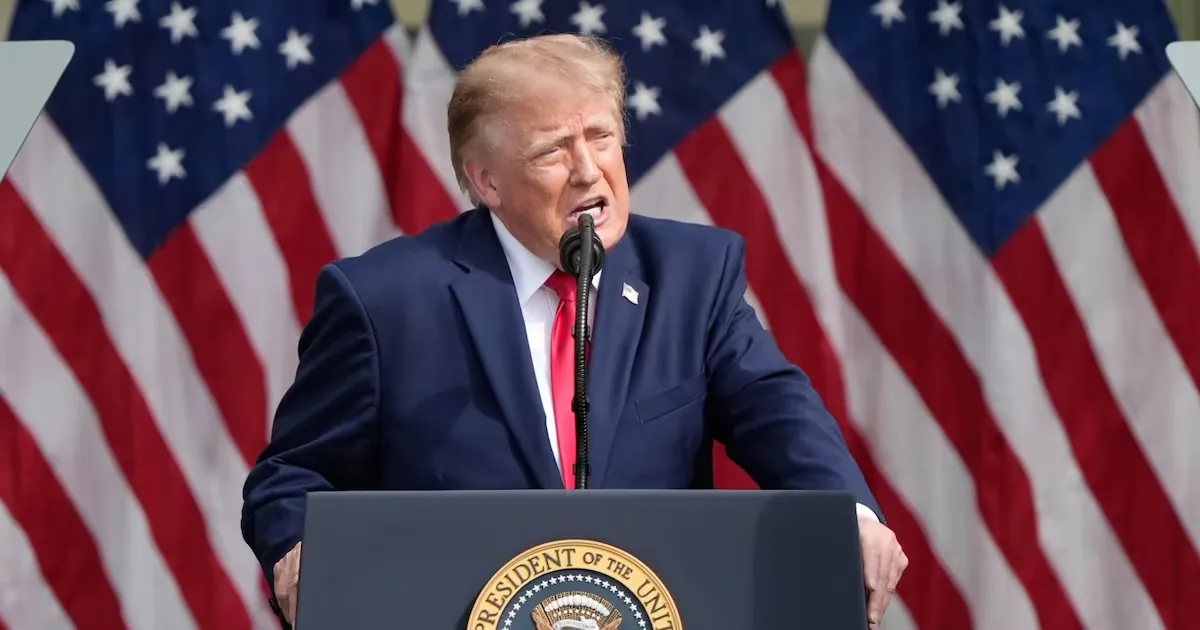
The agreement aims to put pressure on the British prime minister, Labour’s Andy Burnham, after Donald Trump, the president of the United States, said he would “love” to see a unified Ireland.
The Northern Ireland first minister, O’Neill, stated that Burnham “will not be able to contain the wave” of nationalism in Scotland, Wales, and Northern Ireland.
“Our common cause here is the conviction that Westminster does not and will never serve our people. Our common cause here is that we have the right to self-determination, and the common cause we share here is that we must collectively ensure that this message is heard in Westminster,” she said.
She maintained that Irish reunification was “very much on the table,” despite Burnham’s contrary claims, and that Trump’s comments over the weekend “largely reflect that there is now a chorus of people participating in this debate.”
The agreement promised that the nations would join the EU after independence, despite Wales having voted in favor of Brexit and warnings that this would create a hard border with England.
The pact sets plans to “reject the failed economic model of Whitehall” and share ideas on economic growth, expand energy resources, and states that “the future of our nations belongs to the European Union.”
Burnham ruled out “participating in constitutional debates or new referendums” after last week seeming to open the door to another vote on Scottish separation.
The Scottish National Party (SNP) has been in power in Scotland since 2007 but lost the independence referendum in 2014. It has pressured all prime ministers since Theresa May to repeat the vote, but its request has been rejected.
Plaid Cymru came to power for the first time in Wales in May and has ruled out holding an independence referendum before the next Senedd elections in 2030.
Meanwhile, Sinn Féin has been in power in Northern Ireland since 2022, and O’Neill will run for re-election next year.
Last week, the British prime minister declared before the House of Commons that the trigger for a vote on separation was “exactly the same situation in Scotland” as in Northern Ireland.
Under the terms of the 1998 Good Friday Agreement, also known as the Belfast Agreement, there is a potential path to hold a referendum on Irish reunification. That agreement states that a consultation should be called if it “appears likely” that the majority of the population of Northern Ireland would vote to separate from the United Kingdom.
Swinney stated that it was the first time since the 2014 Scottish vote that “a British prime minister accepted that majority support for a referendum should imply its holding.”
A day later, Burnham retracted his comments and told Swinney that a referendum was “out of place.”
Russell Findlay, leader of the Scottish Conservatives, said: “Many people in Scotland will be horrified to see John Swinney join forces with Sinn Féin in their common desire to destroy the United Kingdom.”
“They will also be horrified by the SNP’s continued disrespect towards the majority of Scots who reject separation and want the Edinburgh autonomous government to do its job,” he added.
Harriet Cross, the Scottish Conservative Party spokesperson, stated: “Andy Burnham’s naive and incorrect comments in last week’s prime minister’s question session have been seized upon by nationalist leaders across the United Kingdom and have provided them with new ammunition to plan the disintegration of the United Kingdom.”
Amid this context, the question arose whether it was possible for these three nations to hold a referendum. In an analysis published on the Diplomacy and Law portal, legal expert Edmarverson A. Santos pointed out that British constitutional law does not provide Scotland, Wales, and Northern Ireland with identical paths for a referendum or a change of status.
“Scotland illustrates the distinction between political support for independence and the legal authority to initiate the process,” Santos indicated. The 2014 referendum was held following an order under section 30 of the Scotland Act 1998, which modified the reserved powers framework for that specific vote. In 2022, the UK Supreme Court ruled that the Scottish Parliament could not legislate for another independence referendum under its current competence, as the proposed bill referred to reserved powers related to the Union and the UK Parliament.
Wales, for its part, does not have an equivalent referendum mechanism: the union of Wales and England and the UK Parliament are reserved powers under Schedule 7A of the Government of Wales Act 2006.
Northern Ireland is governed by a different legal framework. The Belfast/Good Friday Agreement recognizes that its constitutional status is based on the principle of consent, while section 1 and Schedule 1 of the Northern Ireland Act 1998 establish a legal procedure by which a majority can opt to separate from the United Kingdom and join a united Ireland. “This is not a general right of unilateral secession, but a specific constitutional mechanism created by the 1998 agreement and incorporated into British legislation,” he indicated.
“The capacity in which the agreement was signed is legally important. The memorandum is a political agreement between parties, not an intergovernmental agreement between the devolved administrations,” he maintained.
“Its direct legal effect is limited. It cannot amend the Scotland Act 1998 or the Government of Wales Act 2006, confer competence to hold referendums on the Scottish Parliament or the Senedd, nor alter the border voting mechanism established by the Northern Ireland Act 1998. It also does not impose a new legal obligation on the UK Government or Parliament to authorize Scottish or Welsh independence referendums,” he concluded.
Read more Trump compares the “hoax” of the danger of AI with the “scam” of climate change