









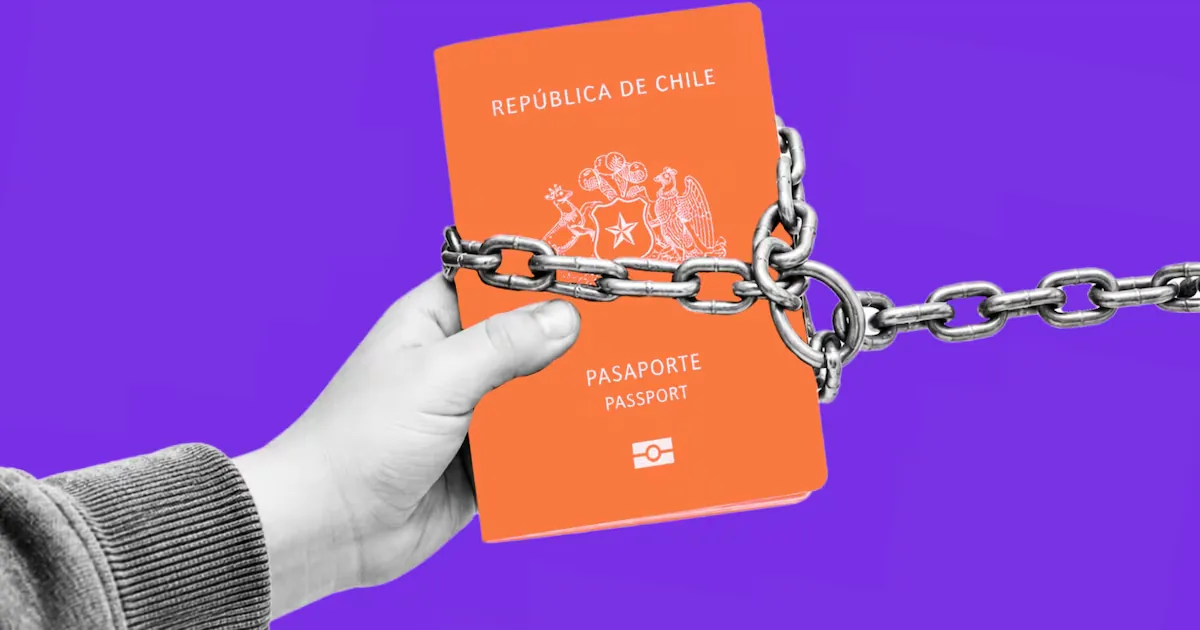
Emilio, 13 years old, had everything ready to travel to a sports championship in Buenos Aires: the registration paid, the team prepared, and the trip coordinated with his delegation. His father refused to sign the authorization to leave the country. He gave no reason related to the trip nor explained what risk it could pose to his son. So Antonia, his mother, asked us to request judicial authorization. The father had been registered for months in the National Registry of Child Support Debtors, so the court could grant it without considering the reasons for his refusal. That is what it did. It ruled outright and authorized the trip. But the father appealed.
Although the authorization had already been granted, the appeal opened a new discussion about its execution. While its admissibility and effects were being resolved, time kept running. Finally, the date of the championship arrived and the ruling lost all practical use.
Meanwhile, Antonia received an email from her son’s father in which he said he would only sign the authorization if she agreed to reinstate the direct and regular visitation arrangement—the same one the court had suspended—and reduce the child support that he also did not pay. “It depends on you that Emilio can do the things that make him happy,” he wrote, shifting the responsibility for what he himself was preventing onto her in one sentence.
At heart, what the father was doing was using his son’s championship as a bargaining chip, which reveals that sometimes this kind of behavior is not about protecting a child but about controlling, pressuring, or maintaining power over the ex-partner, even if it directly harms children.
There are legitimate reasons to oppose a trip and the right to appeal must be safeguarded. The requirement to have authorization from both parents seeks to protect the direct and regular relationship of the child with the parent who does not have their personal care.
The problem arises when that relationship is judicially suspended, as was the case with Emilio. Currently, that suspension does not eliminate the requirement to have authorization from the parent who will not be traveling. Therefore, even if they cannot maintain contact with their child, they retain the possibility of refusing to sign and forcing the other parent to request permission from a court.
The law provides an exception when the person denying authorization is registered in the National Registry of Child Support Debtors. Law 21.389 allows that, in those cases, the court grants permission without considering the reasons for the refusal. This was the mechanism that allowed Emilio’s trip to be authorized outright.
However, the fact that the request can be resolved outright does not mean the decision is unappealable. The authorization remains subject to appeals and there is no special procedure to ensure a final resolution before the date of the trip.
In Emilio’s case, the father appealed and the processing of the appeal extended until the date of the championship. Thus, although the court did not need to consider the reasons for his refusal, the appeal produced the same result: the trip could not take place.
In these cases, delay is not neutral. An authorization that becomes available after the departure date has, in practice, the same effect as a rejected authorization.
In August 2026, Bill 18.516-18 was introduced in the Chamber of Deputies. The project proposes that if the person denying authorization is registered in the National Registry of Debtors, the court must grant it within 48 hours, without a hearing or intervention from the other parent, unless the trip appears manifestly harmful to the child.
The initiative speeds up the initial decision but does not establish what will happen if the authorization is appealed. It also does not address the situation of those who have their direct and regular relationship judicially suspended nor cases where the signature is used to try to obtain economic or family advantages unrelated to the trip.
These are some of the aspects that a broader reform should resolve. If the direct and regular relationship is suspended, it would be necessary to review whether it is appropriate to continue requiring authorization from that parent. And if the permission has already been granted judicially, its challenge should not prevent the trip, unless a concrete risk to the child is proven.
The right to appeal must be protected, but there must also be mechanisms to prevent the processing of the appeal from becoming an indirect form of veto. Otherwise, a judicial authorization can lose all usefulness before the family manages to exercise it.
Emilio lost the opportunity to participate in the championship. The child support remains unpaid and the direct and regular visitation arrangement remains suspended. In this case, the appeal did not protect a bond nor prevent a risk related to the trip, but it did prevent the judicial authorization from being effective.
Violence can also take the form of a judicial appeal or negotiation. When these mechanisms are used to control, punish, or maintain power over an ex-partner, the violence has not disappeared, it has only changed form.