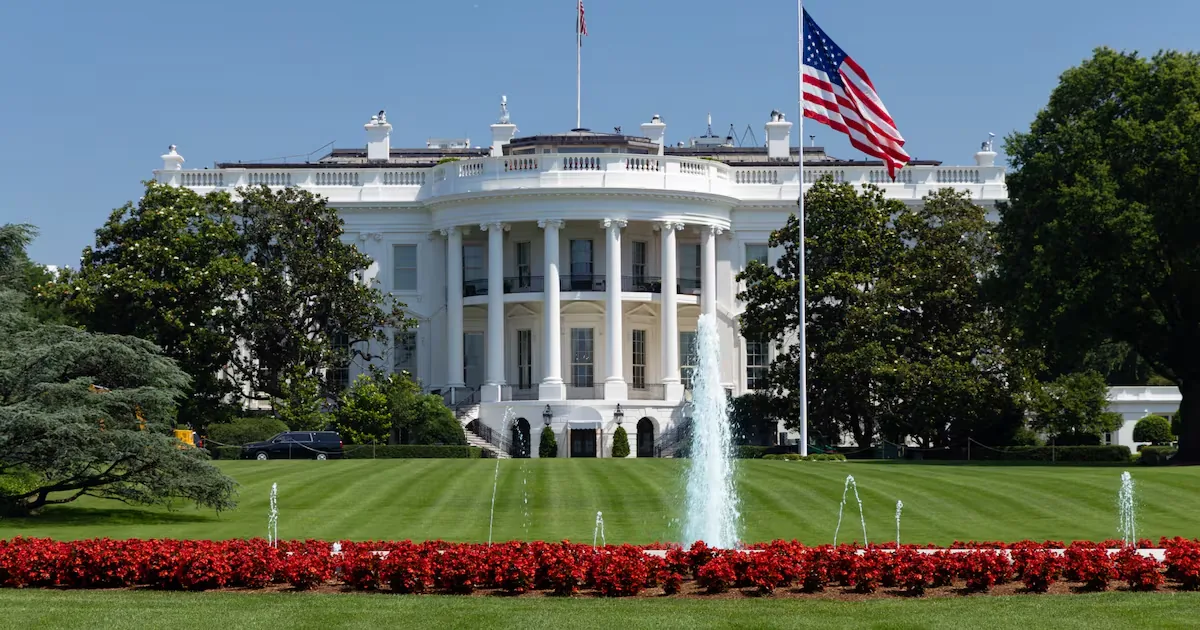









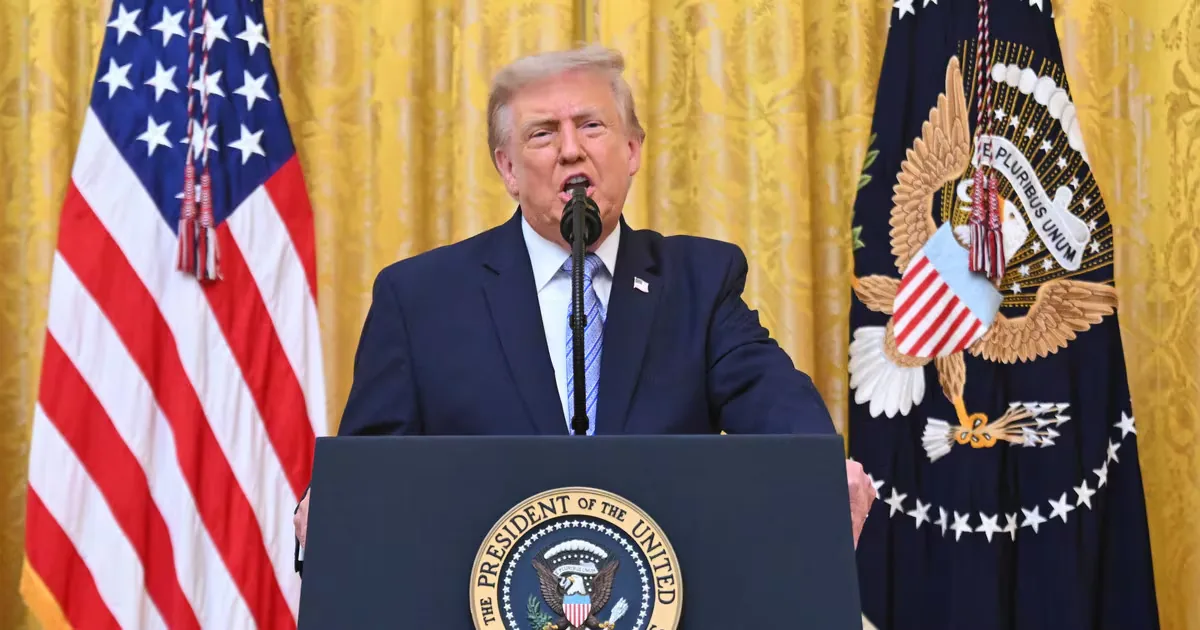
Truth Social, the social network that was born almost as a whim of Donald Trump after being banned from Twitter in January 2021, has become since the Republican’s return to the White House in 2024 an indispensable source of information.
It is there that Trump usually turns to make major announcements, ranging from changes in his combative tariff policy to news about the war in Iran or proposals for truces in Ukraine or Gaza.
His posts are important enough to shake financial markets, causing drastic price rises and falls in a matter of seconds, not to mention the impact they have on global geopolitics.
This is public information that, it is understood, should be free and accessible to everyone simultaneously. Or at least that was thought until now.
Since August 1, Trump Media & Technology, the parent company of Truth Social, has enabled Truth API, a paid service that will allow Wall Street firms and institutions to access the posts of the most influential accounts on the social network in advance.
A controversial initiative with which Trump’s media company – and the president himself – hopes to raise large profits to offset its financial messes, and which raises serious questions about the exploitation of insider information and the use of one of the most powerful public offices in the world for personal benefit.
In a brief press release published in mid-July, Trump Media & Technology explained that the new service will allow its beneficiaries to access the posts of the most influential accounts on Truth Social before the rest.
The clients targeted by the company are high-frequency traders who react quickly to news to buy and sell bonds and other financial instruments. And a few thousandths of a second often make the difference between gains and losses.
In the presentation text of the measure, Trump Media’s interim CEO, Kevin McGurn, admitted that “markets already move with Truth Social posts,” so he expressed his desire for it to become a “significant” source of income, as part of a strategy to “monetize proprietary assets.”
Although the firm has not publicly revealed the list of accounts that will be given preferential access, the Reuters agency reported that the service would cover the ten most influential profiles on the platform.
Considering aspects such as the number of followers, in addition to Donald Trump, privileged access accounts could include members of the president’s family, such as his sons Donald Jr. and Eric, senior officials of his administration, or conservative personalities close to the MAGA movement.
Citing anonymous sources familiar with the matter, Reuters stated that the company intends to charge up to $100,000 per month to each client as part of a three-year plan.
Trump’s posts have notable relevance and there are plenty of examples of their influence. When he announced his widespread tariffs on April 2 last year, in what he called the ‘Liberation Day’ of the United States, his prior post caused a nearly 5% drop in stocks, while safe-haven investments, such as gold and Treasury bonds, soared.
Sometimes, the calls from the U.S. president are much more direct, such as when, a few days later and after announcing the suspension of tariffs for 90 days, he posted in uppercase that “it is a great time to buy,” which translated into a 9.5% rise in the markets.
Similarly, his changing decisions about his war against Iran, often anticipated or announced on his social network, have caused rises and falls in oil prices almost instantly.
Apart from the exclusives on his political decisions, another motivation to subscribe to the premium service are the praises Trump has given in recent months to publicly traded companies, which unleashes buying euphoria.
In April, Trump highlighted Palantir Technologies – the controversial data analysis company of Peter Thiel and Alex Karp, which has provided support to Israel’s invasion in Gaza or to tracking people for ICE’s anti-immigration raids in the United States – even citing its stock symbol, which triggered the biggest price increase in a whole year; and then did the same with Intel, with a similar effect.
“The promotion of specific companies… Obviously, Wall Street wants to know it before anyone else,” Dylan Hedler-Gaudette, an expert in federal ethics rules from the oversight body Project on Government Oversight, told the AP agency, describing this scenario as “a real disaster.”
Trump’s volatile personality also contributes to speculation. Taking only the month of July, Trump threatened through Truth Social to impose higher tariffs on Canada, cancel the recent nuclear deal with Saudi Arabia, and resume large-scale attacks on Iran, although so far he has not concretized any of those moves.
If they had had access to the information in advance, in the midst of the boom in prediction markets, traders betting on a depreciation of the Canadian dollar, a drop in nuclear energy stocks, or a rise in oil futures could have made large profits.
Joe Saluzzi, co-founder of the independent stock-specialized firm Themis Trading, told AP that this “is information that influences the market,” so “for big investors, it will be indispensable.” He estimates that about a hundred companies could be willing to pay for the service.
Although Trump Media only limited itself to assuring that it already has subscribers, it is not clear which firms are joining the initiative.
Apart from that, those who could see their income grow are Trump himself and his media conglomerate, eager for liquidity to reverse the more than 70% drop in its shares since the president took office last year.
Although the Republican president has contributed to increasing traffic on Truth Social by posting his measures there, the parent company continues to report losses of hundreds of millions of dollars and has also not succeeded in diversifying into several sectors, such as cryptocurrencies, financial services, and nuclear fusion.
If at least three of the six most well-known high-frequency trading firms subscribed to the $100,000 monthly fee, Trump Media would double its income, which last year reached $3.7 million.
Of course, opposition politicians and experts in the field have strongly criticized the initiative, pointing to a clear conflict of interest.
Richard Blumenthal, Democratic senator from Connecticut, described paid access to Trump’s posts as “another example of blatant corruption”; his counterpart from California, Adam Schiff, said that “it is hard to keep up with the president’s illicit enrichment at the expense of the presidency”; while California Governor Gavin Newsom wondered why there is no investigation into this move and why “cowardly Republicans” tolerate these actions of the White House chief.
In response to the questions, Trump Media & Technology issued a statement harshly criticizing the Democrats, accusing them of misrepresenting the service “due to ideological opposition to free markets or for not understanding the distinction between public and private information, or possibly both.”
For the Trump media firm, its payment model follows the steps of similar rapid news transmission services already carried out by other social media companies and media providers. But the difference is that Truth Social not only distributes news but creates it, based on its unparalleled access to the president’s posts.
The company has defended itself by assuring that the information will be published simultaneously for traders and the general public, so there would be no impartiality problem. However, Saluzzi, a critic of high-frequency trading, dismissed that argument, pointing out that what matters is when the posts are received, not when they are published.
Craig Holman, a lobbyist for the group Public Citizen, warned AP that “undoubtedly” the president could use the platform more frequently to announce policies if that allows his company to add profits to reverse its losses.
For Kathleen Clark, an expert in government ethics rules at the University of Washington School of Law, this is “another example of blatant corruption” because “Trump can enrich himself by selling access.”
Meanwhile, Irene Aldridge, director of the firm Able Alpha Trading, which does not plan to acquire the service, said that if Trump were “the CEO of a public company,” this would be grounds for “severe punishment.”
If the configuration of Congress flips in the midterm elections and passes to Democratic control, Truth Social could face investigations.
That is what Massachusetts Senator Elizabeth Warren promised, who said: “We will hold those responsible for this blatant corruption accountable to the American people.”
However, legally, nothing prevents Trump from continuing with this service. Clark explains that the president and vice president are excluded from the provision that, under conflict of interest laws, prohibits U.S. government officials from owning a company that benefits from their office, selling access to their decisions through public statements.
Nevertheless, since that rule was approved, all presidents have acted as if it applied to them, selling shares, disposing of business holdings, or placing their financial assets in a blind trust so they would not know what was bought and sold in their name while exercising power.
Trump has refused to take any of those actions and has often rejected that there is a conflict between acting in the public interest and taking an opportunity to profit as president. Thus, it is not surprising that his wealth has soared in his first year of the second term, with an increase of around $1.4 billion, according to financial disclosures released by the U.S. Office of Government Ethics.