







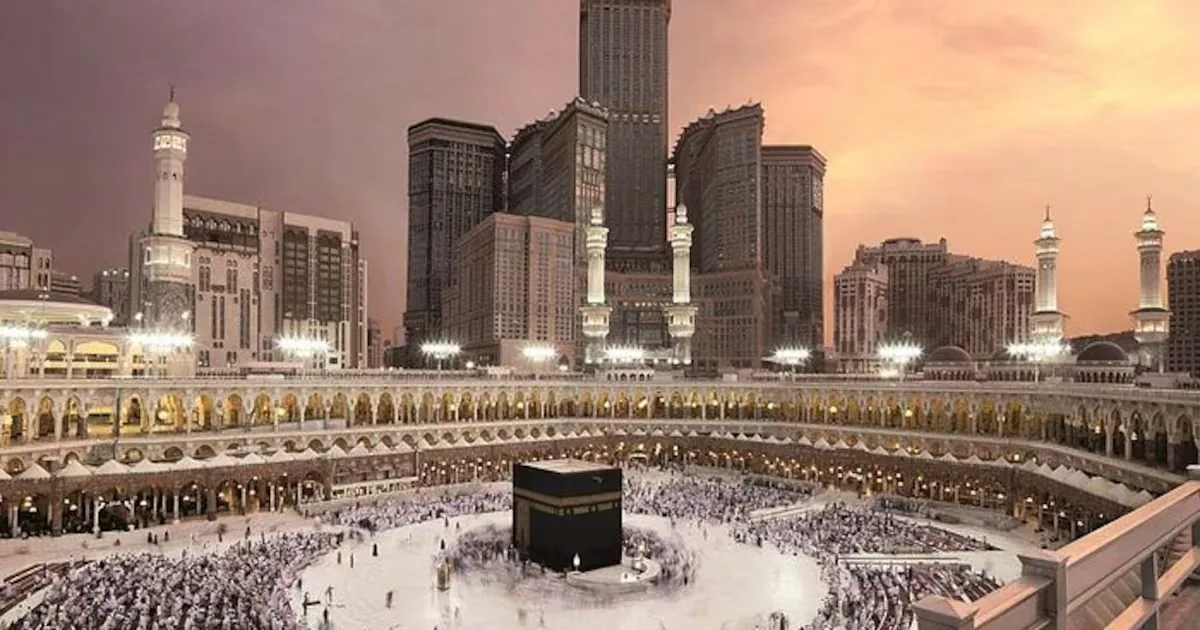
The Saudi-led military coalition claimed on Wednesday to have destroyed a drone launched towards the holy city of Mecca by the Houthi rebels from Yemen, a group supported by Iran that denied the attack.
Read more The Iranian Foreign Minister travels to China to address the Middle East conflict
After years of calm, Yemen was drawn into the regional conflict in July, triggered at the end of February by a US and Israeli offensive against Iran.
The Houthis, opposed to the internationally recognized government backed by Saudi Arabia, took control last week of the Yemeni coast bordering the Red Sea, strengthening their control over the strategic Bab el-Mandeb Strait.
Saudi air defense destroyed on Tuesday “a hostile drone launched by the Houthi terrorist militia before it entered the restricted airspace of the sacred capital” of Islam.
“The security of the two holy mosques and their visitors constitutes a red line,” warned the Saudi-led coalition supporting the Yemeni government.
The Organization of Islamic Cooperation (OIC) immediately condemned the “atrocious attacks” that “desecrate the sanctity of holy places and mosques, and hurt the feelings of Muslims worldwide.”
Meanwhile, Pakistan’s Prime Minister, Shehbaz Sharif, condemned on Wednesday “in the strongest possible terms the cowardly and abominable” attack against Mecca.
The recent events have again driven up oil prices, an escalation that weighs on the global economy.
Brent crude, the international benchmark, was trading on Wednesday at $108.5 per barrel in early Asian trading, slightly down but still about 80% above the level before the war began in February.
The Houthis, who have intensified attacks against Saudi Arabia since early September, denied attacking the holy city and denounced “a worn-out lie,” said one of their leaders, Hazm al Asad, on the social network X.
Read more The Chinese Defense Minister calls for vigilance against «militaristic and revisionist» trends
Saudi authorities had issued an air alert for Mecca on Tuesday morning, the first of its kind for this religious destination that receives millions of pilgrims every year.
The US embassy in Saudi Arabia recommended on Wednesday that its citizens reconsider any travel to the country and avoid approaching the border with Yemen altogether.
Saudi Crown Prince Mohammed bin Salman and Egyptian President Abdel Fatah al Sisi called on Tuesday from Cairo to “ensure the freedom and security of maritime navigation” in the Bab el-Mandeb Strait.
This passage, which connects Europe with Asia through the Red Sea and the Suez Canal, became crucial for Saudi Arabia, the world’s leading crude exporter, after Iran blocked the Strait of Hormuz on the other side of the Arabian Peninsula.
Its closure would have “catastrophic” consequences, admitted Qatar’s Ministry of Foreign Affairs on Tuesday.
Meanwhile, the Houthis claim there is no threat to navigation in that strait, except for Saudi vessels.
As pressure mounts on Saudi Arabia, threatened at both straits and targeted by attacks on its oil infrastructure, the Houthis claimed on Wednesday to have shot down a Saudi fighter jet and accused the country of carrying out 450 airstrikes against its neighbor this week.
Saudi Arabia has also suffered disruption of its East-West pipeline, which allows bypassing the Strait of Hormuz, following drone attacks from Iraq, according to authorities.
At least 100,000 people have been displaced in Yemen since fighting resumed in early September between the Houthis and pro-government forces, according to the United Nations High Commissioner for Refugees.
Read more Von der Leyen proposes that Canada become an associate member of the European Union