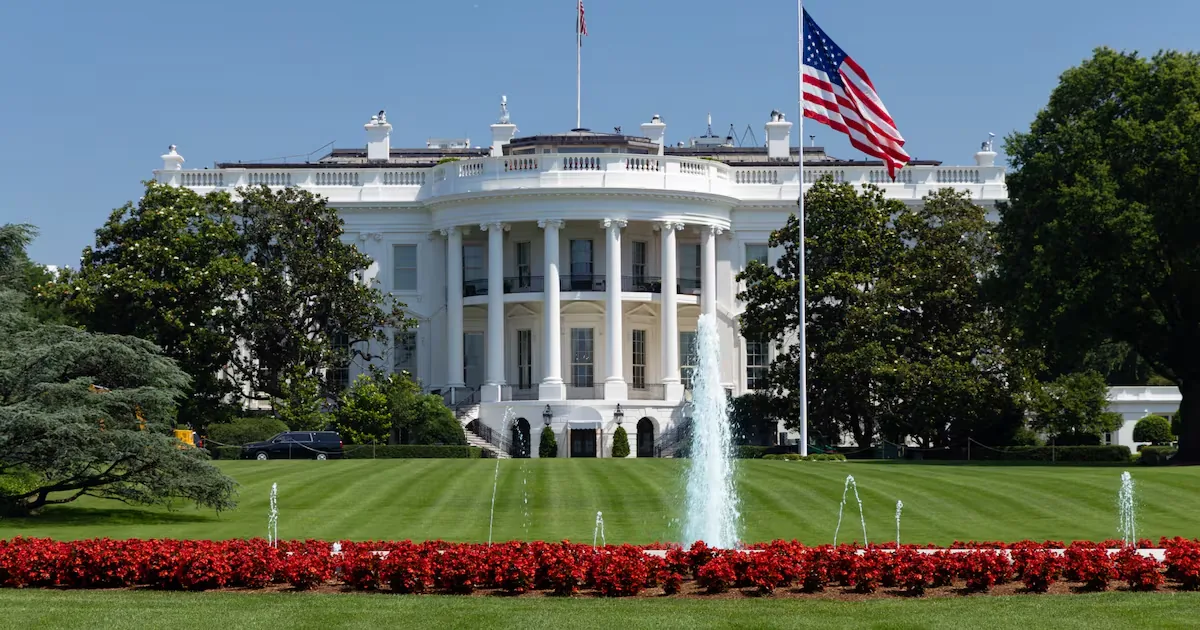





Despite having suggested on social media that he intended to “make a final decision” on the war in Iran this very Friday, U.S. President Donald Trump left a two-hour meeting about a possible agreement with Tehran during the day without making a decision.
The Republican leader had insisted in a Truth Social post before the meeting that an agreement to extend the ceasefire would imply that Iran would reopen the Strait of Hormuz, commit not to develop a nuclear bomb, and allow the United States to withdraw its enriched uranium.
According to The New York Times, which spoke with U.S. officials, both Trump and his advisers still believe they are close to reaching an agreement with Iran, awaiting resolution of certain issues, including the matter of frozen Iranian funds.
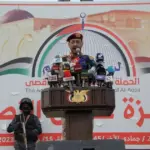
The spokesperson for Iran’s Ministry of Foreign Affairs, Esmail Baghaei, stated on Friday in a telephone interview with Iranian state media that the current negotiations had a limited scope and did not include “the nuclear issue.” In recent days, both sides have exchanged fire, and Trump has repeatedly threatened a return to large-scale war.
In his message, Trump implied that an agreement would allow the United States to lift the naval blockade, which had affected Iranian ships and ports, to reopen the crucial maritime route for the transport of oil and gas. “The ships trapped in the strait due to our amazing and unprecedented naval blockade, which will now be lifted, will be able to begin the process of ‘going home’!” he wrote.
U.S. officials stated on Thursday that a proposed agreement would extend the ceasefire to pave the way for new talks on Iran’s nuclear program. The officials, who were not authorized to speak publicly, requested anonymity to comment on the U.S. stance on the current negotiations.
“If an agreement is reached, it could offer Trump a way out of a war that has driven up oil prices and become deeply unpopular in his country. It could also allow Iran to regain access to frozen assets abroad and provide a path for Tehran to receive billions of dollars in oil revenues again,” wrote The New York Times.
For weeks, mediators between Iran and the United States have tried to reach a preliminary agreement that could end the war. However, these efforts have been repeatedly frustrated, as both sides have accused each other of delaying the process or misrepresenting the terms.
The draft under discussion, international press said, is an initial framework that would pave the way for more substantial—and very likely more difficult and prolonged—negotiations to determine the future of Iran’s nuclear program, U.S. sanctions against the country, and the formal end of the war.
The diplomats involved in the talks stated that the longer the negotiations last, the greater the frustration on both sides and the higher the risk of increased exchanges of fire, which could further jeopardize the overall diplomatic effort.
The New York Times, which spoke with an Iranian official, U.S. officials, and two diplomats involved in the latest talks, who spoke on condition of anonymity, noted that the agreement is likely to stipulate the terms of a non-aggression pact between Washington and Tehran.
The version of the draft described to the newspaper by the Iranian official indicates that the terms included a “declaration of the end of the war” on all fronts, including Lebanon, during the time the negotiations lasted. Two Iranian officials stated that the terms of the memorandum refer only to the negotiation period for a broader and permanent agreement.
The preliminary agreement contemplated a cessation of hostilities for an initial period of 60 days, allowing negotiations between both parties, with the possibility of extending that period.
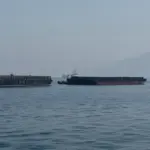
The Strait of Hormuz remains a major point of friction. The agreement was expected to allow a period of free navigation through the route, which is vital for commercial maritime transport and through which approximately one-fifth of the world’s oil and gas passed before the war.
Read more Former California Mayor Pleads Guilty to Acting Secretly as an Agent of the Chinese Government
Iranian attacks practically closed the strait shortly after the U.S.-Israeli offensive began in February, shaking the global economy. In response, the U.S. Navy imposed its own naval blockade on Iranian ports and energy facilities in the Persian Gulf.
According to the U.S. interpretation of the memorandum, the strait would reopen immediately, an official said, but the U.S. blockade would remain, although it would be gradually reduced depending on how much pre-war maritime traffic Iran restored. The idea is to incentivize Tehran to quickly clear mines from the strategic strait.
The diplomat informed about the latest agreement told the newspaper that Iran had agreed to allow maritime traffic to return to pre-war levels for 30 days while both sides negotiated a final agreement. Despite this hope, the process of mine clearance and opening of the strait could take weeks. Tehran is still debating with Washington what will happen afterward, he added.
The Iranian official stated that the agreement contemplates lifting the U.S. naval blockade within 30 days and opening the Strait of Hormuz during the negotiations. The United States has not set any deadline, according to a U.S. official.
Iranian negotiators maintain their position that Iran and Oman, whose territory borders the strait, have the right to determine whether to impose any kind of fee for ship passage after that period, according to mediators.
On Wednesday, President Trump reiterated his claim that the international maritime route should remain open to all, without tolls or fees.
Some U.S. negotiators have suggested that the long-term status of the strait be discussed in a second round of talks, the diplomat said.
The agreement also refers to an investment fund for Iran. The Iranian official and a diplomat estimated it at $300 billion, but other officials involved in the mediation did not confirm the amount.
The Iranian official described it as a “reconstruction program” that would be promised to Iran if a final agreement were signed. Previously, in negotiations, Tehran had demanded reparations for damages caused by bombings, which some Iranian officials estimate between $300,000 and $1 trillion.
Two diplomats informed about the latest draft described it as an international “investment fund,” which the United States would help manage if a definitive agreement were reached. The diplomats indicated that plans for this fund would be discussed in more detail during the negotiation period.
This proposal seems to be a variant of an earlier idea raised by Trump’s Middle East envoy, Steve Witkoff, and Jared Kushner, the president’s son-in-law. Both are real estate investors, and some mediators indicated they had suggested promoting real estate projects in Tehran and an investment fund if an agreement were reached.
Iranian officials said they had proposed to U.S. negotiators that U.S. companies, including major oil and energy corporations, could enter Iran to make investments and joint venture agreements.