




A Venezuelan businessman who built his fortune selling electric turbines and extracting oil became Donald Trump’s administration’s trusted man to promote “America First” deals with U.S. companies in Venezuela, according to anonymous sources reported to Bloomberg.
Read more Let’s talk about love: even in death, friendship survives
Since the capture of Nicolás Maduro earlier this year, Washington has been seeking to expand its influence over the South American country, which holds some of the largest crude oil reserves in the world.
Alejandro Betancourt, who controls the country’s main independent oil producer, North American Blue Energy Partners (NABEP), is reportedly helping the U.S. government identify energy assets, assess operational bottlenecks, and establish contacts in the oil industry.
Thus, the businessman’s role aims to deploy a strategy to attract small independent oil companies operating in Venezuelan territory, since the major companies in the sector have remained reluctant to invest in Venezuela. In recent months, preliminary agreements were closed with firms such as Lionheart Capital and Pacific Coast Energy Co.
The choice of Betancourt illustrates Washington’s effort to convince U.S. companies to extract Venezuelan oil and invest $100 billion in the country, which Trump has described as the 51st state. More than seven months have passed since the United States captured Nicolás Maduro in Caracas and declared Venezuela open for business, and major oil deals have yet to materialize, stalled by negotiations with the state-owned Petróleos de Venezuela S.A. (PDVSA).
The absence of competitive bidding keeps the process opaque, which would have given Betancourt great influence in Venezuelan oil circles, despite years of investigations in Europe, the United States, and Venezuela for allegations of corruption, money laundering, and tax fraud. The businessman has denied any wrongdoing and has never been formally charged with a crime.
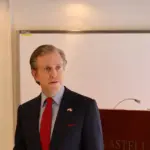
Leopoldo Alejandro Betancourt López was born in Caracas in 1980. The economist, 46 years old, became one of the best-known faces of the “bolichicos”, as young businessmen who made fortunes through public contracts during the governments of Hugo Chávez and Nicolás Maduro are known in Venezuela.
Before turning 30, Betancourt founded Derwick Associates, alongside his cousin Pedro Trebbau and other partners. The company, with no prior experience in the energy sector, obtained at least 11 no-bid contracts worth about $5 billion to build thermoelectric plants during the electrical crisis decreed by Chávez. Transparencia Venezuela estimated the overpricing at $2.9 billion, and several of the plants never operated as promised, according to information from the newspaper El País.
Betancourt then shifted his interest to the oil sector, where he transformed NABEP from a small operator into the second largest private producer in Venezuela, only behind Chevron Corp. The company extracts about 200,000 barrels of crude daily from fields near Lake Maracaibo and the Orinoco Belt, while other foreign oil companies have reduced their presence in the country over the last decade.
Betancourt’s rise occurred amid judicial proceedings in Spain and Switzerland, noted the Spanish newspaper. In Spain, Judge Santiago Pedraz of the National Court is reportedly investigating the businessman and five other Venezuelan citizens for alleged money laundering offenses and against the Treasury.
The case originated from a request by the Zurich Prosecutor’s Office in September 2024, which was investigating the so-called “Operation Bolívar” for alleged laundering of PDVSA funds. The individuals involved allegedly paid about $42 million in bribes to three officials of the state oil company to defraud $4.85 billion in currency exchange operations channeled through oil.
Pedraz provisionally shelved the case in March this year, considering that Venezuelan justice had already examined the loan between PDVSA and Administradora Atlantic and concluded that the operation was legal. The Spanish Anti-Corruption Prosecutor’s Office appealed that decision, and the Criminal Chamber of the National Court ordered the procedure to be reopened months later.
Read more Reuters/Ipsos Poll: Trump Approval Falls to 33%, the Lowest Level of His Presidency
In Switzerland, the businessman faced an extradition order from the United Kingdom and the retention of his Italian and Venezuelan passports until the canton of Zurich lifted the restrictions in May. A diplomatic source attributed the decision to U.S. influence.
In the United States, Bloomberg reported in 2019 that lawyer and former New York mayor Rudy Giuliani helped represent Betancourt in a meeting with the Department of Justice. However, the meeting minutes do not mention the Venezuelan’s presence.
Betancourt began traveling frequently in recent months from his residence in London to Venezuela, according to sources familiar with his movements cited by the U.S. agency. He regularly meets with interim president Delcy Rodríguez, backed by the United States, and her foreign policy advisor, Félix Plasencia.
A private plane from Palm Beach took him to Caracas on June 27, along with his wife Andreina and a second man, according to flight records reviewed by El País. Until that moment, and for almost eight months, Betancourt remained in the United Kingdom, where he moved between his two English mansions.
On July 30, Betancourt left Venezuela for a private airport in Miami accompanied by Sean Pi and Henry Heeney, co-founders of Heeney Capital, an investment firm focused on mining. In May, that company signed advance purchase agreements for production for mining and gold projects in Venezuela, supposedly backed by the White House.
Betancourt’s link to Washington was supported for months by Mauricio Claver-Carone, Trump’s unofficial advisor on Venezuela, close to Secretary of State Marco Rubio. Claver-Carone acknowledged to Reuters that he and other U.S. officials used Betancourt as an intermediary because he understood the oil business in both countries and could build bridges between both governments.
Although Claver-Carone, according to Reuters, will not continue his advisory duties for the Venezuela case and Latin American affairs, many of the figures he gathered around the oil country, including Betancourt, remain active. A diplomatic source explained that the investigations the businessman faces are not relevant to Washington. “He is a piece of the United States and they use him. Betancourt has known how to sell himself and the Americans are buyers,” he said, after expressing surprise at the businessman’s return to the presidential environment in Caracas.
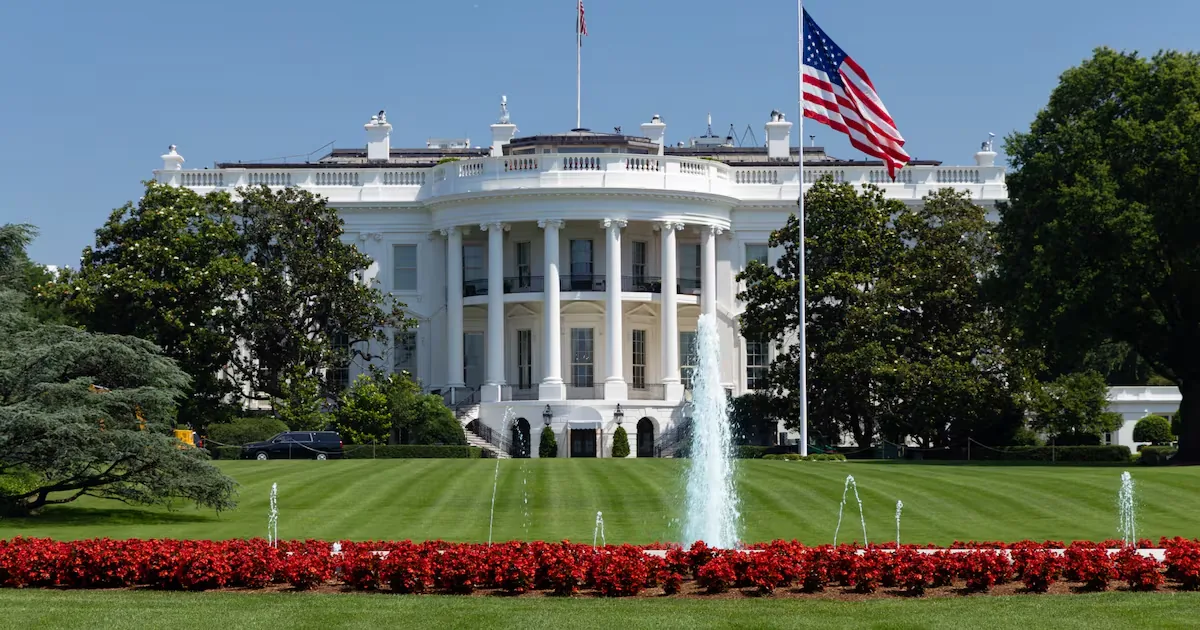
Asked by Fortune magazine, the White House described bilateral relations with Miraflores as “extraordinary,” without directly responding about Betancourt’s role. “We are working very well with interim president Delcy Rodríguez and her representatives. Oil is starting to flow, and large amounts of money, unseen for many years, are helping the Venezuelan people enormously,” it said in response to a request for comment.
Last month, the Spanish newspaper ABC reported that the U.S. Congress opened an investigation to determine the destination of more than $13 billion generated by the marketing of Venezuelan oil under Donald Trump’s administration.
After crossing maritime records from Kpler, a global data analysis and intelligence company, with market projections from Argus Media, the Financial Times revealed that Venezuelan crude exports under Washington’s tutelage total nearly $13 billion. However, the report questions the lack of clarity about the use and destination of the money.
U.S. lawmakers demand that the bank accounts used, participating marketers, commissions established for oil sales, and authorized payments be identified. They also seek to determine if there are mechanisms to prevent financial crimes, acts of corruption, embezzlement, and possible conflicts of interest.
Read more Former Ecuadorian Minister Ivonne Baki joins the race for the UN Secretary-General position