







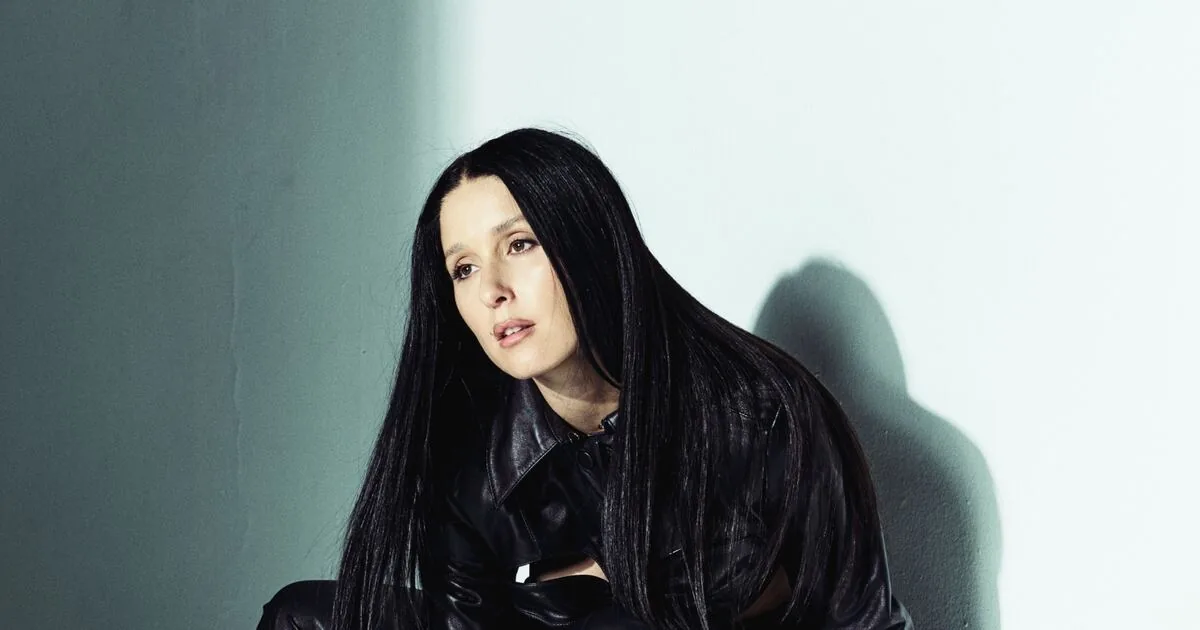
In the hustle and bustle of her daily life, between bottles, diapers, and baby food, the Chilean Francisca Valenzuela had begun to outline a new album. Since releasing Adentro (2023), the artist focused on her most intimate world, crossed by the experience of motherhood. But initially, she was thinking of an ambitious idea. “There was a fantasy in my mind that was like a show that was ultra sporty, glamorous, and pop. I don’t know where that idea came from, but I think there was a fantasy of getting away from what I was living.”
Read more Book Review: from Robert Darnton to Daniel Alarcón
It took just one conversation to turn that initial idea into another. One afternoon she sat on Zoom with the Chilean musician Francisco Victoria, with whom she worked on her previous album. They talked about the moment she was living, the readings of Lucy Jones, Audre Lorde, Jazmina Barrera, and the podcast listens related to motherhood. “I felt that he catalyzed a legitimization of that search about these themes that have to do not only with postpartum, but also with the female body, female revolution – she explains -. And I said to myself, okay, I’m going to take this invitation to see what comes out.”
It was the moment when MALDITA, the seventh album by the Chilean singer-songwriter, crossed by motherhood, began to take shape. A bit like Cerati with Amor Amarillo, the album was worked on in the intimacy of the living room of the artist’s house in Santiago, where she set up piano, mellotron, electric bass, and two Yamaha Reface keyboards. She also made time to take some classes with Martín Benavides, who taught her the secrets of the Theremin, the peculiar electric musical instrument played without physical contact. The first song Valenzuela worked on together with Victoria and the Mexican Roberta Nikita was MALACARA. A track that led her to a different energy. “I hadn’t composed anything in a long time – she recalls – And we were talking about how at that moment I was angry, particularly impatient. Then I said, okay, I’m connected with this emotion that also energizes. And we made it in about 2 hours.”
All the reflection allowed the artist to define the album’s title. It addresses the contrast between the usual idealized image of motherhood and the wasteland of reality. “In this postpartum stage, feeling so deliriously confused, sad, anguished, scared, I said, how is that contrast possible? Supposedly it’s a bright, blessed moment and I feel taken over by this state. That’s why I say cursed, because it’s like a curse, it’s like being possessed by this discomfort,” she explains. “And also, because when developing the songs and connecting with this archetype of the cursed woman, I began to enter the idea of the woman who has to overcome taboos, the woman who is punished and taken to the stake, the woman who is considered very irate or subversive, that thing of being a cursed woman.”
That reflection also poured into a song titled precisely MALDITA. It is the one that opens the album and has a repetitive structure. “I curse the day I was born/I curse the day I gave birth/I curse my youth/Eternal ineptitude,” it says. An idea that can connect with Maldigo del alto cielo, by Violeta Parra. “I had it as a tribute in that format. I feel that in Violeta Parra there is something brutally honest. And there is something poetic in the form, the repetition, a verbiage and I identify with that verbiage, with that impulse to be listing the things that hurt you. And also Violeta would also be like a cursed woman.”
Read more 300 people are evacuated after a 4.7 magnitude earthquake in Italy
MALDITA is an album different from what has been heard from Francisca Valenzuela. Not only because of its visceral energy, but also because of the compressed percussion and saturated sounds that evoke trip hop. The references extended from Laurie Anderson and Charly García to Ravel and Wendy Carlos. It also includes two incursions into spoken word, DEBÍ TOMAR MÁS AGUA and EXTRACCIÓN. “I had the texts written and basically couldn’t find a way to integrate them melodically into a song,” she explains. The second comes directly from the artist’s notes, a kind of breastfeeding diary where she records schedules, portions, formula, etc. Reluctant at first, she began to explore with Francisco Victoria. “And it was something like Peaches meets Jorge González in Cuanto aguanta un niño. We looked for some things from Peaches, like the more electroclash base and put it together. EXTRACCIÓN, it’s me in the middle of the piece reading and shouting the breastfeeding log.”
In some way, this stage has allowed Valenzuela to chew over her new condition as an artist and mother. “I admire my colleagues who have integrated motherhood into their artistic life, whether it’s Cami Moreno, Ana Tijoux, Nicole, Mon Laferte, Natalia Lafourcade, whom we have also talked about lately. As in many other industries and areas, there is an absolute precarization and invisibilization of motherhood. There are practical things that are very complex, that is, from the facilities to be able to tour with children, schedules, institutional systemic support. And then, at a cultural and more conceptual level, it is the conversation about motherhood, how one integrates or resignifies it as part of your identity. I think the idea of being not only a mother, but not being super young, in entertainment is a disadvantage. Being young is always a plus. But there is something with women that we are constantly challenging, which is that if you are not the youngest, if you are not the most desirable, it’s like it’s a less relevant or less important or less marketable project. And I think we are resignifying those attributes, motherhood included.”
Besides releasing MALDITA, this week the artist flew to New York to receive the Wonder Women of Latin Music award, as part of the Latin Alternative Music Conference (LAMC). She is also preparing for the theater tour that starts in Valdivia on August 14, as well as dates in Frutillar, Temuco, Concepción, and Santiago. She will also have 5 dates in Spain, 5 in the U.S., and one in Mexico. And she will be one of the acts at Ruidosa, the female music event she started 10 years ago and which this year returns to Parque O’Higgins on two dates, October 10 and 11. “Ruidosa is not only a social and cultural concern I have, but it has also been a way to create community and boost other types of cultural spaces, leadership, paradigms, and not just have to do what the market offers. All that has been great nourishment for me in these 10 years.”
Before taking the plane, last Friday the 24th Francisca was the guest in the confessional segment on Rosalía’s show. As Culto detailed, the arrangement was made through the record label Sony Music. The artist found out the day before and immediately, without looking much further, defined the story she told at the moment. She did not know the Barcelonan in person and their first meeting was on stage. “It was very fun. And I must say that not only was the stage experience and the show incredible and very delightful, I loved that the backstage and all the production was calm, everything working very well and very calmly. That was very refreshing because I have been in many high-impact backstages and sometimes you feel the tension, the hysteria, the rush. And here everything was very calm, everything running.”
Read more Lula will be proclaimed the PT presidential candidate to seek a fourth term in Brazil