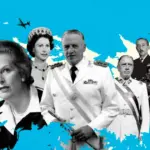



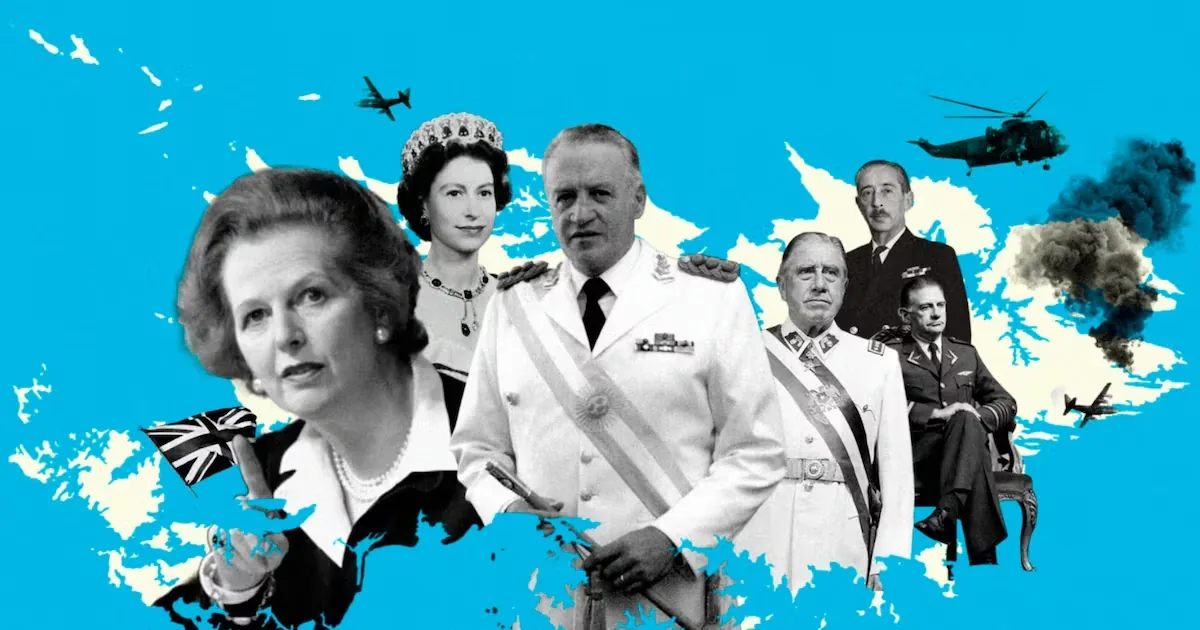
A folder with a series of documents, bearing the label “Secret” on the outside, was what Admiral José Toribio Merino – a member of the Military Junta governing Chile – sent to the United Kingdom embassy in Santiago. Through a naval officer, the commander-in-chief of the Navy took the first step to support the British in the conflict that, by mid-March 1982, seemed imminent.
Read more Brazil: At least two women dead after building collapse on a house in São Paulo
A few weeks later, on April 2, the Argentine Military Junta launched the so-called Operation Rosario, with which it took possession of the Falkland Islands; the next day, it did the same with the South Georgia Islands. British Prime Minister Margaret Thatcher reacted immediately, and on April 3 launched Operation Corporate to regain control of the islands. The Falklands War began, and Chile was not indifferent to the conflict.
What was Chile’s role in the Falklands War? The story was thoroughly investigated in the book The Perfect Pact (Ediciones B), by journalists Daniel Avendaño and Mauricio Palma. “We have always been interested in investigating topics covered by a mythical veil that often obscures a full understanding of the facts. Although Chilean aid to the United Kingdom was partially known, there were loose ends and much documentation that had not been publicly disclosed until this book,” both say in unison to Culto.
For this, the journalists carried out a documentation process that included testimonies from former military personnel and official responses obtained via Transparency in Chile and Argentina. Surprisingly, on the other side of the Andes, the duo’s requests received better responses and willingness. “In Argentina, there was no resistance. On the contrary, there was excellent willingness from veterans and analysts to talk about what happened in the war. However, in Chile there was some resistance and the transparency responses were sometimes partial or simply nonexistent.”
As we said, the first step in the aid Chile gave to the United Kingdom was taken by Admiral Merino. “He was the one who ordered, at the beginning of 1982, that information be given to the British about a possible invasion. And, once the war had started, it was Merino who ordered that the tanker Tidepool, which had been ceded to our Navy, be put at the service of the British.”
Indeed, the entire Chilean crew of the Tidepool was disembarked and the ship was ceded for British use, performing duties in the Task Force on Ascension Island, a UK possession in the South Atlantic. “The Argentine high command, upon learning of this ‘first betrayal,’ tried to hunt the ship with Neptune planes, but they never found it. The Argentine pilots thought the tanker would join the British force from the Chilean coast, passing through the Patagonian channels,” but this never happened and they never detected the ship. “It would be vital in refueling oil for the Crown’s ships throughout the war,” Avendaño and Palma affirm.
According to the volume, Merino was fully aware of what would happen if Argentina definitively took over the Falkland Islands, in terms of strategy and geopolitics. “Chilean Navy analysts knew that the occupation of this archipelago located in the middle of the South Atlantic would lead to the establishment of a future Argentine naval base. They also knew about the re-equipment process carried out by their Argentine counterparts, who were already receiving Super Étendard attack planes purchased from France and were also awaiting new destroyers and submarines, which were under construction in German shipyards. Merino was clear that having an Argentine naval base in the southern archipelago would give them strategic depth for a future attack on Chile. It was no secret that Galtieri and his leaders would go for the Picton, Nueva, and Lennox islands.”
Therefore, Merino mobilized all his resources to provide information to the United Kingdom. And Pinochet? “He was always more cautious and political, consistent with his dual role as commander-in-chief and head of state,” Avendaño and Palma assure, so he initially delegated the cooperation with the British to Merino. In fact, the admiral had to make an effort to convince Pinochet, who, just as he hesitated when joining the 1973 coup, also had doubts about Chile’s position in this war.
“Merino knew well Pinochet’s hesitant personality – Avendaño and Palma indicate -. He was the one who convinced him to ‘put all the force’ to carry out the 1973 coup d’état. For that reason, he knew that somehow he had to persuade him again to prevent an Argentine attack on Chile. For this, he asked the head of the Naval Intelligence Service, Captain Raúl Monsalve, to prepare a report describing the real Argentine threat. General Pinochet ended up convinced. The British had to be helped. But everything would be secret. That way, the Chilean leader could wash his hands if discovered.”
Thus, Merino mobilized the Squadron to the Austral Zone, and even went further and informed both the Squadron chief and the Third Naval Zone chief that a possible intervention would begin on April 19. The message was intercepted by Argentine naval intelligence, and Merino added a crucial point: “The Admiral’s intention is to support the British only as necessary to ensure their success and when the first military actions have taken place.”
However, in mid-April, the United Kingdom sent to Chile a Royal Air Force (RAF) officer named Sidney Edwards, who would directly coordinate the support the British would request from Chile. He was the one who contacted General Fernando Matthei, member of the Military Junta and commander-in-chief of the Chilean Air Force. “A more detailed and organic proposal was offered to General Matthei,” Avendaño and Palma comment.
Read more Death toll rises to 76 in ferry fire west of the Philippines
Specifically, the United Kingdom urgently needed information about Chile and Argentina, so they turned to Matthei who, in his traditional pragmatism, knew he had an opportunity he could not miss. “Due to human rights violations during the military regime, the major military powers had closed the doors to Chile for purchasing war material. And the Chilean Air Force was perhaps the most affected of all the branches of the Armed Forces. Therefore, General Matthei saw in this ‘military cooperation’ his great opportunity. Galtieri had to be stopped, but also, the ideal scenario was created to regain lost power,” say Avendaño and Palma.
Matthei responded to Edwards that he would consult Pinochet, just as Merino had done, and the head of state gave the same answer he had given the admiral. “Pinochet stayed on the sidelines and delegated Matthei to take charge. That is, he chose his role as president of the republic rather than a military chief role,” Avendaño and Palma point out.
What did the support Matthei deployed to the United Kingdom consist of? Avendaño and Palma indicate: “The support had basically three fronts: British reconnaissance aircraft, that is, espionage planes, were allowed to use Chilean runways on San Félix Island, Carriel Sur, Punta Arenas, and Easter Island, as well as allowed to use our airspace. Secondly, a portable British radar was installed in Balmaceda, almost on the border with Argentina, thus expanding the radius to detect takeoffs of Argentine planes. Finally, all licenses were given to Sidney Edwards, who settled in Santiago de Chile to facilitate everything the British aviators and radar operators required, whose mission was to gather key information and then send it directly to the British High Command.”
In return, Matthei took advantage of obtaining royalties from the United Kingdom: “Chile kept three Canberra reconnaissance planes, with the Balmaceda radar, obtained a new batch of Hawker Hunter combat planes at a ridiculous price, and since 1982, training for officers and non-commissioned officers of the Chilean Air Force increased in various UK facilities.”
Although Pinochet did not want diplomacy to know about these actions, the truth is that according to Avendaño and Palma, the Foreign Ministry was aware of these movements. “The Chilean ambassador in London, Miguel Schweitzer, met previously with Sidney Edwards, then sent weekly reports about what was happening in London and dedicated many lines to the effects the war was generating. For his part, Foreign Minister René Rojas alerted his Argentine counterpart about 22 violations of our air, maritime, and land space perpetrated by Argentine military during the conflict.”
Another point revealed by this investigation is the little-known participation of Chilean aviator Jorge Freyggang, brother of Renato, former member of Inti-Illimani, as a spy in the war. He was an Air Force officer who participated in the detention and torture of leftist leaders along with a group of officers and non-commissioned officers of the air force self-called “The Wild Gang,” during the early years of the military regime. Freyggang died in a plane crash in June 1982, and his aircraft was never found. His role would have been to support the British, say Avendaño and Palma.
“For years, all kinds of speculations circulated. Some claimed that Jorge Freyggang had acted as a Chilean spy in the service of the British and even made regular flights to Puerto Stanley. There were also those who suggested that his accident was the result of an Argentine intelligence operation. Others went even further and claimed he had faked his own death and that of his family, simulating the plane crash to disappear. Over time, there were those who claimed to have seen him in England, Australia, or any other corner of the world that popular imagination could conceive. People who knew him closely categorically reject the existence of a permanent link with British intelligence, whose agents occupied the entire fourth floor of the central Cabo de Hornos hotel in Punta Arenas at that time. However, they acknowledge that Freyggang was hired to secretly transport a group of British commandos who had been isolated in Tierra del Fuego after the failure of a covert mission.”
Avendaño and Palma comment on how they came across this story: “We knew of a former Air Force pilot who, during the war, had transported British military from Punta Arenas to Santiago, until we found his full name and realized he was the brother of a member of Inti Illimani. But the biggest surprise was receiving his military record confirming his participation in raids and arrests after the coup d’état. Later, we reviewed court files that identified this ex-pilot as the one who led torture sessions. This information was totally unknown to the members of the group.”
The book also followed a lead that former president Ricardo Lagos mentioned in his memoirs: that the sending of information from Chile to the United Kingdom continued even during the Concertación governments, until Lagos himself ordered it stopped. “The second volume of the former president’s memoirs was published in August 2020, that is, when we were still in a pandemic. In fact, the launch was online. There, we believe, may be a reason why his statements did not become widely known. However, what Lagos says is revealing and confirms that the sending of information to the British was not limited to the Falklands War but continued through three democratic governments.”
Finally, both authors assess the real extent of Chilean aid to the United Kingdom’s victory in the war. “Chilean aid was significant but did not determine the British victory. There, US assistance was much more decisive, especially due to the military equipment they provided to the British, which in a modern war is decisive. More than debunking a myth, our book confirms – with unprecedented documentary force – that Chile assisted the United Kingdom during the war. To ignore it, after 40 years, would be absurd for strengthening dialogue between both nations. We must not forget that our country is and continues to be the main strategic military partner of the United Kingdom in the region. It is a state policy that transcends governments in office and is demonstrated in the book.”


