







The deepening of cooperation between Iran and Russia through drone production, arms transfer, and the exchange of military technology has “merged” the wars both in the Middle East and in Ukraine.
Read more Philippines Foreign Minister: “The next UN Secretary-General must be a woman and from Latin America”
This is supported by a study from the think tank, Atlantic Council, which states that at the start of the large-scale invasion in February 2022, Iran sent hundreds of drones to Russia, mainly Shahed models, used as low-cost, one-way attack drones to saturate Ukraine’s air defense systems.
“Despite Russian President Vladimir Putin’s apparent reluctance to publicly show his support for Iran, the underlying reality is one of increasingly close strategic ties between Moscow and Tehran,” said the center’s analyst, Katherine Spencer.
In June 2023, Iran collaborated with Russia in building a drone manufacturing plant in Yelabuga to produce Shaheds domestically, which were later renamed Geran-2 following a $1.7 billion agreement. Since February 2022, Russia has used approximately 57,000 Shahed drones in its invasion, making them a key component of the Kremlin’s military strategy, Spencer indicated in the Atlantic Council article.
As the war progressed, Russia refined and modified the Shahed design, and now “returns the favor to Iran” by providing more advanced drones. Following U.S. and Israeli attacks in February this year against the Islamic Republic, senior Iranian and Russian officials held secret talks in March for the transfer of these unmanned aerial vehicles.
As detailed in the report, the new modifications are very diverse and include jet engines, reconnaissance cameras, radio links, artificial intelligence platforms, internet devices compatible with Starlink, and advanced electronic countermeasure systems. While little is publicly known about the shipments, Western officials believe Iran has used enhanced Russian drone systems in the Middle East and suspect some modified drones were deployed in the recent Iranian attack on a CIA station at the U.S. embassy in Riyadh last March.
Spencer noted that military cooperation between Russia and Iran goes far beyond drones. It has also included, for example, the formation of commissions and working groups to share defense practices, as well as shipments of ammunition and artillery shells from Iran to Russia. According to reports, in 2023 Tehran dispatched more than 300,000 artillery shells and one million rounds of ammunition over a six-month period.
In this regard, The Telegraph reported that Iran has supplied Moscow with $2.7 billion in ballistic and air defense missiles, including hundreds of short-range ballistic Fath-360 missiles and 200 surface-to-air missiles, while Russia has spent more than $4 billion on Iranian military equipment since late 2021.
Iran provided the key components and technology for Putin’s Shahed drone fleet and helped Moscow establish production facilities in the Alabuga Special Economic Zone to manufacture up to 6,000 units per year.
In March this year, The Washington Post reported that Russian officials provided Iran with intelligence information to attack U.S. forces in the Middle East, transmitting the location of warships, aircraft, and other American military assets to their Iranian counterparts. Tehran has few military-use satellites, making Russia’s advanced capabilities increasingly beneficial for its military operations in the Persian Gulf.
U.S. officials told The New York Times that Russia helped Iran resupply after it lost 60% of its drone arsenal during the war.
At the end of July, Ukrainian President Volodymyr Zelensky noted on his X account that since the beginning of that month, they had detected active Russian satellite surveillance of the Gulf states and U.S. military facilities located there. “These images subsequently appear in Iran. At the same time, there is a clear correlation between Russian satellite images of these sites and Iranian attacks, both before the attacks, in preparation for them, and after, to assess the damage caused.”
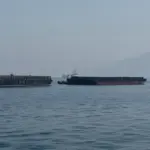
Amid this context, The Telegraph noted on Wednesday that Russia has quietly established a new strategic supply route to Iran through the Caspian Sea. Known by some as the Caspian Express, this logistical corridor has become the backbone of Putin’s effort to arm Tehran, while allowing both countries to circumvent U.S. maritime pressure in the Persian Gulf.
Read more At least two dead in Indonesia after the 7.7 magnitude earthquake on Flores Island
The newspaper noted that Moscow applied this same model during the Syrian civil war, when it supported Bashar al-Assad’s regime through a maritime supply route sometimes called the Syrian Express.
Operating for nearly a decade between occupied Crimea and the Syrian port of Tartus, the supply corridor allowed Moscow to reinforce its expeditionary forces despite Western sanctions and diplomatic pressure. Turkey closed the Bosporus to warships after the invasion of Ukraine in 2022, narrowing the route, before this vital communication route was definitively cut off with the end of the Syrian regime in 2024.
Currently, Moscow has replicated that approach in the Caspian, transforming this inland sea into its logistical backbone for its military alliance with Tehran. The strategic consequences are becoming increasingly evident as the war in Iran spreads to the region.
Earlier this year, Israel carried out airstrikes against the Iranian naval base at Bandar Anzali, on the Caspian Sea, destroying port facilities and several vessels. This was the first use of the Israeli Air Force in the Caspian region. At the end of July, Ukraine conducted a drone attack against an Iranian merchant ship, leading Tehran to consider retaliatory operations against the Ukrainian port of Odesa.
“Iran’s threats are unjustified and unfounded,” then posted on X Ukraine’s Foreign Minister, Andrii Sybiha. “The Tehran regime is a direct accomplice to Russia’s aggression against Ukraine, fueling Moscow’s criminal war with weapons that have killed Ukrainians since 2022,” he wrote.
On the other hand, up to four Iranian ports on the Caspian work tirelessly to import wheat, feed, and oil, as Tehran diverts essential trade through the inland sea due to the U.S. blockade of the Strait of Hormuz.
In the northern Caspian Sea, the Russian port of Olya has become Moscow’s main transit hub for importing components and ammunition for Iranian drones. “Consequently, both Russia and Iran depend on the Caspian Sea, which has no outlet to the sea, as an indispensable supply line for their respective war efforts,” The Telegraph wrote.
“Because the Caspian Sea has no outlet to the sea, the United States, as a maritime power, can do nothing to prevent Russia from sending supplies to Iran that would otherwise pass through the Strait of Hormuz, currently blocked by the U.S. Navy,” it added.
This geographic reality aligns directly with Moscow’s broader geopolitical ambitions, as the Caspian becomes the centerpiece of a north-south transport corridor connecting Russia, Azerbaijan, Iran, and ultimately India, bypassing strategic maritime points controlled by the West. Thus, Moscow and Tehran put into practice Sir Halford Mackinder’s Heartland theory, creating a landlocked Eurasian logistical network that neutralizes Western maritime power, the British newspaper indicated.
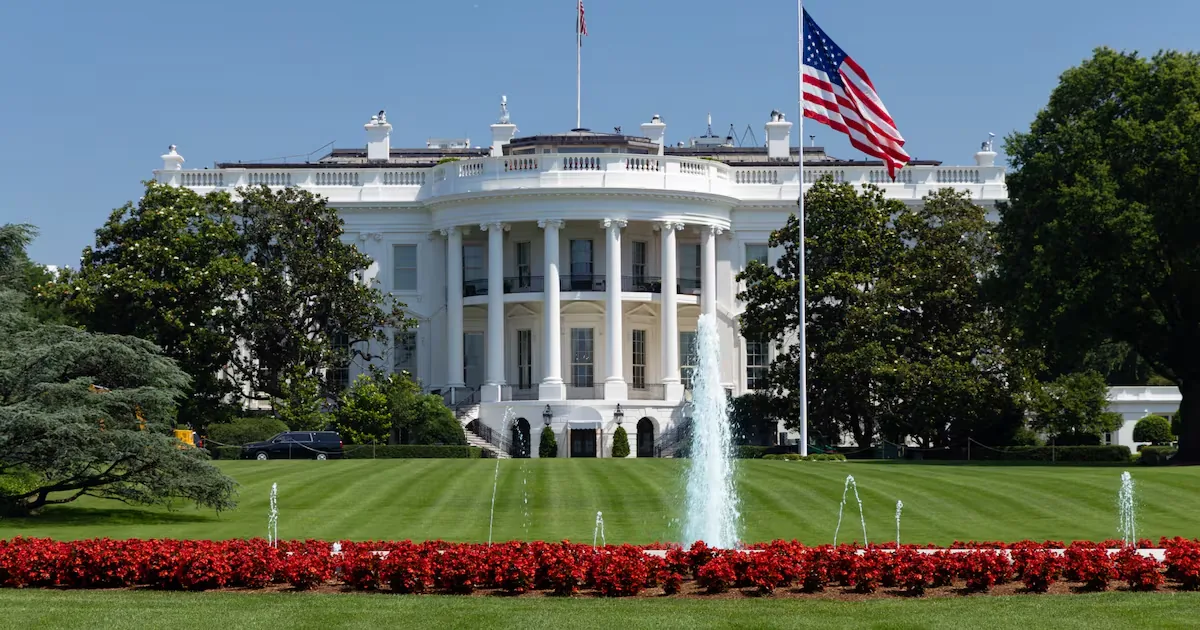
As the regional dimension of the conflict between Iran and the United States expands, the Trump administration, The Telegraph pointed out, must decide whether to challenge the Caspian Express project before it becomes the permanent logistical backbone of the Russia-Iran alliance.
In this regard, the White House has already laid the diplomatic groundwork by supporting a peace agreement between Armenia and Azerbaijan and launching the Trump Route for International Peace and Prosperity. “It should now capitalize on that success by developing a regional strategy that promotes the emergence of Azerbaijan as an emerging middle power in the South Caucasus, while allowing Ukraine to maintain military pressure on the Caspian Express without risk of direct U.S. intervention,” the newspaper said.
“History shows that wars are often decided not only on the battlefield but also on the supply routes that sustain them. The ‘Syrian Express’ prolonged a war for years. The ‘Caspian Express’ now sustains the strategic alliance between Russia and Iran and Tehran’s effort to resist the United States in a war that has already lasted six months,” it concluded.b
Read more Government of Bolivia eliminates the Ministries of Planning and Tourism by decree