







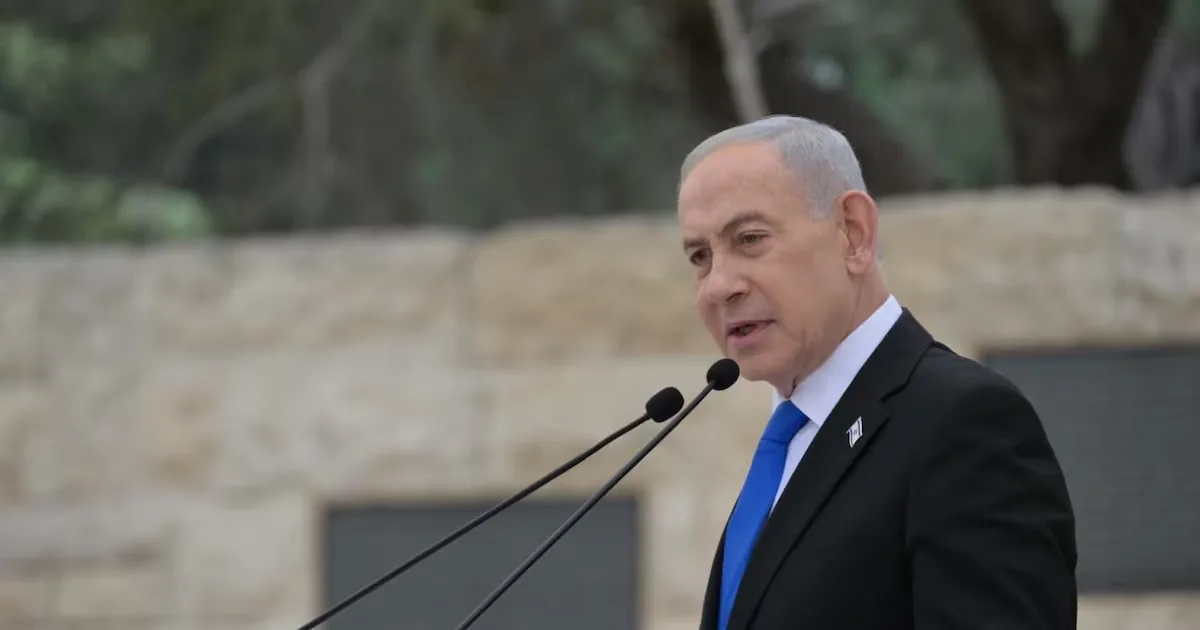
Israeli Prime Minister Benjamin Netanyahu emphasized this Monday that the upcoming October 27 elections “will be decided by every vote” and has urged the public to “not waste” their ballot by betting on “small parties” that might not reach the minimum percentage to gain representation in the next Parliament and pave the way for a victory of “the left.”
“These elections will be decided by every vote. Do not waste your vote on small parties that might not surpass the necessary threshold, leading the left to power,” he said in a message on social media. “Do not waste your vote. Protect the right. Vote for Likud,” he stressed.
He explained that leftist parties won the 1992 elections due to splits caused by disputes with then-Prime Minister Yitzhak Shamir, after which the government elected reached the so-called Oslo Accords with the Palestinian Authority, now emptied of content.
“We paid with thousands of citizens killed and thousands of victims, and we still face today this problem, derived from that problem, in which splits of right-wing parties separated and overthrew the right-wing government,” Netanyahu maintained, questioning whether “this mistake will be repeated again,” according to the newspaper ‘The Times of Israel’.
The Israeli Prime Minister’s message comes on the eve of former General Ofer Winter launching a new party that could attract votes on the far right, while Yoseph Haddad, a right-wing activist, has launched his new party, Brave Israel, which threatens to take votes from Likud and its coalition partners.
These new formations will join others created in recent weeks, including Israel First – led by Sharren Haskel -, Unity – headed by Yuli Edelstein and Gilad Erdan -, and Zionist Home-The Reservists – by Yoaz Hendel and Chili Tropper -, although there are doubts about whether they will reach the 3.25% of votes needed to gain representation.
According to a poll published Sunday by the Israeli public broadcaster Kan, Winter’s party could surpass the mentioned threshold, while Netanyahu’s Likud would lose ten seats and fall to 22. In fact, the survey states that the prime minister’s bloc would gather 52 of the 120 seats that make up the Knesset.
Netanyahu confirmed in mid-June that he would seek re-election again, although various polls published since then have indicated a deterioration of his support following the attacks of October 7, 2023, the open conflict in the Middle East, and the economic situation in Israel, in addition to the judicial processes against him for alleged corruption.
Read more Netanyahu versus Erdogan: Israel points to Turkey as its next rival