






The relations between Turkey and Israel have entered a phase of greater tension, ranging from periodic diplomatic disputes to a strategic rivalry driven by opposing regional interests and security concerns.
Read more We tried it and liked it: this hair dryer is the new rival of Dyson
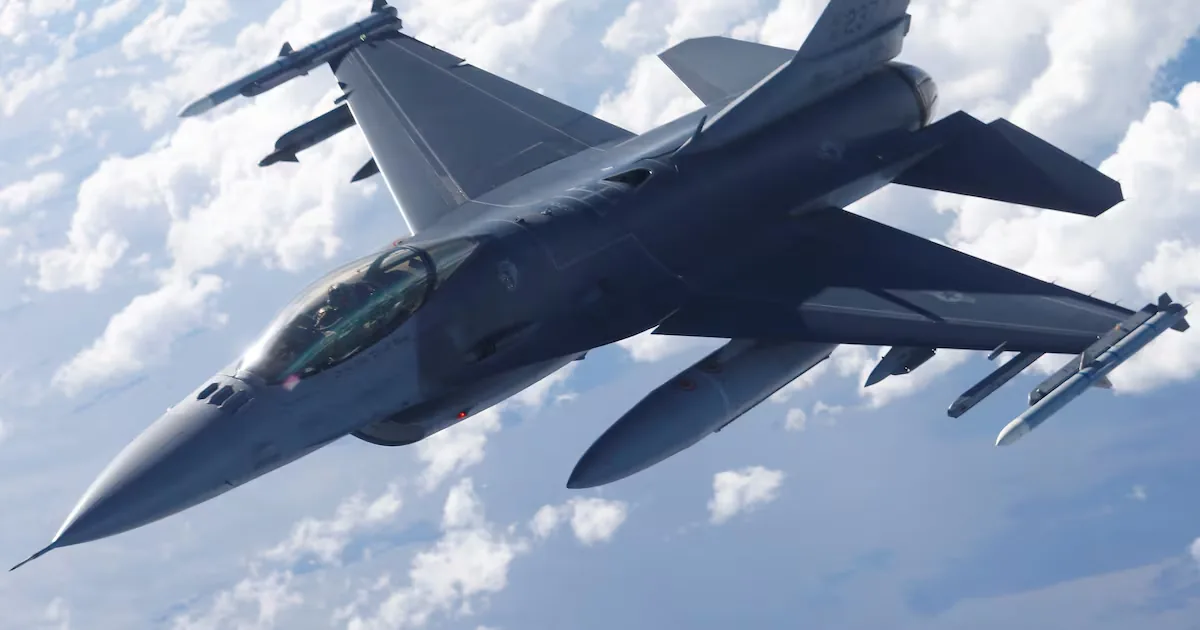
The recent Israeli Air Force attack on a military airport in Idlib (northwest Syria), which Israel claims was to host Turkish troops, had as its main objective to send a direct message to both Syrian and Turkish leaders, following specific intelligence information that supposedly indicated that Damascus was preparing to violate the statu quo with Israel by allowing the deployment of Turkish troops on Syrian territory, according to Haaretz.
A diplomatic source who spoke to the Israeli newspaper said that until recently, Turkey had been careful not to cross the red lines set by Israel and had not taken any practical steps to establish a military presence in Syria. The attack meant that the contacts Israel and Turkey have maintained in recent years have not fully overcome their differences, the newspaper stated.
Last Wednesday, Netanyahu referred to the attack in a Likud campaign podcast, noting that Israel “will not tolerate a Turkish military presence moving southward, because it threatens us.” “We sent a message. The message arrived, but apparently they did not understand it well, so we made sure they understood it better,” he added.
For his part, Israeli Defense Minister Katz stated that “Erdogan is dragging Turkey into dangerous adventures in Syria. Israel will not allow anyone to threaten its security.”
“It would be better if Erdogan continued to give empty and fanciful speeches against Israel in the Turkish Parliament and did not test Israel’s determination to defend itself,” he added in the text written on X.
Meanwhile, Ankara has rejected the accusations and Damascus later denied that there were Turkish soldiers at the base or any intention to turn it into a Turkish base. Washington, for its part, has accused Israel of deliberately increasing tensions.
Officials from the three capitals believe that the unusual Israeli attack was linked, at least in part, to the Israeli general elections to be held in two months, Haaretz stated.
“The circumstantial aspect of the problem is that, as Israel approaches an election period, Prime Minister Benjamin Netanyahu’s main concern is to find a new political target,” Gökhan Çınkara, associate professor at Necmettin Erbakan University and director of the Center for Global and Regional Studies, told Daily Sabah.
“This was already evident in the campaign poster he used for the elections,” he said, adding that the decline in support for Netanyahu’s Likud party could be seen as another sign of the pressure he faces.
Turkey first became involved in Syria in 2011, when Ankara sent aid to rebels fighting against Bashar al-Assad’s regime. Turkish forces officially entered the country in August 2016, and in 2020 Turkey significantly reinforced its presence while the forces of the Syrian leader and their Russian allies prepared an offensive against the rebels in Idlib, which borders Turkey.
After the overthrow of Assad’s regime by rebel forces led by Ahmad al-Sharaa, the current president of Syria, Turkey’s influence in the country was consolidated. Last year both countries signed a military cooperation agreement, under which Ankara committed to helping rebuild the Syrian Armed Forces with logistical support, weaponry, and training.
At the same time, Damascus sought to develop relations with other countries so as not to depend entirely on Ankara. One of the countries with which it has strengthened ties is Qatar, which has started supplying gas to Damascus through Jordan. Or Saudi Arabia, which contributes to paying the salaries of its officials. Both Doha and Ankara are now anathema to Israel: the capitals closest to the Islamists of the Muslim Brotherhood and the main Sunni obstacles to its hegemonic ambitions in the region, indicated the newspaper El Periódico.
“The reconfiguration of the Syrian map clashes with Israel’s regional strategy, focused on keeping its neighbors weak and fractured. Not for nothing, since the chaotic days of Assad’s fall, its military illegally occupies an additional 230 square kilometers of Syrian territory, a presence that facilitates the destabilization of the country. Additionally, it courts the Druze and, to a lesser extent, the Alawites, two of the Syrian minorities. Israel has also added most of Gaza and southern Lebanon to its domains, where it also intends to stay permanently. Its leaders do not hide it. They call the newly conquered territories ‘security belts’,” wrote El Periódico.
According to Haaretz, Israel has suggested that Turkey is trying to establish air defense systems in Syria that could restrict the freedom of action of the Israeli Air Force, particularly in operations against Iran.
The decision may also reflect recent Israeli security assessments of the Al-Sharaa government, whose leader, as Israeli officials have repeatedly described, is a “jihadist in a suit.”
Israeli military activity in Syria has notably intensified in the last two weeks. According to Syrian sources, Israel has attacked Syrian targets 27 times, carried out 36 ground operations, and detained 11 Syrian citizens.
However, Damascus has so far refrained from threatening a more forceful response. Syrian Foreign Minister Asaad al-Shaibani urged Israel to reconsider its stance, stating that its attacks harm “not only Syria” but also “the United States and its allies in the region.”
The official who condemned the attack most vehemently was the U.S. special envoy for Syria, Tom Barrack, who is also the U.S. ambassador to Turkey and is known for his closeness to Ankara.
Amid these tensions, Turkey issued an international arrest warrant on Friday against Israeli Prime Minister Benjamin Netanyahu and another Israeli citizen, according to Turkish Justice Minister Akin Gürlek on X.
“Within the framework of the judicial procedure related to the attack in international waters against the activists of the Flotilla (…) and in accordance with the arrest warrants issued on July 14, 2026, against Benjamin Netanyahu and Afek Moskovitch for ‘genocide,’ the Ministry of Justice requested the Ministry of the Interior to issue red alerts for their international arrest,” the Turkish ministry stated. Benjamin Netanyahu and Afek Moskovich are being prosecuted for “crimes against humanity, genocide, aggravated deprivation of liberty, ‘attacks and voluntary injuries,’ torture, destruction of property, aggravated looting, and misappropriation of transport vehicles,” the ministry specified.
Netanyahu quickly responded and called Turkish President Recep Tayyip Erdogan an “anti-Semitic dictator” and warned that he will not be intimidated.
The approximately 430 crew members of the roughly 50 ships boarded in May by the Israeli Army in the Mediterranean were forcibly taken to Israel and later detained in Ktziot prison before being expelled.
The activists of the “Global Sumud Flotilla” departed from Turkey with the aim of drawing attention to the humanitarian situation in the Gaza Strip, devastated by more than two years of war, and also sought to break the maritime blockade imposed by Israel.