

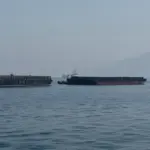
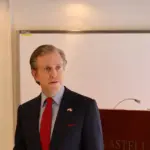



Will Freeman, a Latin American studies researcher at the Council on Foreign Relations (CFR) and a prominent writer on Latin American politics, democracy, organized crime, and U.S.-region relations, traveled to the Ecuadorian coast to interview survivors and families of the crew of the missing fishing vessel Fiorella. In The New Yorker magazine, Freeman published one of the first investigations into the incident at the end of June, which according to new reports could be the result of a covert U.S. operation. On January 20, the ship disappeared in international waters without a trace, after having departed from the port of Jaramijó, Ecuador, seven days earlier. Seven months later, the whereabouts of eight of the 10 fishermen on board and the fate of the Fiorella remain unknown, and the case is being investigated as a presumed involuntary disappearance.
Read more Changes and challenges six months into the war in Iran
The Washington Post and The New York Times published articles in mid-August that continue the investigation Freeman carried out. “A secret CIA program is said to be behind the mysterious attacks on ships in the Galápagos,” titled the first U.S. newspaper. “They spoke English, flew U.S. flags, and attacked fishermen. Who were they?” highlighted the second.
The three articles deal with the same events: the disappearance in January of the Ecuadorian fishing vessel and its crew, and the attacks in March against two other ships, La Negra Francisca Duarte II and Don Maca. For months, these cases remained unexplained. The Pentagon and Ecuador’s Ministry of Defense denied having any knowledge or involvement in the attacks. Together, the three accounts point to something bigger: Operation Southern Lance—the Trump administration’s campaign of attacks against alleged drug trafficking vessels, ongoing since September 2025—could be “bigger, more secretive, and directed by more actors than previously thought,” Freeman suggested in an article published last week on the CFR site.
Freeman, who before joining the CFR collaborated with the U.S. Senate Foreign Relations Committee’s Western Hemisphere Subcommittee, analyzes in the following interview with La Tercera the scope of Trump’s Operation Southern Lance and the possible “hidden front” that the program of attacks on vessels allegedly involved in drug trafficking has revealed.
Beyond the CIA, who else might be involved and with what objectives?
We don’t know with any degree of certainty, but the confirmed involvement of a maritime monitoring plane registered to a U.S. private company, in what appears to have been surveillance of the three attacked Ecuadorian ships, suggests that private defense contractors may also be participating in Operation Southern Lance. Erik Prince has denied having an active contract with the Ecuadorian government or involvement in these incidents, but before Ecuador’s 2025 presidential elections, a deal was publicly announced. I also find it likely that agencies such as the U.S. Department of Homeland Security (DHS) and the DEA are participating in some way, either in target selection or pursuit.
You highlight that you discovered none of the attacked Ecuadorian crew members had criminal charges related to drug trafficking. Could CIA intelligence data have failed at that level, or was it deliberate?
That’s right. I think the most likely scenario is that the three alleged attacks on fishing vessels we have identified—especially the first one, in which the Fiorella disappeared—were false positives: attacks planned based on incorrect intelligence. Everything indicates that these three ships attacked between January and March had nothing illicit on board. One of them, La Negra Francisca, was inspected by the Ecuadorian Coast Guard and declared clean just hours before being attacked.
The New York Times reports that a maritime patrol plane operating from a base in El Salvador flew toward the three vessels in the days before each attack. What level of involvement do you think Nayib Bukele’s government has in these operations?
Read more Rodrigo Rey Rosa: “The megaprison are an unnecessarily cruel system, a return to enslavement”
The United States has had an agreement with El Salvador since 2000 to use Comalapa airport for maritime surveillance operations. That agreement was renewed in 2019 and was valid until 2025. At the end of 2025, there was also a significant increase in U.S. military resources in El Salvador. What we don’t know is what agreement, if any, allowed maintaining or expanding that access in 2026.
And that is especially interesting because the surveillance plane that followed the Ecuadorian vessels operated from Ilopango, which is not part of the public Comalapa agreement and has a history as a base for covert U.S. operations against the Sandinistas in 1980s Nicaragua. This raises the possibility that Bukele authorized broader cooperation with the U.S. than has been made public.
The Pentagon chief announced that Colombia, Guatemala, and Honduras have joined Ecuador to authorize joint ground attacks. Do you think allied countries under the Americas Shield will end up joining these operations?
Yes, I think it is likely, although Guatemala’s president, Bernardo Arévalo, has publicly said that joint operations were not authorized. It may be that we have already seen some attacks in southern Colombia in January 2026, although that is yet to be confirmed. I would also add the attack that killed Héctor Rusthenford Guerrero Flores, alias “Niño Guerrero,” the top leader of the criminal organization Tren de Aragua, by the Southern Command on Venezuelan territory. This represents a new level of direct U.S. military intervention in the fight against drug trafficking.
Regarding the effectiveness of Operation Southern Lance, you wrote that “street prices and purity in major U.S. cities suggest that the cocaine supply has not decreased.” Has Congress not questioned these operations? Do you consider them merely media stunts by the White House that at the same time constitute true summary executions?
Yes, several congressmen and senators have publicly and repeatedly questioned military officials and administration members. I don’t know if senior Trump administration officials really believe these attacks will eventually reduce cocaine flows and significantly weaken drug trafficking networks, or if the attacks respond more to palace politics and an attempt to gain the boss’s favor.