

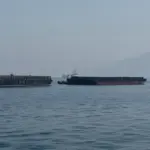




The conflict that U.S. President Donald Trump said would last between four and five weeks has already extended for six months and there are no signs that it will end soon. During this time, the war in Iran has caused not only a shock to the global economy but has also strained regional alliances, while failing to achieve its goal of overthrowing the Iranian regime or dismantling its nuclear program. On the contrary, Tehran now de facto controls the strategic Strait of Hormuz.
Read more Rodrigo Rey Rosa: “The megaprison are an unnecessarily cruel system, a return to enslavement”
The war with Iran has become a major challenge for Trump’s second term, harming his popularity among U.S. voters ahead of the November midterm elections, and has also weakened the United States’ position in the Middle East. Moreover, the White House occupant’s ability to influence the outcome seems seriously limited, considering that the Islamic Republic has managed to withstand intense bombings and has responded to the world’s most powerful army using mines and drones.
Trump needs to reopen the Strait of Hormuz but faces economic limitations and, so far, has refrained from undertaking the riskiest and most extreme military actions against Iran, which restricts his war options.
Below are the key points to understand the conflict.
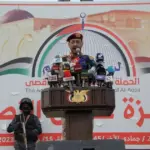
On February 28, when the United States launched attacks against the Islamic Republic, Trump promised Iranians that “their hour of freedom is near.” Now, experts indicated, he seeks to economically strangle Iranians even more with sanctions so that they rebel against the regime and overthrow it.
The use of sanctions as a weapon comes at a time when the Republican administration weighs the depletion of ammunition reserves after months of war, raising concerns that the prolonged conflict could undermine U.S. military readiness elsewhere in the world.
After the death of Supreme Leader Ali Khamenei at the start of the war and the succession of his son Mojtaba, the Iranian leadership is increasingly dominated by the military, who consider their own survival on the same level as that of the nation. According to The New York Times, they see the sacrifices of ordinary Iranians as a necessary act of patriotism and even martyrdom. At the same time, they have become increasingly ruthless in suppressing the slightest sign of dissent.
In this context, the Islamic Republic has not only survived but de facto controls the Strait of Hormuz. It has strengthened its influence in the region, and even countries it bombed a few months ago are trying to restore their ties with Tehran.
“The war has not achieved the objectives of the United States,” said Sanam Vakil, director of the Middle East and North Africa program at Chatham House, an independent political analysis institute and research center based in London, to The New York Times.
Suzanne Maloney, an Iran expert and director of foreign policy at the Brookings Institution, considered the war a failure. “We caused a lot of damage to Iran, but they have come out stronger,” she told the newspaper. Iran’s neighboring countries have decided they must find a way to operate with an Islamic Republic that is not going to disappear.
Amid the conflict, U.S. allied countries began forming their own ties. This was the case with Pakistan, Turkey, and Saudi Arabia, which at the beginning of the month signed a mutual defense agreement that the Turkish Foreign Minister himself, Hakan Fidan, referred to as the “NATO of the Middle East.” Although he clarified that the pact was not directed against Iran.
The Mecca Joint Defense Agreement declares mutual defense as a duty of its three members: an attack against one will be considered an attack against all. However, it does not establish a central command system, nor pathways to achieve greater interoperability, nor clear obligations regarding defense spending and procurement. It also does not mention the use of nuclear weapons.
Turkey, which has the second-largest army in NATO, has stated that the pact is open to expansion to other countries in the region and does not intend to replace any existing alliance.
For Saudi Arabia, this agreement strengthens its influence in facing an increasingly bold Iran and the limitations of U.S. deterrence in the region. “Riyadh also takes advantage of this turbulent period to reaffirm its regional leadership: by hosting the signing of a new security agreement with another regional power—Turkey—Saudi Arabia positions itself as a reference for regional stability at a time when the other major regional powers, Iran and Israel, are perceived as destabilizing forces,” said Allison Minor in an essay for the Atlantic Council think tank.
“This agreement further consolidates Pakistan’s position in the emerging Middle East security architecture. It comes shortly after Islamabad finalized a new mutual defense pact with Saudi Arabia, and at a time when it is taking steps to deepen defense cooperation with other regional allies, such as Egypt and Jordan. The agreement also grants Pakistan—with its majority Muslim population and its capacity to develop nuclear weapons—greater prestige and influence in the region,” noted Atlantic Council expert Michael Kugelman in an article.
Since the war began, Trump has issued contradictory statements, also launched threats and then retracted them, causing confusion even within the White House, which has had to clarify the president’s remarks.
For example, the president has offered contradictory versions about the status of talks with Iran and about the Strait of Hormuz, versions that have been denied by the Iranians and, at times, by himself.
There was also contradictory information about attendees at talks in Pakistan last April. While the U.S. Ambassador to the United Nations, Mike Waltz, and Secretary of Energy, Chris Wright, confirmed the vice president’s participation, Trump said JD Vance would not attend, even though he was to lead the delegation.
In April, he also warned that “an entire civilization will die” if Iran did not accept the terms of an agreement. And almost at the deadline, he toned down his rhetoric and agreed to a two-week ceasefire.
Both supporters and opponents face exhaustion. And as the November midterm elections approach, some Trump voters who applauded the president’s 2024 campaign promise to stay out of wars now wonder how much longer they will have to pay high prices for their car fuel.
Approval of Trump’s handling of the war has been declining as gasoline and other commodity prices remain high. A Reuters/Ipsos poll published this week places Trump’s approval at 33%. Pollsters found that support for the war has decreased among Republicans, although approval of the measure within his party remains at 69%.
But the most worrying for the White House is that a recent Reuters/Ipsos poll revealed that respondents considered the Democratic Party manages the economy better than the Republican Party for the first time in nearly a decade. Thirty-seven percent of registered voters said the ruling party has a better economic approach, while 36% leaned toward Trump’s party.
The president has been especially sensitive to investors’ reactions to his measures regarding Iran. In June, just after signing a provisional peace agreement with Tehran that later failed, he declared: “Every time we talked about the possibility of peace, the stock market shot up like a rocket.” “I didn’t want to witness an economic catastrophe,” he said, explaining his decision to sign the pact.
Those economic concerns seem to have limited the government’s willingness to economically pressure Tehran, the Washington Post reported. Treasury Secretary Scott Bessent declared this week an “economic D-Day” against Iran, warning countries that risked suffering the consequences of U.S. sanctions if they continued doing business there.
The deepening cooperation between Iran and Russia through drone production, arms transfer, and military technology exchange has “fused” the wars in both the Middle East and Ukraine.
This is the claim of an Atlantic Council study, which states that at the start of the large-scale invasion of Ukraine in February 2022, Iran sent hundreds of drones to Russia, mainly Shahed models, used as attack drones, low-cost, one-way, to saturate Ukrainian air defense systems.
“Despite Russian President Vladimir Putin’s apparent reluctance to publicly show support for Iran, the underlying reality is one of increasingly close strategic ties between Moscow and Tehran,” said the center’s analyst Katherine Spencer.
On the other hand, The Washington Post previously reported that the United States has lost approximately a quarter of its Reaper drones, which cost between 30 and 50 million dollars each. These drones are used for surveillance and target location. Stocks of the sophisticated Patriot missile defense systems, used to protect Israel, Ukraine, and U.S. bases worldwide, have also been drastically reduced.
“The shortage has led some countries to be more cautious with their aid to Ukraine and its Arab allies, as they perceive a growing need to preserve a larger arsenal for their own defense in case the United States has less capacity to help them. Ukraine, for example, requested Patriot batteries from Greece, but Athens recently refused and instead moved a system to the island of Crete, near a U.S. base, following threats from Iran,” it added.
Read more German consul in Costa Rica drowns after kayak he was paddling capsizes