


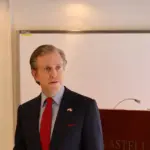




The president of El Salvador, Nayib Bukele, denied that the government had transferred the country’s bitcoin reserves to a private operator, amid the demands agreed with the International Monetary Fund (IMF) to advance a credit program for US$ 1.4 billion.
Read more U.S. Ambassador to Israel assures that there is no plan to forcibly displace Palestinians from Gaza
The controversy arose after the international organization reported that the public stake in Chivo, the digital wallet promoted by the Salvadoran Executive, had been significantly reduced and that its majority ownership and operational control were transferred to a private entity.
Through his account on X, Bukele rejected interpretations that pointed to a possible transfer of the State’s digital assets. “The only thing that was transferred were the shares of Chivo (…) and NOT the Strategic Bitcoin Reserve,” the president stated.
According to the figures released, said reserve would have a value close to US$ 618 million.
Bitcoin has been one of the main points of discussion between the Salvadoran government and the IMF since the negotiation of the financial agreement. As part of the commitments made, in January 2025, El Salvador modified its legislation to eliminate the obligation to accept the cryptocurrency as legal tender.
This Thursday, September 3, the IMF also announced a preliminary agreement that would allow the release of about US$ 140 million more for the country, within the framework of the economic program agreed with the organization.
Read more Putin orders to suspend attacks on Kiev for three days during visit of Trump’s emissaries
The decision came after the Salvadoran government proved that its new bitcoin acquisitions had been financed through private donations and not with public funds.
In a statement, the IMF said that “the public stake in the Chivo wallet has been substantially reduced” and that efforts continue to improve transparency regarding bitcoin holdings.
The organization added that “majority ownership and operational control have been transferred to a private operator”, although it specified that the State maintains a minority stake and custodial responsibilities over certain client assets.
The agreement between El Salvador and the IMF includes a progressive reduction of the state’s exposure to bitcoin, one of the main economic policies promoted by Bukele since the country adopted the cryptocurrency in 2021.
In that regard, the international organization indicated that the State is not expected to continue increasing its reserves through public funds. “Going forward, no additional accumulation of bitcoin beyond documented donations is expected,” the IMF said.
Read more Russia attacks Ukraine hours before Trump envoys’ visit: at least four dead and five injured