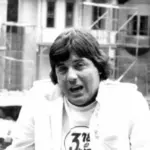





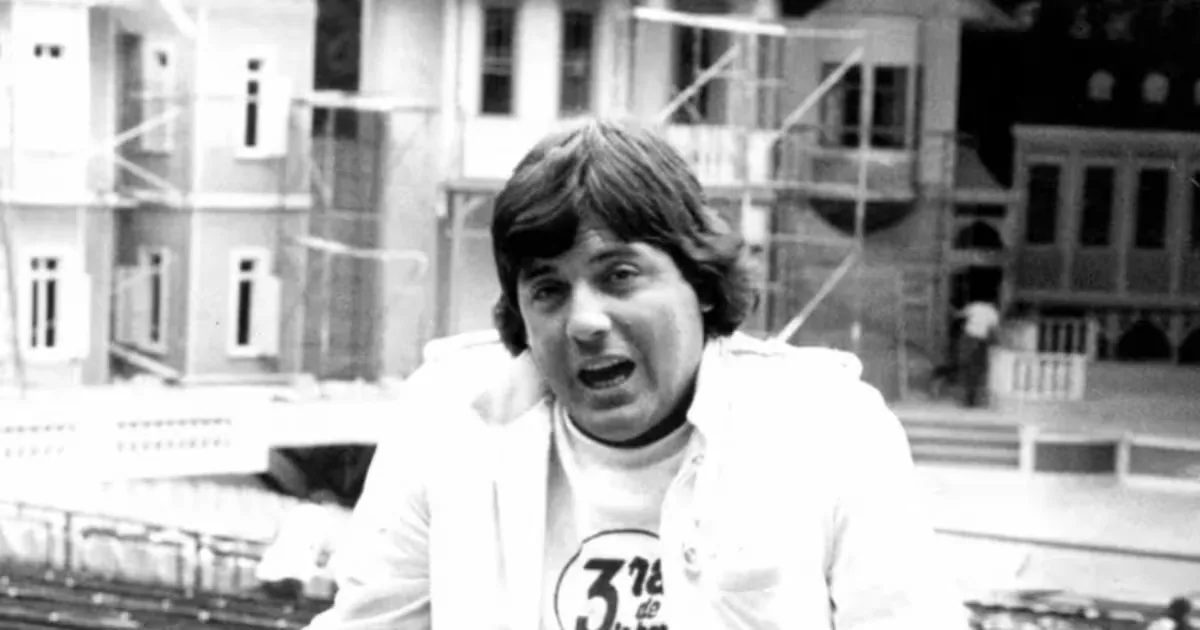
Journalist Luis Hernández can consider himself lucky. When he was a child living with his parents in Conchalí, Zalo Reyes came to live right next to his house, so he was a real-time witness to one of the most extraordinary feats in Chilean music, the one that places a self-taught artist from a popular Santiago neighborhood as a mass phenomenon that broke barriers in a leaden and classist country, dominating from the Viña Festival to intellectual debates, only to later get caught in a spiral where he never regained his past glory.
Read more Houthis claim missile and drone attacks against Riyadh and Saudi Aramco facilities
In the neighborhood, stepping out the door to look, he saw him surprise his neighbors by buying his first car or causing collective chaos after achieving glory at Quinta Vergara in 1983.
Over time, he became friends with the singer’s son, Boris González, in a full experience that decades later would serve him for his first book: Hernández – with a broad and distinguished radio career and now host of Radio Activa – is currently presenting A Tear and a Memory. The Biography of Zalo Reyes (Editorial Abejorros), the first investigation dedicated to the man behind Un ramito de violetas. A text based on abundant archival material, interviews with family, friends, former collaborators, and figures who have expressed admiration for his work – such as Mon Laferte, Cristóbal Briceño, or Los Vásquez – and the singer’s own unfinished memoirs, which he began writing by hand but never completed.
“I had the urge to do this for ten or twelve years because I knew his story since I was a child,” the author specifies. He continues: “Along the way, I learned from the family that he always wanted to have a book, as a way to transcend, that he wanted to be beyond, that he didn’t want to rest in peace, he wanted people to keep remembering and listening to him, and one possibility was that he would write his own book. That was his big project. He started writing it by hand because the computer would crash on him. Then, his grandson gave me this material and it seemed like pure gold because he wrote about his origins, his birth, which is something stars often don’t touch once they are established.”
In those writings, Reyes recalls that he came into the world on November 3, 1952, right at the change of government from Gabriel González Videla to Carlos Ibáñez del Campo, and that his grandmother attended the birth at their own home. His father, Fernando González Labbé, who was a taxi driver, did not go out to work that day due to a city gripped by the situation.
“When I started to realize the place where my parents and grandmother lived in their mud house, everything around us was just pastures,” the singer points out.
His childhood and adolescence unfolded playing street soccer, listening to songs by Lucho Gatica, Paul Anka, and the Nueva Ola, and almost accidentally discovering his passion for singing: at first, Zalo wanted to be a priest, then a veterinarian, and even did military service in the Navy. “He thought that through a ship he would travel the world, something that ultimately did not happen,” Hernández comments.
After winning municipal festivals and making a name in the ballad scene, the singer made his first recordings – some versions of songs by Luisito Rey, Luis Miguel’s father – but ran into an obstacle: his songs sounded too much like Los Ángeles Negros. He did not achieve much resonance, even rebranding himself as Nahum, which was even less effective. Until Congreso’s guitarist, Fernando González, produced the 1978 long play that included A Tear and a Memory, his first hit.
However, the big breakthrough for the singer happened when he started appearing on TV; there he not only demonstrated his artistic identity but also a spontaneous and almost disruptive humor for a country under dictatorship, where the screen barely tolerated showing more common people.
Read more Three media outlets denounce access blocks to the White House following Trump’s ban
Hernández continues: “If Chile seems classist today, back then it was worse, especially on TV. It was brutal. Cumbia, for example, was considered only grill party music. Popular people only had space on El Festival de la una. But Zalo’s freshness and humor, the fact that he could tell stories, allowed him to carve out a space. He was a super necessary artist for those years. A poorer and more fearful country needed to be distracted. He wasn’t a sharp guy who talked about politics, although he did, because before being at Viña 83, he imitated Pinochet in a casino show, so they suggested he not do it at the Festival.”
There are two key appearances of the singer to bring him closer to other audiences: on Permitido, from TVN – where he laughed at the “blondies” in the audience – and on Noche de gigantes, from Canal 13. But the most resounding precedent of his connection with the masses came in 1981, when he was invited by journalist Lucho Fuenzalida to host the program El festival en bote, on Teleonce (now Chilevisión).
In that contest, Zalo was involved in the legendary fistfight that confronted Harry Wayne Casey of KC and the Sunshine Band with Fuenzalida, when the latter suggested in his column in La Tercera that the American was bisexual. “Zalo threw a couple of punches at KC’s companions to somewhat save the honor of his partner,” the book recounts.
Another even better story? While hosting the show that was indeed done from a boat, one of the guests, Argentine singer Ricardo Ceratto, got seasick and had to be taken out by a boat. But the vessel began to sink. Since Ceratto didn’t know how to swim, Zalo Reyes jumped into the sea, pulled him out of the water, slapped him in the face, and grabbed him by the hair: unfortunately, the singer had a thick toupee that ended up in the Chilean’s hands. It all happened live and direct.
Then follows the phenomenal success at the 1983 Viña Festival, a massive concert at Santa Laura Stadium, an internationalization that took off well but later failed, and a difficult path from the 90s onward involving drugs, illnesses, and distance from TV. “But in his period of greatest personal crisis, from 1992 onwards, drugs were also a painful refuge when Zalo passed 40 years,” the text reads.
Hernández adds: “In 1991, when EMI ended his contract, it was very painful for him. They cut his contract and a spiral of bad situations and decisions began: he separated from his wife, left the house, left Conchalí, had a sister who died, a sister who got into legal trouble. He entered a bit of a decline; as a result, he gained weight, which made him self-conscious, he distanced himself from television because he felt he would look fatter. It was a very bad period. He returned to TV in situations that made him look ridiculous, like the onion. Why didn’t they do that to Raphael and they do it to Zalo Reyes? There was still a very present classism on TV.”
However, the journalist says Reyes went in peace when he died in 2022: “In the 2000s he was recognized by a new audience and people still loved him. That was proven at his funeral. Or that we keep talking about him to this day.”
*The book A Tear and a Memory. The Biography of Zalo Reyes is available at La Tienda Nacional (Barrio Lastarria) and through Instagram @colectivoabejorros with shipping throughout Chile.
Read more The U.S. claims to have escorted more than 1 billion barrels of oil through the Strait of Hormuz