





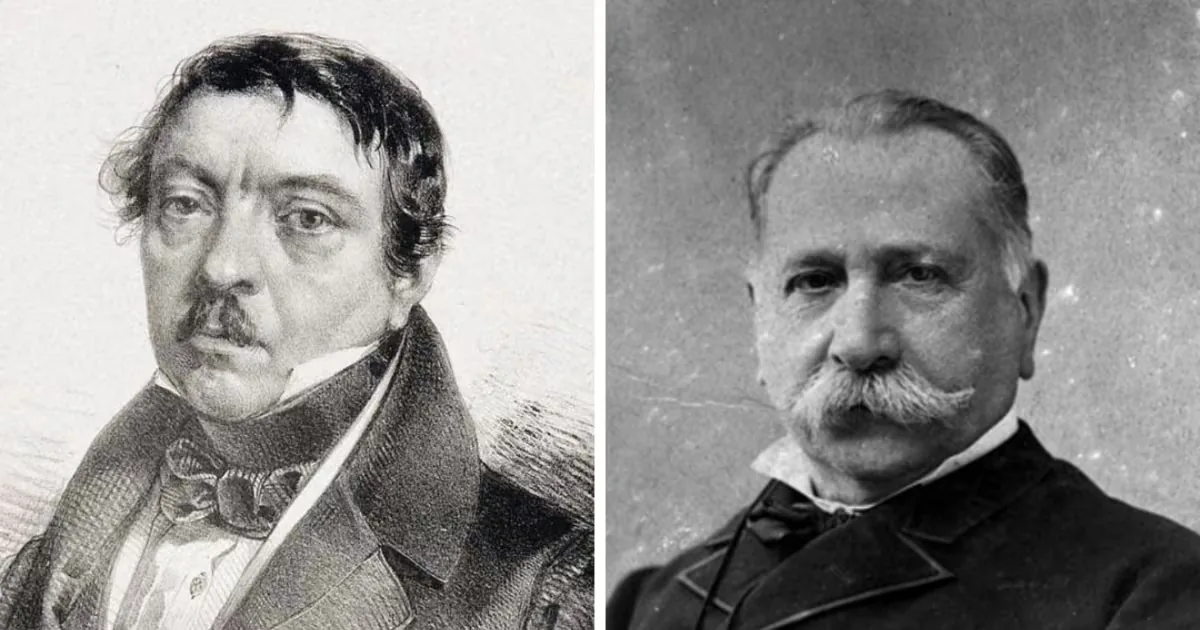
The known history of the Chilean National Song begins in 1819, when the government of Bernardo O’Higgins commissioned Bernardo de Vera y Pintado a poem of ten stanzas and a chorus intended to be sung. The text received official backing in September of that year and it was ordered to be printed, distributed throughout the country, and sung before each theatrical performance. Initially, it was sung with different melodies, including that of the Argentine National Anthem, as recalled by José Zapiola. This was not unusual, as the new Latin American republics could share what would later become exclusive patriotic symbols. It was said to be the theater entrepreneur Domingo Arteaga who later commissioned a music of his own from Manuel Robles, violinist of his theater’s orchestra. As musicologist Cristián Guerra points out, this new version was premiered under the direction of the composer himself on August 20, 1820, during the inauguration of the permanent venue of the Teatro de Arteaga.
Robles’ music combined the style of the new republican marches and anthems with elements inherited from the colonial tradition and the cathedral villancico. Guerra even finds similarities between the chorus of Robles’ anthem and the verses of a pastorela by José de Campderrós, former chapel master of the Santiago Cathedral. The simplicity of this musical synthesis favored collective singing and contributed to the popular rooting of the first patriotic anthem. When its performance began in theaters, the audience stood up, and both O’Higgins and Ramón Freire listened to it with respect and emotion.
However, this anthem was not well accepted by the Chilean literate elite, who had more modern and refined tastes, close to the style of Gioachino Rossini’s operas. Thus, Mariano Egaña, Chile’s diplomatic representative in London, took the initiative to seek a new composition. He commissioned the task to the Catalan composer and conductor Ramón Carnicer, then exiled in the British capital, who in 1827 wrote new music for the same verses. This is the music we sing to this day. But something was still missing.
Indeed, it was from the recognition of Chilean independence by Spain in 1844 and the reestablishment of diplomatic relations between the two countries that the markedly anti-Spanish tone of Vera y Pintado’s verses began to become uncomfortable.
Therefore, in 1847 the Chilean government entrusted the young poet Eusebio Lillo with a new lyric. Lillo composed six stanzas but kept the old chorus: “Sweet Homeland, receive the vows…”. Thus, the authorship recognized in Chile to this day was established: music by Ramón Carnicer, stanzas by Eusebio Lillo, and chorus by Vera y Pintado.
This is, in general terms, the history of the Chilean National Song that we know. However, in recent years Venezuelan musicology has challenged this history in what could be a great misunderstanding, although supported by very concrete findings.
It all began in 2008 with the discovery in the National Library of Venezuela of a sheet with the patriotic anthem “Caraqueños, otra época empieza” (Caracans, another era begins), with lyrics by Andrés Bello and music by Cayetano Carreño, dated 1810. That anthem, whose music was not included in the discovered sheet, had been forgotten in favor of what would later become the National Anthem of Venezuela, “Gloria al bravo pueblo” (Glory to the brave people), also from 1810.
The discovery a few years later of a score with the music for Bello’s lyrics produced the real surprise, as that music corresponded to the Chilean National Song. Moreover, the chorus said: “Sweet Homeland, receive the vows / with which all America swore / that either the grave you will be of the free / or the refuge against oppression.” From that finding, the idea began to circulate in Venezuela that the music of the Chilean National Song was by Cayetano Carreño and the chorus by Andrés Bello.
The Caracas finding was extraordinary, but it posed a chronology problem. Although “Caraqueños, otra época empieza” was from 1810, the score found in Caracas would have been copied between 1840–1845, more than a decade after Carnicer’s score. It is suggestive that this copy was from the time when the acts of repatriation of Simón Bolívar’s remains to Venezuela were being prepared, for which abundant patriotic repertoire was required. Everything indicates, then, that the Chilean National Song circulated in Venezuela in the mid-19th century.
Andrés Bello had worked with Mariano Egaña at the Chilean legation in London and must have known early on the new Chilean anthem commissioned to Carnicer. That it later appeared in Caracas could well have been a gesture of cultural diplomacy by Bello himself. All this is just a possibility that reverses the direction that the Venezuelan finding initially seemed to suggest.
The particular thing is that in this continental dimension that “Caraqueños, otra época empieza” acquired, now Chilean-Venezuelan from the 1840s onward, Bolivia also participated, since the music of the final verse of the Chilean anthem, “or the refuge against oppression,” is the same as that of the Bolivian anthem, but sung with the words “die before living as slaves.” It happens that when in 1845 the Bolivian president José Ballivián commissioned a patriotic song from the Italian musician Leopoldo Benedetto Vincenti, he had just worked with Chilean military bands and knew our national anthem very well. Vincenti, then, did not hesitate to use that concluding fragment as the finale of Bolivia’s patriotic anthem, uniting two neighboring nations through their own national anthems.
It must be kept in mind that in those years numerous patriotic songs circulated throughout Hispanic America whose verses and melodies were exchanged, adapted, and reused quite freely. The same text could be sung with different music, as happened with our first national anthem, and the same melody could receive new words according to the political circumstances of each territory, as occurred with our second national anthem. The modern concept of an anthem as a fixed and unalterable unit of lyrics and music, also associated with clearly identified authors, was not yet consolidated in America.
The differences between the Venezuelan findings of the lyrics and the music therefore require separating questions that until now had been presented as one. One thing is to verify the close similarity between the Venezuelan copy from the 1840s and Carnicer’s music; another is to prove that this copy reproduces a work composed in 1810 by Carreño on Bello’s verses. The printed sheet confirms the collaboration of both authors in “Caraqueños, otra época empieza,” but does not prove that the lost music of that song is the one we sing today in Chile. Nor does it allow attributing Bello the chorus of Vera y Pintado, absent from the original Caracas print.
Venezuela’s international isolation and the deterioration of its academic and musicological spaces during the difficult years since the early 2010s help explain why these misunderstandings were not discussed more broadly before. Only recently, thanks to the initiative of Venezuelan musicologists who continue working in their country, has it been possible to resume dialogue, exchange sources, and contrast interpretations. So, we can affirm that, like the Strait of Magellan, our National Song and our toaster are, have been, and will continue to be Chilean.