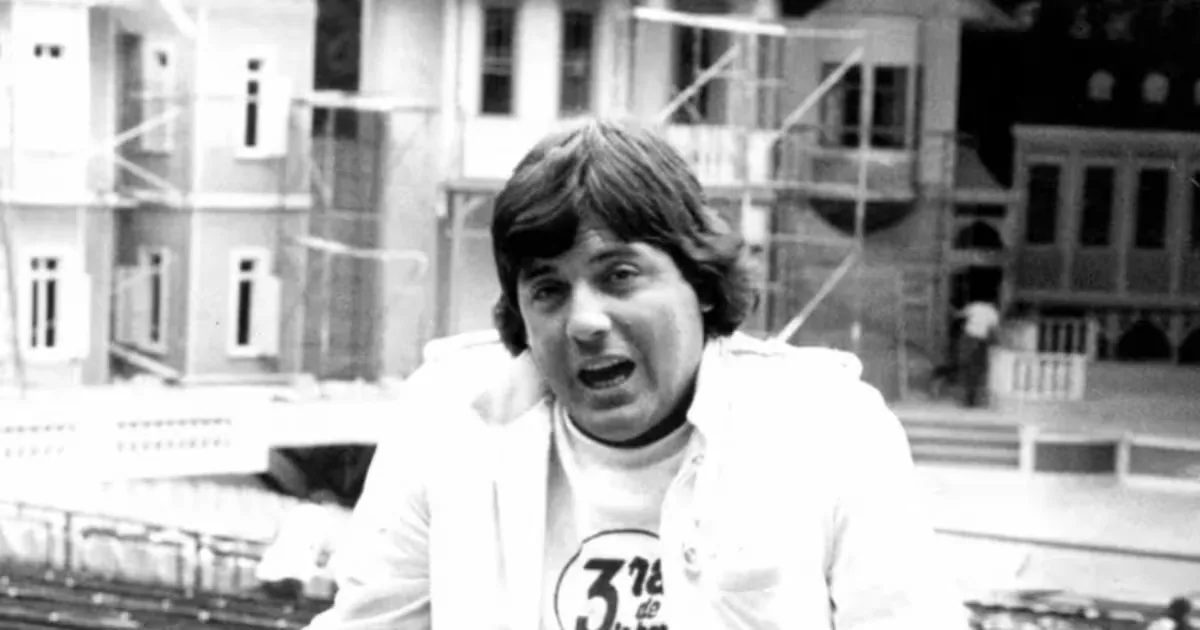






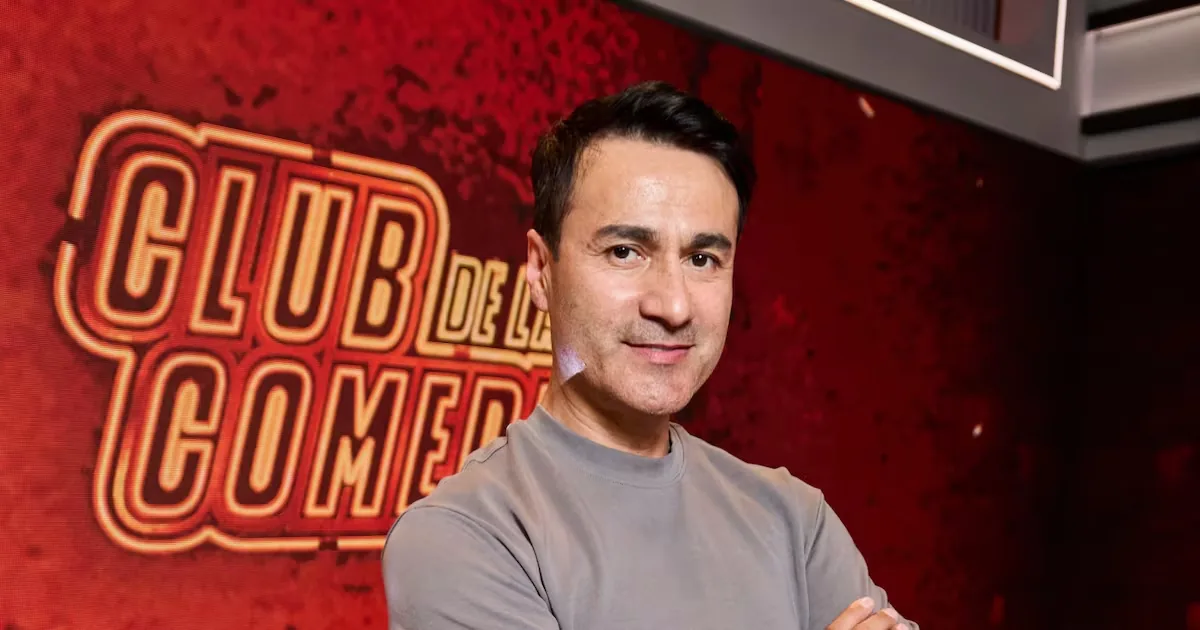
It was persistence that made Christián Henríquez move from the Modelo circus space to television. It all happened when the producers of Morandé con Compañía went to see him at a show for a circus set up by a well-known supermarket chain.
At that show, Henríquez played the character Ruperto, a somewhat naive little drunk. “The character was very successful and I don’t know how, but the producers of Morandé came to see me. They liked what I did, the producer approached me, obviously with the circus owners’ permission, and asked if I was interested in working on television.”
At that moment, Henríquez had his doubts. It was the early 2000s and Morandé con Compañía dominated the nights with its mix of adult humor and comedy numbers inspired by the revue genre, with models and lots of skin.
“At that time I didn’t have television in my mind and everything that comes with that whole story, because I felt I didn’t fit into that world – he recalls -. Because besides, at that time television was also different, it was a stronger, more aggressive humor. And the character is kind of very white.”
The producers of Morandé did not give up. Days later, they asked him to record his routine and then came with an invitation from Kike Morandé to watch the program live. “Honestly, I found it very entertaining. And that’s how it ended. I went back, continued with the circus season, finished the season and they called me again to ask if I wanted to record a program. So I remember talking to my wife, Carolina, and she told me to go.”
Aware of the initial apprehensions, Henríquez was offered to record his participation, as the program was live at the time. It was October 2005 and the comedian’s life changed forever. “I traveled, I remember arriving at Chilefilms, where the program was recorded, and they made me record. I did the routine I did at the circus, we adapted it a bit… and it was an immediate success, it was explosive, people liked it, the directors, producers, the audience above all. And from there I never left.”
Since then, Henríquez has become an unavoidable name on television, thanks to several characters. The best known is Ruperto, a character originally played by his cousin, Patricio Henríquez, in the circus, but due to an accident he could not continue. “That drunk act was so powerful that the circus owner approached me and asked if I dared to replace him – he recalls -. I had the raw material because I was a clown and trapeze artist, I always watched how he did it. So I told him I could do it, but I was going to do it my way, my style, so it wouldn’t be the same.”
Once at Morandé, he was initially hired for a month, but after a couple of weeks, they called him to the office to extend it to a full year. “And that’s when they started to push me; Rupertina appeared, Maikel Pérez Jackson appeared, Luis Migel, I did a gypsy named Melolailo, I did a parody of Lindorfo, Sebastián Jiménez, called Chantolfo. And then another big hit appeared, Pablo Escobar, the Bread Boss.”
-You didn’t come from the world of television. What was the most complex thing for you to assimilate about this new world that was opening up to you?
It was quite hard at first, the first years. I had trouble understanding or accepting criticism, but later I assimilated it; by the third or fourth year I realized that the TV world worked that way. And well, it was also a matter of time to earn a footing, respect from peers, colleagues, and realize that what one was doing was very professional. And that helped me grow a lot; I am very disciplined, very responsible with what I do, with my schedule, with everything. That also goes hand in hand with what I have achieved so far.
-Do you consider Kike Morandé a sort of mentor for you in TV?
Look, I always had my producer, Esteban Arancibia, with whom I have done practically all the characters, but Kike Morandé is undoubtedly like a father in television to me. I love him a lot, I respect him greatly, he is a very wise guy and an extremely good person. And of course, he always advised me and was very happy, even today he is very happy with my achievements. I have the best opinion of Kike Morandé because he is a guy who is always concerned about his people, always asking what they need, what they lack, always ready to help you with anything. And honestly, he is a great guy, extraordinary. For a reason, he is where he is too.
-Today you are with Ruperto and other characters on Club de la Comedia. How different is it for you to do Ruperto today compared to the beginnings?
If you review the videos from back then, when he just started, Ruperto was a little drunk, but basically a filler. Today, Ruperto is already an iconic character. He is practically like a cartoon. But yes, we have grown a lot in the script aspect. I am very much into improvisation. I am very clear that I have a script, but within the script there is a lot of my improvisation too. Because the character allows me. Obviously respecting the cues to be able to deliver it to the partner. Before I had to say everything the script told me exactly, I had to say it. Nowadays no, now I play, I master the character perfectly and that also allows me to do things that people really like.
-On the Club you do the “Leit de Ruperto”. How is that segment prepared?
I rehearse with the guests, and in rehearsal I tell them my craziness, I say, look, here I’m going to go off, I’m going to say such stupidity, and I ask them to wait a bit for what I do, and then I resume and deliver the text as it should be. And besides, all the guests who go on the program love the character, they like Ruperto’s interview. There has been something very strange; there are guests who call the program to say they would like to go… but to the interview with Ruperto.
Read more Part of the original lineup of La Ley revives its legendary history with a show at Club Chocolate
-At El Club you share with younger people, Claudio Michaux, Diego Urrutia was there, more linked to stand-up comedy. How was it to share with people who came from other worlds, other experiences?
Sure, it’s different, but look, I am one of those people who don’t have much trouble adapting. I adapted quickly to the format. Now, it’s true that they asked me to do what I knew how to do and not do things that were not within me. So, in that sense, I was very calm.
-With the Club, CHV is programming humor spaces again, but there is also Mega, and recently Canal 13. How do you see this moment of humor on TV?
I find it extraordinary, really, because there was a time when there was no humor. We were living in a practically bitter country. There was a need to laugh again, to smile again. Besides, for me, comedy is mental healing, it is very important for health. And I was very happy when the program Detrás del Muro returned to television on CHV. First at the Teletón and it was a huge success. Unfortunately, I couldn’t be there due to work issues, but I was very happy because I had a lot of faith that after that the program could return. And it did, it did it on Chilevisión, which opened its doors to us, and we marked again like before. People received it incredibly, it was great.
CHV treated us like a 10, treated us very well, supported us. Honestly, it was an incredible rebirth of the program. Well, and it was an absolutely tested and very proven space where it would fall and we proved it. So I am very happy. And then that more doors have opened to continue doing humor on other channels, whether on Canal 13, and in this case us here on CHV with Club de la Comedia, I think it’s perfect because we need to laugh.
-The fact that CHV treated you “like a 10”, was that key in your decision to stay there and not go to Mega with El Muro?
Yes, well, when this hallway rumor was heard that the program could go to another channel, I was the first, the first in the cast to make my point of view known to Kike. I told him I would love for us to stay on CHV one more year, to close a cycle, because I felt the channel gave us an opportunity and opened the doors for us to return. And I wanted to stay, honestly, I wanted to stay, but as weeks and months went by it became more likely that the program was going elsewhere. And I decided to talk again with Kike and tell him that if there was an option for me to stay here, I told him I would like to think about it because I felt very good at the channel. I never felt so good at a TV channel, because of the treatment they gave us. And when it was confirmed that the program was going to Mega, they called me, offered me to stay and also offered me my own project. And I loved that.
I was also looking, I felt I could still do more things and they offered me this program, which is my own program and I loved it immensely. I discussed it with my family and felt it was time to continue my career alongside Kike. I made the decision and I don’t regret it because I think it was the best decision I could have made. I stayed because I was going to have two projects, one was a late show with Julio César Rodríguez, which unfortunately couldn’t be done because he left and then they asked me to participate in the Club, and also my own program, Ruperto’s program. And well, El Muro went to Mega and continues shining as always and will keep doing so because honestly they are a great team.
-How is your own program coming? When does it premiere?
Honestly, all this was delayed a bit because of the issue everyone knows, the change of channel boss, Julio César left. So this delayed the whole story a bit, but I can tell you with great pride that we are going full speed ahead. Very soon we will start recording the program. And we hope to launch it on air before the end of the year. Obviously, the main character is Ruperto, but sporadically other characters I have will appear within that program.
-At El Club you have also had the chance to share with your daughter, Antonella – who is a participant in Fiebre de Baile -. How was that experience for you? Did you have any apprehension?
Look, at first it was very difficult for me because I am very protective of my kids, I don’t like to expose them too much, but Antonella was born to shine. She was always an artist since she was little, at 6 years old she already dressed herself, put on makeup herself, went on stage to sing with the circus, so she always had that artist’s spirit. She got this opportunity to enter television in Fiebre de Baile and I was afraid, I didn’t want to, I talked to her, told her that exposure is very complicated, she had to prepare for criticism, that at one moment she would feel like she was touching the sky, but at another she could feel like she was touching hell. So, she had to be prepared. With my experience, I prepared her a lot, a lot. And fortunately, she has done very well in dancing and then ventured into comedy with me. And that also starts because she earned it.
Now, the invitation to the sketch, the proposal is always made by the director, we don’t do it. And I was surprised when one day he told me: Cristian, I want Antonella to come to do a sketch with Rupertina. And again I got a little complicated, I said: gosh, isn’t it too soon?, but he told me it could work very well as father and daughter, all that. And honestly, we did it and it was like that, the reception from the public was incredible. And of course, Antonella is very funny off-screen, she is very funny. She also does voices, does Colombians very well, imitates them perfectly. So she has that spark, as they say, of comedy. I am a proud dad, I am proud of Antonella because I think she has done quite well and she is just starting, it is a long road that she likes and intends to continue.
Read more Bamba: festival with Marc Anthony, Juanes and Fito Páez defines its schedule