







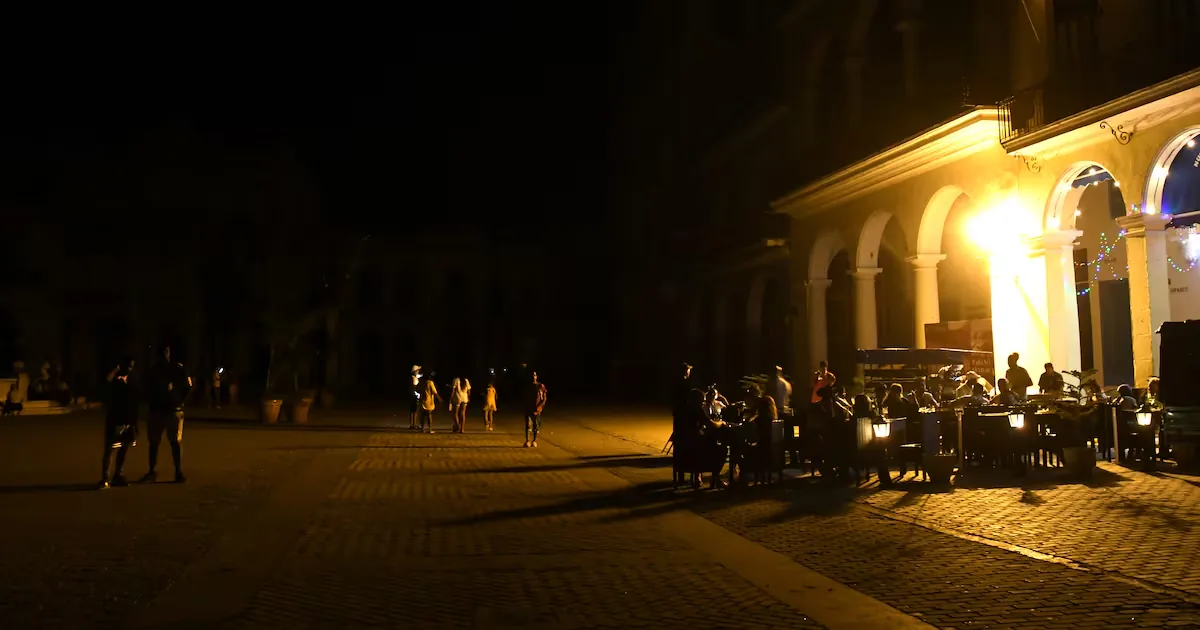
As Cuba’s energy crisis worsens, solar panels supplied by China have proliferated across the island as a measure to overcome difficulties caused by electricity shortages due to fuel scarcity, deteriorated infrastructure, and almost daily blackouts.
Read more 7.4 Earthquake shakes Colombia: injuries and severe building damage reported
According to RenewAtlas, a database that tracks solar projects and satellite images, at least 41 medium-sized solar parks and 18 smaller ones have been built in Cuba over the past two years. In fact, in 2024, the government announced plans to build 92 medium-sized parks by 2028.
“Blackouts in Cuba have been going on for years. We, the people from the provinces, have suffered them hard since the pandemic, while Havana was being protected and receiving oil from Russia and Venezuela,” said Rodolfo, a retiree from the Antonio Maceo Thermoelectric Plant, popularly known as Renté, in statements to the Diario de Cuba portal.
“The management of this problem has been terrible, not only for not investing in new thermoelectric plants but also for their lack of vision in renewables. If they had liberalized the import of solar panels years ago, they would be cheaper today. In the end, they (the government) have panels in their homes and prioritized circuits, and the people were left with the SEN (National Electric System) because here the dogs are us,” he added.
In this context, the Havana government approved two new resolutions to promote the use of renewable energies and try to ease the tax burden on both private and state entities investing in this sector.
Resolution 180/2026, published on Friday in the Official Gazette and effective as of this Saturday, exempts natural and legal persons from paying customs duties on the importation of photovoltaic solar systems, their parts, and essential components.
According to the resolution, natural and legal persons importing “solar heaters; photovoltaic pumps; small wind turbines; geomembrane biodigesters; biogas motor pumps; solar lighting and solar air conditioning systems” will also be exempt from this payment.
The measure will also benefit those bringing to the island chargers for electric vehicles that operate using renewable energy sources, “equipment intended for biomass processing for energy production and the essential parts and components of these devices.”
The push for solar energy accelerated after a series of nationwide blackouts in 2024, partly due to the collapse of Cuban crude oil imports from Venezuela, Ricardo Torres Pérez, a Cuban economist at American University, told The Wall Street Journal.
However, according to the newspaper, Cubans still spend much of the day without electricity despite the increase in solar energy capacity. The island’s 10 million inhabitants suffer almost daily power outages due to fuel shortages, a crisis worsened after the Donald Trump administration effectively blocked nearly all energy shipments to Havana at the end of January.
The new solar parks could generate around 1,000 megawatts of capacity when operating at full power, nearly five times the previously installed capacity and almost a third of the country’s typical peak demand, which is around 3,200 megawatts.
According to the government, solar energy now covers about 10% of the country’s energy needs, up from 3% at the beginning of last year.
The Wall Street Journal stated that it is unclear how much Havana is paying for the new construction, although China appears to be the main source of equipment.
Beijing manufactures approximately 80% of the world’s solar panels and already shipped equipment worth $117 million to Cuba in 2025, compared to $3 million in 2023, according to customs data compiled by the Journal. China has also sent more battery storage units this year, according to the same data.
Cuban Prime Minister Manuel Marrero Cruz said the projects were partially financed with nickel revenues. The government’s 2026 economic plan includes the donation of solar panels worth 320 megawatts from China. Vietnam and Japan have also donated smaller amounts of equipment.
According to a report from the Inter-American Dialogue think tank, cited by the U.S. newspaper, “China has rapidly increased its donations and financing for the fight against climate change in the Caribbean, one of the main transit zones for Latin American raw materials to Beijing. In the last two decades, China has replaced the United States as the dominant trading partner for most of the region’s major economies.”
“China is earning a lot of goodwill throughout the region with what it is doing with Cuba,” Jorge Piñón, who studies Cuban energy at the University of Texas, told The Wall Street Journal. While the new solar energy capacity is a welcome addition, it has contributed little to alleviating Cuba’s chronic energy problems.
“I have my EcoFlow and my solar panel; I am already independent from the National Electric System (SEN), which was my biggest dream. As things go in Cuba, every Cuban will have to self-supply electricity because the reality is that the SEN’s thermoelectric plants are old junk that can’t go on anymore,” said Isabel, 45, to Diario de Cuba.
Since fuel shipments and domestic oil production have declined for years, Cuba’s electricity grid, dependent on imports, was in a fragile state even before the United States cut off Venezuelan oil supplies and threatened sanctions on countries supplying fuel to Havana.
Cuba announced in May that it had run out of fuel reserves. Since then, the Trump administration has authorized some fuel shipments for private companies on the island.