







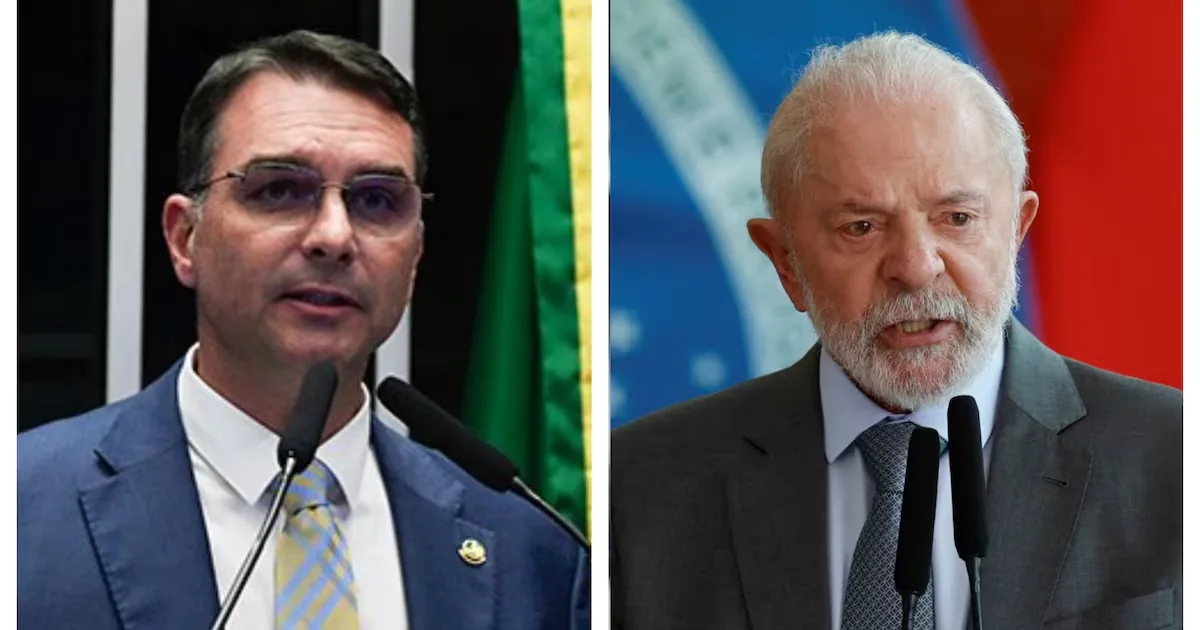
A survey by Quaest published this Wednesday by the newspaper O Globo shows Brazilian President Luiz Inácio Lula da Silva (Workers’ Party, PT) with 37% voting intention for the first round of the presidential elections on October 4, compared to 29% for Senator Flávio Bolsonaro (Liberal Party, PL). Augusto Cury (Avante) confirms the rise recorded in polls by other surveyors and appears in third place, with 10%.
Read more Donald Trump suggests renaming the Strait of Hormuz to «Trump Strait»
Next, Renan Santos (Missão) has 3%, and Ronaldo Caiado (PSD) and Romeu Zema (Novo) have 1% each.
Cury’s advance is explained by his good performance among independent voters, says Felipe Nunes, director of Quaest and professor at the Getúlio Vargas Foundation (FGV). “In this segment, the Avante candidate already reaches 24% and numerically surpasses Lula,” he told the media outlet G1 from Globo.
The best evidence the research has to explain Cury’s movement is his level of national exposure in the last week, Nunes points out. The candidate’s unawareness decreased from 74% to 54%. His disapproval rate increased from 16% to 25%. But his voting potential also doubled, from 10% to 21%, he highlighted.
In a second-round simulation, scheduled for October 25, between Lula and Flávio, the situation is a technical tie, as the difference between them varied from three to one percentage point compared to the previous poll. Support for the president fluctuated from 43% in the August 14 Quaest poll to the current 42%. The PL senator went from 40% to 41%. All these fluctuations occurred within the margin of error, which is about two percentage points.
In second-round simulations against the other four candidates, Lula appears ahead: 42% to 37% with Caiado, 40% to 34% with Cury, 43% to 36% with Renan Santos, and 44% to 33% with Romeu Zena,
The Quaest survey also shows the rejection rates of the presidential candidates. The candidates with the highest rejection rates (the highest percentages of “I know them but would not vote for them”) are Flávio Bolsonaro, with 55%, and Lula, with 53%.
Likewise, the survey reveals voters’ opinions on the investigations of the Lulinha case and the film “Dark Horse” in relation to the campaigns of Lula and Flávio Bolsonaro. On one hand, the president has been pressured to explain the alleged influence peddling of his eldest son, Fábio Luís Lula da Silva, in federal bodies. On the other hand, the senator and Lula’s rival in the presidential elections must respond about the financing of the biographical film of his father, former president Jair Bolsonaro.
According to the Quaest survey, 65% of those surveyed believe that the Lulinha investigation harms Lula’s campaign. Meanwhile, 64% believe that the “Dark Horse” investigation affects Flávio Bolsonaro’s campaign.
The Federal Police are investigating alleged irregularities in the origin and destination of funds negotiated by the senator with former banker Daniel Vorcaro, former owner of Banco Master, who is under preventive detention within the framework of Operation Compliance Zero, which investigates the largest recent financial fraud in Brazil and an alleged network of corruption and obstruction of justice.
Read more School uniform: in France, the discreet end of an experiment that did not convince