





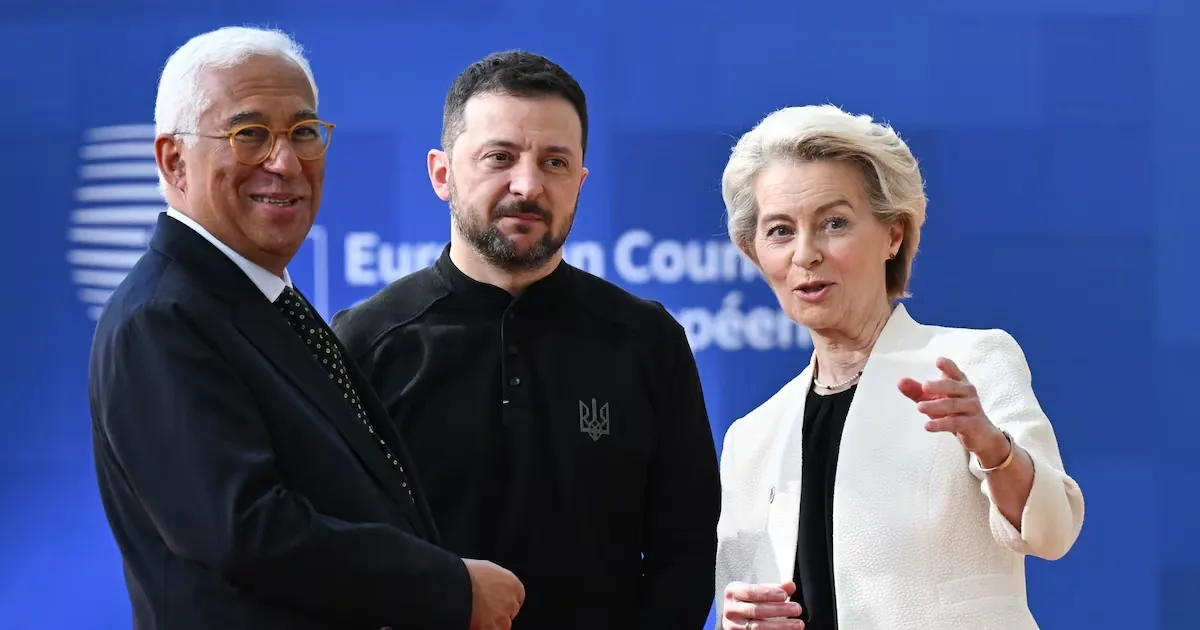
The European Union (EU) is set to begin formal accession negotiations with Ukraine and Moldova this month, likely coinciding with the meeting of Foreign Ministers on June 15 in Luxembourg, after the new Hungarian Government lifted the veto that Viktor Orbán’s administration maintained for two years on the process.
“This marks a significant milestone on their path to European integration and sends a strong message of unity and determination from the EU”, highlighted the rotating presidency of the EU Council, held this semester by Cyprus, in a statement announcing the unblocking of the process.
In the text, the Cypriot leadership reported that preparations are beginning for “the formal opening of cluster number one of the accession negotiations” with Ukraine and Moldova, referring to the first block of reforms addressed in the accession process.
The first cluster refers to the “basic fundamentals” and covers key issues such as the functioning of democratic institutions in the candidate country, public administration reforms, the judiciary, and Fundamental Rights.
This block of negotiation chapters is the one initially opened in every accession process to the community body, but, being fundamental reforms, it is also the last to be closed, according to European sources consulted by Europa Press.
The decision to take this step comes after a discussion at the level of ambassadors of the Twenty-Seven this Wednesday in Brussels, which confirmed that the new Hungarian Government no longer maintains the veto to start the formal process.
The Hungarian Prime Minister, Péter Magyar, in fact, stated last week at a press conference in Brussels, accompanied by the President of the European Commission, Ursula von der Leyen, that he was committed to opening a new chapter in relations with Kyiv and that talks to resolve bilateral differences over the rights of the Hungarian minority in Ukraine were advanced.
There are still days of technical work to formally finalize the “common position” of the Member States that will allow the opening of the first cluster, but it is assumed that it can be adopted during the next week.
Read more Runoff in Colombia: AtlasIntel poll gives De la Espriella a 7.7 percentage point lead over Cepeda
If this schedule is met, the EU intergovernmental conferences with Ukraine and Moldova, respectively, could take place on June 15, coinciding with the meeting of EU Foreign Ministers to be held in Luxembourg.
The two-year blockade led Brussels and Kyiv to begin informal talks some time ago to work technically on many of the chapters, with the aim that once they could be opened, they would be very advanced.
The Hungarian Prime Minister announced this Wednesday that his Government “will support the opening of the first group of Ukraine’s accession chapters” to the EU, as long as Kyiv’s commitments to expand the rights of the Hungarian minority in Transcarpathia, in southwestern Ukraine, are included in its action plan directed at Brussels.
Magyar also highlighted that “in just three weeks, we have achieved what Viktor Orbán and his Government did not accomplish in ten years.”
“We have reached a comprehensive agreement with Ukraine to expand the linguistic, educational, cultural, and political rights of the more than 100,000 members of the Hungarian minority in Transcarpathia”, he stated on his social media.
The head of the Hungarian Government indicated that the agreement with the Ukrainian authorities “is the result of several weeks of intense technical negotiations” between the two countries, emphasizing that “political and religious organizations representing the Hungarian minority in Transcarpathia” have also participated in them.
However, the Prime Minister specified that “Hungary continues to oppose accelerated EU accession”. “If Ukraine manages to close the 33 accession chapters in the next 10 to 15 years, Hungary will support Ukraine’s entry, provided a legally binding referendum is held,” he added.
Read more Is Iran’s Supreme Leader involved in negotiations with the U.S.?: The failures in Middle East truces