







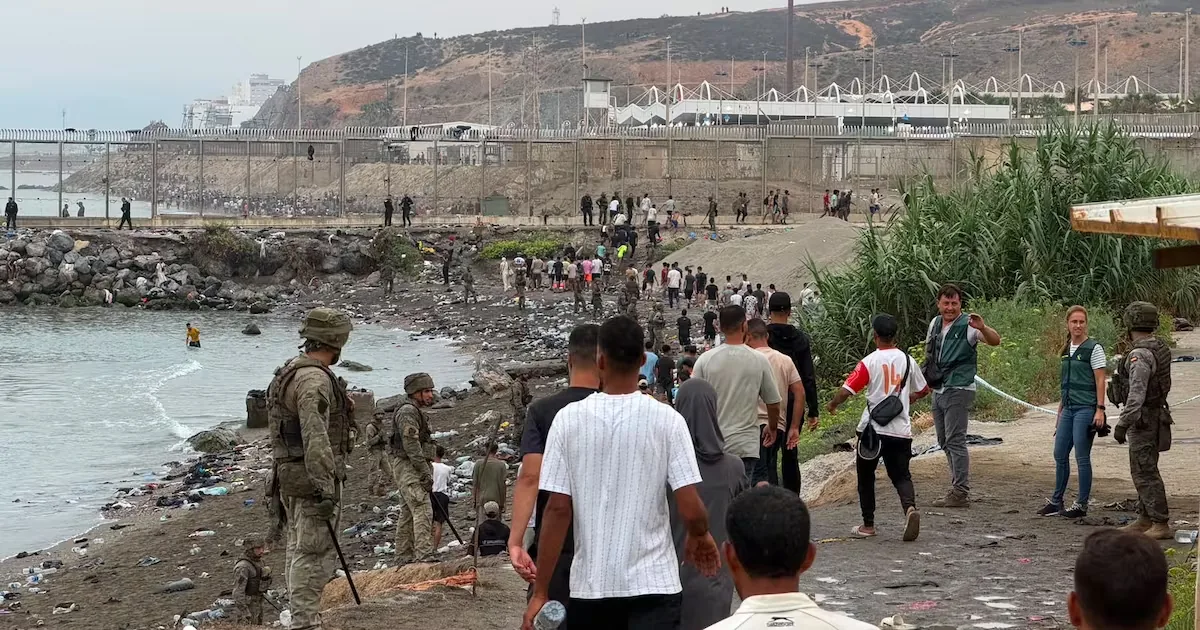
The Interior Ministers of the European Union and the countries associated with the Schengen area have agreed to strengthen the external borders, returns, cooperation with third countries, and the capacity to anticipate future episodes like the migration crisis in Ceuta, while expressing their “firm solidarity” with Spain and considering the situation under control upon noting that the vast majority of people who crossed irregularly have already been returned and that no subsequent movements towards other Member States have occurred.
Read more The case of Ceuta rekindles divisions around migration in Europe
This has been reflected in the conclusions drawn after the extraordinary videoconference held this Tuesday by the ministers in charge, in which they congratulated the Spanish authorities for their “quick and effective” response to the crisis in Ceuta and expressed their condolences for the “tragic loss of lives.”
“The EU is united and ready to support Spain. The EU’s external borders are a shared responsibility and migration requires a unified European response”, stated the Irish Minister for Justice, Interior and Migration, Jim O’Callaghan, who defended that the meeting served to evaluate the instruments the Union already has, identify areas where greater cooperation is needed, and prepare the debate that European leaders will hold at the European Council scheduled for October.
Beyond the immediate response to the crisis, the ministers agreed on the need to intensify the fight against migrant trafficking networks, strengthen returns, reinforce the protection of external borders and deepen cooperation with countries of origin and transit.
Likewise, the Twenty-Seven advocated improving the Union’s anticipation capacity through the development of early warning systems, including greater information exchange and monitoring of social networks to detect possible disinformation campaigns or coordinated movements that could lead to new mass arrivals.
The ministers also emphasized the importance of strengthening cooperation with places of origin and transit and continuing to develop partnerships with third countries that contribute to improving migration management and expanding opportunities for the local population.
The conclusions also highlight the importance of strengthening coordination among Member States during this type of crisis and maintaining “more coherent” communication to counteract information manipulation and interference from external actors.
The extraordinary meeting was held after several days of tension among European partners over the response to the Ceuta crisis, marked by criticism from 22 Member States of Spain’s migration policy and the request, both from the Prime Minister, Pedro Sánchez, and that group of countries, to convene an urgent meeting of Interior Ministers to coordinate a common response from the bloc.
Read more Guatemala’s Fuego volcano increases its activity and forces the first evacuations