

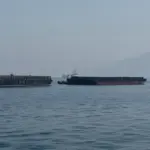



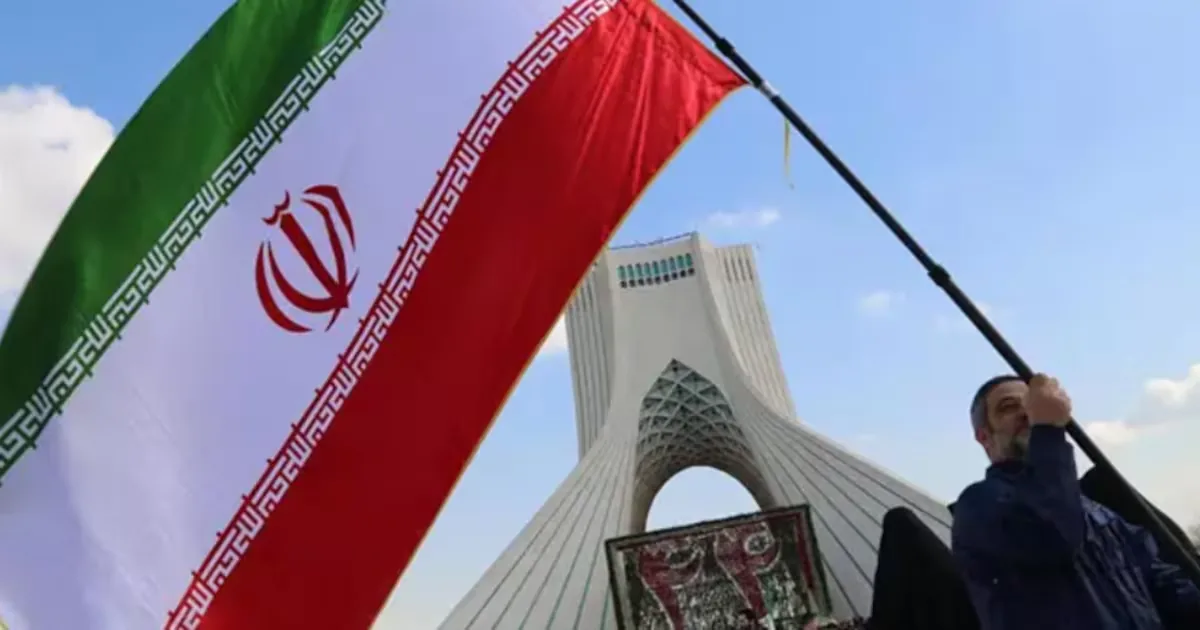
Iran stated this Sunday that the agreement with Oman to establish new maritime routes in the Strait of Hormuz is in its “final stages,” although it reiterated that the maritime route will not be reopened until the United States meets other conditions.
Read more Hamas maintains “firm commitment” to Trump’s plan for Gaza despite Netanyahu’s rejection
The Iranian Foreign Minister, Abbas Araqchi, indicated that the understanding about the strait that separates both countries is in its “final stages.” According to the Iranian agency Mehr, the agreement would establish the new maritime routes that would be used once the United States meets the conditions set and the reopening occurs.
A U.S. official had indicated on Friday that an agreement between Iran and Oman was close to being reached and that the maritime route could soon be reopened, which before being blocked by Iran transported one-fifth of the world’s shipments of oil and liquefied natural gas.
Araqchi also stated that Iran and the United States are not currently in talks and that Tehran will not initiate them while Washington fails to comply with the provisional agreement signed in June. According to the minister, messages between both countries are exchanged through intermediaries.
The U.S. president, Donald Trump, said on his part that Washington was acting discreetly in its relationship with Tehran. “We are only partially negotiating with them. We are simply watching Iran, with its huge inflation and the lack of liquidity they suffer,” he said.
Araqchi stated that the reopening of the strait will depend on the fulfillment of certain conditions, including a U.S. compensation to Iran for the attacks.
The secretary of the highest Iranian national security body, Mohammad Baqer Zolqadr, added among the demands the end of U.S. threats against Iran, the cessation of aggression against the country and its Lebanese, Palestinian, Yemeni, and Iraqi allies, the lifting of the blockade and sanctions against Tehran, as well as the release of Iranian assets.
A U.S. official, speaking on condition of anonymity, said that “once the agreement to restore unhindered commercial maritime transport is announced, the United States will lift the blockade of Iranian ports.”
Read more “Even wars have rules”: WHO Director-General condemns attack on medical storage in Ukraine
According to the same official, Washington’s actions would be conditioned on Iran fulfilling the commitments it has assumed.
The final decision on the Iranian side corresponds to the supreme leader, Mojtaba Khamenei, who has not been seen publicly since an airstrike killed his father and predecessor on February 28. State media reported this Sunday that President Masoud Pezeshkian met with Khamenei at the end of July.
Meanwhile, the United Arab Emirates stated on Saturday that Iran had attacked a ship belonging to its state oil company. Iran did not issue immediate comments and stated that the ship’s passage through the strait had not been coordinated with Tehran.
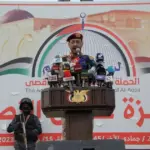
Tensions have also spread to the other side of the Arabian Peninsula. The Houthis claimed to have attacked the Jazan refinery of Saudi Aramco with a drone this Sunday.
The Saudi Ministry of Energy reported a fire at the facility, which was later extinguished with no injuries, although it did not specify the cause.
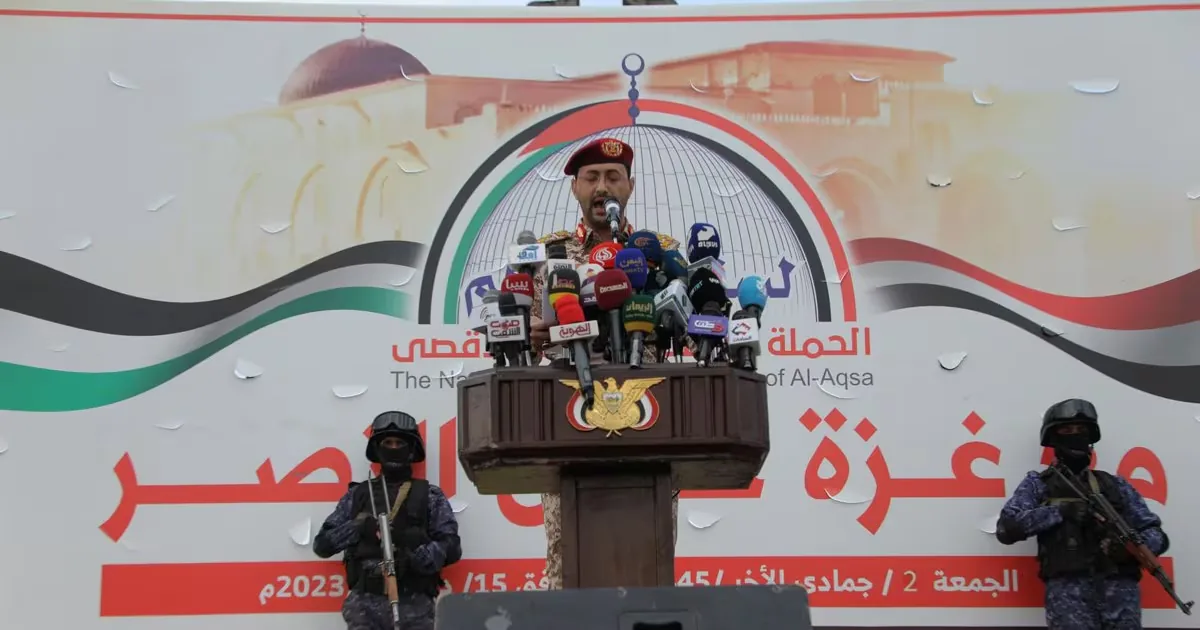
The Houthi military spokesman, Yahya Saree, stated that the group used a drone in the attack. The Jazan refinery processes 400,000 barrels of crude oil per day in southwestern Saudi Arabia.
Read more Houthi attack on Moca port leaves at least seven dead and 35 injured in Yemen