






The Government of Iran has warned South Korea of “serious consequences” in case it carries out a military deployment in the Middle East and has stated that it would be seen as “direct support to those responsible for the aggression,” referring to the United States, after Seoul confirmed that it was considering this option in the Strait of Hormuz following pressure from Washington.
“The relationship between Iran and South Korea spans more than 64 years of history, and both nations have consistently developed based on mutual respect,” said the spokesperson for the Iranian Ministry of Foreign Affairs, Esmaeil Baqaei, who noted that Tehran “places great importance on its friendly relations” with Seoul.
However, he pointed out that “given the current situation, in which the Iranian people are defending themselves from U.S. aggression and firmly responding to the war crimes committed by the United States against women and children, any military presence or participation in operations by another nation in the Persian Gulf or the Strait of Hormuz can only be considered direct support to those responsible for the aggression, which will bring serious consequences.”
“No sovereign and responsible nation should yield to the pressure and intimidation of the United States to join the conspiracy of aggression and atrocious crimes against the great Iranian people,” emphasized the Iranian diplomacy spokesperson through a message posted on social media.
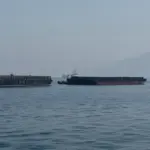
In this regard, he recalled that the strait “was completely open on February 28,” the date of the surprise offensive by the United States and Israel against Iran, while reiterating that it was these attacks that caused disruptions to navigation in the area.
“Washington unleashed an illegal and brutal war in the region and affected the normal flow of commercial maritime transport; tankers are detained, trade has been affected, and energy prices are rising,” he argued, before stating that “Iran is now trying to pass on to the world the bill for a disruption it itself caused, and blames Iran for it.”
Read more At least five dead, including two children, in new Israeli attacks in Gaza despite the ceasefire
“In Washington’s narrative, a war started by the United States must somehow be presented as the cost that Iran’s behavior represents for the world,” he explained. “The United States started the war but expects the whole world to pay the bill, while portraying Iran as the cause of this chaos. That is completely absurd!” he added.
Baqaei’s words came after the South Korean Presidency confirmed on Friday that it is analyzing options, including military measures, to support freedom of navigation in the Strait of Hormuz, although it ruled out having made a decision on the matter,
A spokesperson for the Blue House then stated that a military contribution does not only involve combat forces, but there are other “options”. “When one hears troop deployment, it tends to be associated with combat, but that does not necessarily have to be the case,” he said, while denying that this possible deployment is a point of friction between South Korea and the United States.
U.S. President Donald Trump ordered the Pentagon in August to substantially reduce maneuvers with North Korea, citing the “very good relationship” with North Korean leader Kim Jong Un and the military priority represented by the war in Iran, while criticizing Seoul for not supporting his offensive alongside Israel against the Asian country.
Read more Lula says that Brazil «is not a colony» and that decisions belong to the country and «no one else»