


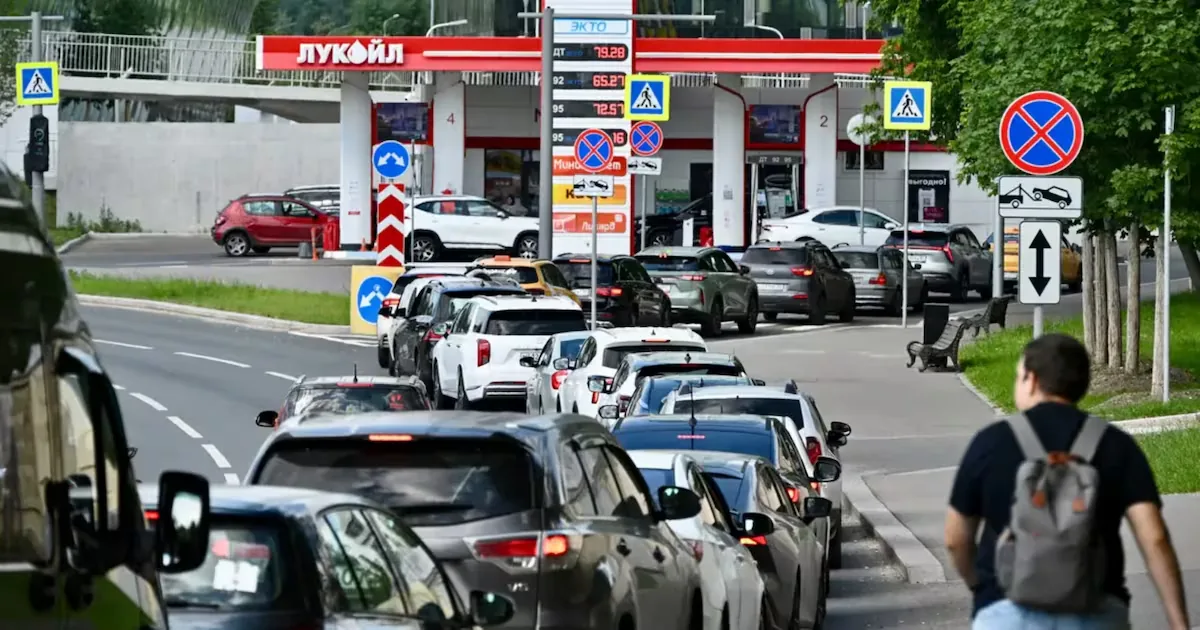
“We have returned to the Soviet Union,” say some Russians due to the lines they have to make every time they need to buy gasoline. For more than a month, it has been common to see queues of cars and trucks waiting for their ration of 40 liters of fuel at the few service stations that are operating. And the situation affects not only the means of transport but also the farmers who do not have gasoline for their chainsaws, for example.
Read more Lula vs. Milei: What lies behind the worst diplomatic clash in years between Brazil and Argentina
Almost two months after the start of the extensive Ukrainian campaign of long-range drone attacks that has paralyzed a significant part of Russia’s gasoline refining capacity, the growing national fuel crisis is reducing the Russian government’s room for maneuver.
The International Energy Agency noted that almost all major refineries in western Russia have been attacked by Ukrainian drones. Many plants have suffered multiple hits. In total, experts estimate that between 20% and 40% of the country’s total refining capacity has been put out of service.
This has forced the Russian government to extend its bans on diesel and gasoline exports until January 31, 2027, according to a statement released on Thursday.
Russia initially introduced the diesel ban from July 8 to 31 as part of a broader package of measures to support the domestic fuel market. Moscow had already imposed restrictions on gasoline and aviation fuel exports.
The government also announced on Thursday the temporary ban on the export of gasoline, diesel, marine fuel, and gas oil in order to maintain stability in the domestic market. However, from September 1, producers’ exports will be exempt from restrictions on diesel, marine fuel, and gas oils.
According to the statement, some fuel exports will continue under intergovernmental agreements and in the form of humanitarian aid.
At first, Russian President Vladimir Putin ignored the situation. And at the end of June, he acknowledged that Ukrainian drone attacks setting fire to Russian oil refineries and other critical infrastructure in the rear of the front were “creating problems.” But he noted that Russians would adapt and persevere. “These terrorist attacks have no impact on the situation,” he declared.
However, practically all regions of Russia, even in faraway Kamchatka on the Pacific coast, have felt the effects of the Ukrainian campaign. Some regions have imposed daily restrictions on vehicle refueling; others have tried to curb hoarding or speculation by banning the filling of fuel cans; others have established a coupon system, similar to that used by Soviet authorities when facing food shortages.
In Novgorod, for example, a northern region located just south of Saint Petersburg, Russia’s second-largest city, has also been affected. On VK, Russia’s largest social network, locals have started posting complaints on the page managed by the regional governor, claiming that the ban on refueling with metal gasoline cans harms villages far from gas stations and municipal centers.
“We live in a village without a supermarket, without a pharmacy, without transport to services. Our whole life, once a week, we have driven to a gas station 30 kilometers away to fill our tanks and cans, or even a couple more (for the generator) just in case there is a blackout,” wrote a woman who identified herself as Irina Tryaskina, cited by the Radio Free Europe/Radio Liberty portal.
Read more USA: More than a dozen wildfires in the state of Washington force mass evacuations
“How am I supposed to fill my tractor’s tank in the middle of the field?” wrote another person who identified himself as Aleksandr Vasilyev. “Do I have to drive several kilometers to fill it? And if I can’t refuel, then I—or rather, my cows—won’t have food for the winter,” he added.
Radio Free Europe/Radio Liberty noted that the discontent comments should not be confused with organized opposition. They also do not necessarily reflect a moral reconsideration of the Russian invasion. Some who wanted the war to end still blamed Ukraine or the West for having started it. Others supported Vladimir Putin and the Russian Army while complaining about the costs of the conflict.
This contradiction matches survey data. In a poll conducted in April by the Levada Center, an independent organization, 62% of respondents were in favor of peace negotiations, while only 27% wanted the fighting to continue. The portal noted that “polls in an authoritarian country—where criticizing the war can have legal consequences—must be interpreted with caution. Still, the persistent preference for negotiations—and the growing willingness of Russians to express their frustration—suggests a public increasingly eager for the war to end, although many Russians remain unwilling to question the original justification for the invasion.”
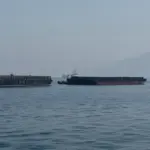
Ukraine’s successful medium-range attack campaign has not only disrupted Russian logistics and supply lines but has also further slowed the Russian military advance. In July, Kyiv began flying warehouses belonging to Russia’s largest online retailer, Wildberries, putting the war at the center of consumer attention and affecting thousands of small and medium-sized Russian businesses selling through this company. Kyiv has also intensified efforts to isolate Crimea by attacking fuel supply routes and power generation facilities on the occupied peninsula. Additionally, Ukrainian drones are attacking Russian tankers and cargo ships in the Black Sea and the Sea of Azov in an attempt to stop the country’s maritime exports of oil and grain.
Kyiv’s campaign is harming the Russian economy, according to an article in Foreign Affairs. The official forecast for Russian GDP growth in 2026 is barely 0.4%. Inflation is rising. To avoid an even greater price increase, the central bank keeps the interest rate at 14%. However, this very high figure makes credit prohibitively expensive for many companies.
The most worrying for the Kremlin, the magazine warned, is that the budget deficit increased by $73 billion in the first half of 2026, far exceeding the $48.5 billion forecast for the entire year. “Trump’s war against Iran has increased Russian oil revenues, but these revenues are not enough to create a liquidity cushion, and the monetary reserves that Russia accumulated during decades of commodity exports, including the commodity price boom caused by the 2022 war, have been depleted. To finance its growing war spending, the Kremlin has to keep cutting non-military spending and borrowing domestically, just as Russian bond buyers demand higher risk premiums,” the analysis indicated.
Another current concern is that the Kremlin will order a new mobilization after the State Duma elections scheduled for mid-September. Although authorities have denied it, rumors persist because the cash shortage problem is real.
Russia has suffered enormous losses on the battlefield. According to a recent estimate by the Center for Strategic and International Studies (CSIS), 450,000 military personnel have died and 1.4 million have been wounded in the four years of war. Although exact figures cannot be verified, all reliable estimates describe losses of a magnitude not seen in Europe since World War II.
In this scenario, Foreign Affairs magazine points out that Russia’s position has deteriorated. “Plan A to win over Trump failed. Plan B also went wrong. While the White House stopped providing many types of assistance to Ukraine, the United States has continued supplying vital intelligence to Kyiv and imposing sanctions on Russia. Meanwhile, Kyiv has been able to turn to its European allies to make up for the lack of aid. In fact, Ukraine is now in a better military position than last year. Russia, on the other hand, is losing more soldiers than it can recruit and is stuck on the battlefield. Its economy faces growing difficulties. Therefore, Plan C, in which Russia would win by outlasting Ukraine, is also not working,” the publication stated.
“But that does not mean Putin will change course. Russia’s problems are real, but the country is nevertheless capable of sustaining the conflict. Its economy continues to function well enough and it has the manpower and weaponry needed to continue fighting. Moscow is also devising new ways to regain the initiative. The Kremlin’s insistence on continuing to fight will worsen the situation for Russians, so there are elites in Moscow advocating for a negotiated solution. But there is no sign that Putin is listening. Therefore, it is almost certain that the war will be prolonged,” it concluded.