




The President of the United States, Donald Trump, assured this Tuesday that his country maintains “total control” of the Strait of Hormuz, a strategic maritime passage that has become one of the main hotspots of tension in the Middle East conflict and over which Washington and Iran have imposed a blockade.
“Right now we have total control of the Strait of Hormuz. They (the Iranians) do not control it. We have total control. It is ours,” said the U.S. president in statements to the media.
Trump made the statements when asked about Iran, a country about which he said he maintains deep distrust.
“I am the last person who would trust” the Islamic Republic, said the White House chief, then adding: “They have constantly lied to me.”
Along those lines, the president stated that, after about half a century, Iran “is no longer the bully of the Middle East” and highlighted the position in which, in his opinion, the United States currently finds itself.
“At some point, maybe they will do something and then get beaten, but right now we are in a very good position,” he added.
Trump’s statements come hours after the new head of Iran’s Supreme National Security Council, Mohsen Rezai, conditioned the opening of the Strait of Hormuz on a series of demands.
Read more Let’s talk about love: my first love
Among them, he proposed a ceasefire that includes Lebanon and the Gaza Strip, as well as the end of the blockade imposed by the United States and the release of Iranian funds that remain frozen.
The strait has thus become one of the main pressure tools amid the escalation, while both countries maintain restrictions on maritime transit.
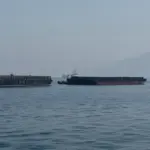
In parallel, the United States Army reported via social media that it fired two missiles at the Vela Nova ship, flying the Panamanian flag, when it was trying to cross the Persian Gulf heading to an Iranian port.
According to the U.S. version, the vessel sought to “violate the U.S. blockade against Iran by sailing to an Iranian port.”
In the same post, U.S. forces reported that so far they have diverted 55 merchant ships that allegedly tried to evade the blockade.
They also stated having disabled three vessels that did not comply with the rules and boarded two others as part of the operations deployed in the area.