





The United States and Iran are closer to a larger conflict, after three U.S. military personnel died and several were injured in an attack in Jordan and an incident in Iraq, further intensifying a week-long exchange of attacks that has highlighted the importance of Amman.
Read more Dmytro Yefremov, Ukrainian expert: “Putin does not want to start any negotiation”
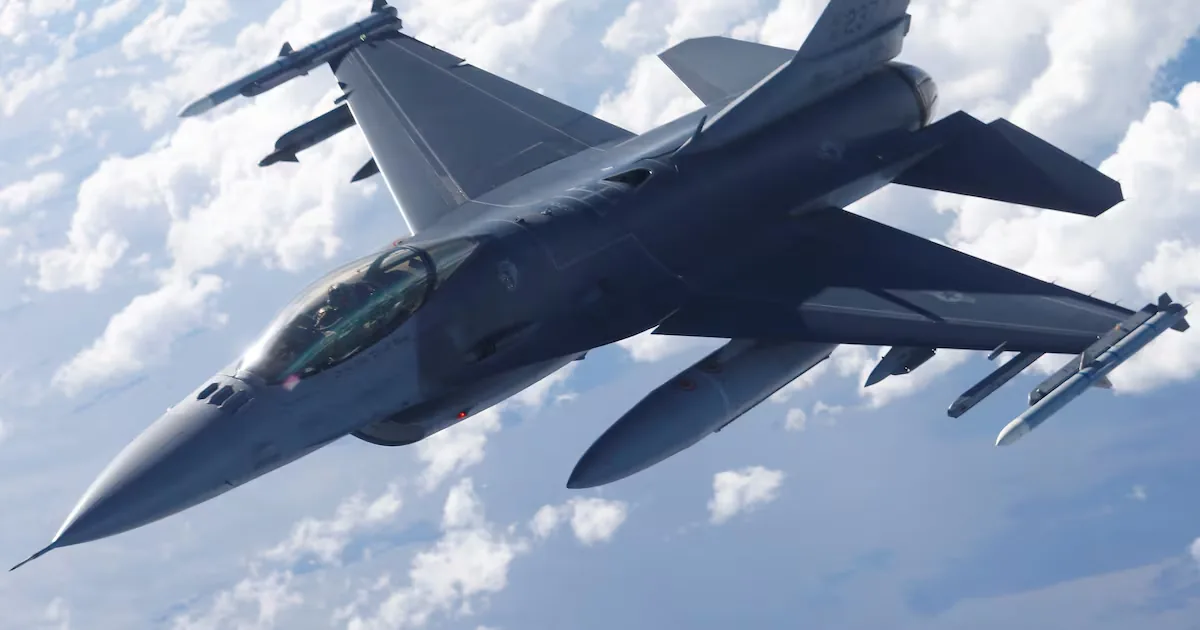
The United States Central Command (Centcom), which oversees U.S. forces in the Middle East, confirmed the deaths caused by a missile that struck a base in Jordan and stated that another soldier is missing due to the attack. According to sources close to the matter, who spoke with The Wall Street Journal, manned and unmanned aircraft were also hit in the attack.
Subsequently, Centcom announced that another soldier had died on Saturday in northern Iraq “during the controlled detonation of unexploded ordnance from a downed one-way Iranian attack drone.”
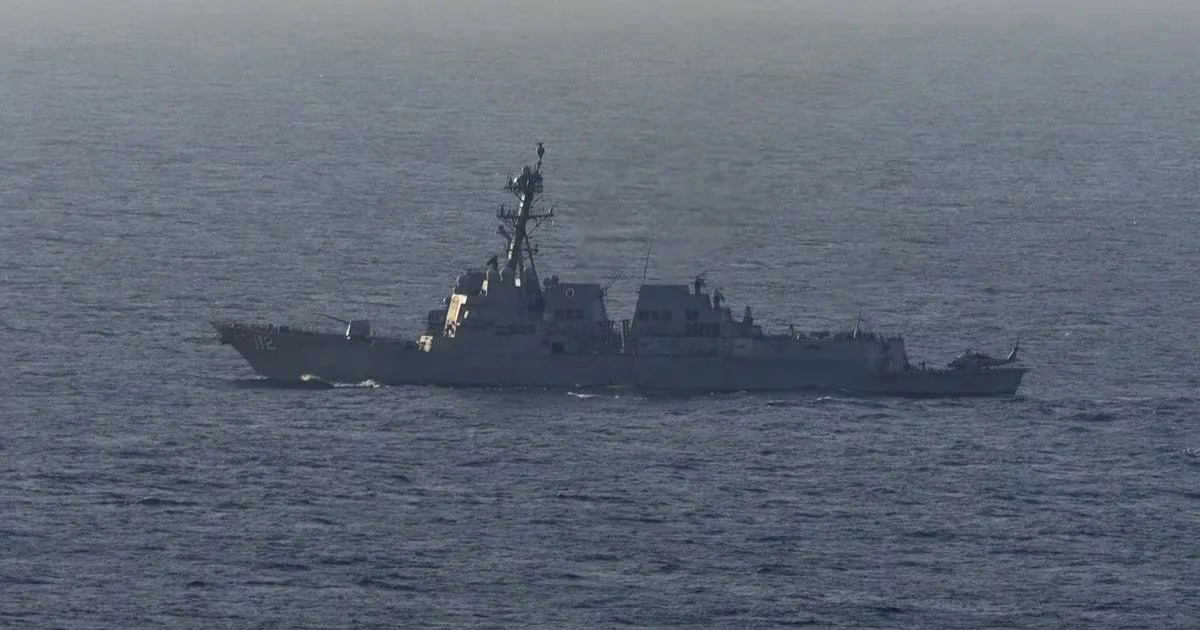
The United States launched new offensives against Iran to punish the regime for attacking Americans and to weaken its ability to ram merchant ships.
This was the first time U.S. soldiers died from an Iranian attack since the truce broke down in recent weeks, raising the number of U.S. casualties in the war to 17. According to analysts, with the death of the soldiers, what remained of the Memorandum of Understanding signed in June to end the war was practically dismantled.
The Trump administration hoped that the June ceasefire would end the war in exchange for Iran reopening the Strait of Hormuz, the vital Persian Gulf maritime route for global energy markets that it blocked during the conflict.
Instead, the war reignited when Tehran tried to maintain its control over the strait by firing on merchant ships passing through the area. The United States responded by bombing southern Iran, triggering a cycle of attacks and counterattacks.
Defense Secretary Pete Hegseth said on Saturday that the loss of U.S. soldiers “only strengthens our resolve.” However, The New York Times indicated, the attacks are likely to worsen Trump’s dilemma over how to proceed in the war against Iran that he started along with Israel last February.
Although Trump repeatedly promised the campaign would be brief and successful, “it has become a matter that has dragged on for months, has hit global energy markets, and has failed to force Iran to abandon its nuclear program,” the newspaper said.
The attacks have targeted strategic objectives such as bridges and water facilities both in Iran and Kuwait, a U.S. ally on the other side of the Persian Gulf. The Iranian Ministry of Health said at least 50 people have died in the country since the escalation began earlier this month.
According to The New York Times, no progress was seen in diplomatic efforts to end the fighting. In an unusual global warning issued over the weekend, the State Department alerted Americans traveling abroad that tensions in the Middle East had created the “potential for an unforeseen escalation.”
The U.S. military announced early Sunday that it had attacked Iranian coastal surveillance and air defense military facilities, as well as forces of the Islamic Revolutionary Guard Corps responsible for attacks against U.S. forces in Jordan.
Iran, for its part, launched attacks against Kuwait, Bahrain, and Jordan, Middle Eastern countries where the United States maintains a significant military presence. According to authorities, in recent days Iranian attacks had increasingly damaged critical infrastructure, including an oil facility and water and electricity treatment plants in Kuwait.
Iran has adapted to U.S. defenses by firing missiles that travel at extremely high speeds and can maneuver while heading toward Earth, according to U.S. officials who spoke with The Wall Street Journal. Iran’s ability to reach sensitive targets has also raised concerns that the regime is receiving help from China or Russia in target selection, the officials added.
Read more Japan’s Defense Minister says his country needs to have a debate about nuclear weapons
The intensification of Iranian attacks against Jordan highlighted the role Amman has played in U.S. military operations against the Islamic Republic.
The United States and Jordan have long cooperated on military, intelligence, and counterterrorism matters, and the Hashemite kingdom hosts important U.S. air bases. U.S. officials told The New York Times that Washington increasingly turned to Jordan in the lead-up to and during the early days of the war against Iran, as the Pentagon moved troops from Gulf Arab countries (Bahrain, United Arab Emirates, and Qatar) to relatively safer locations in Jordan and Israel.
U.S. economic and military aid to Jordan, dating back to the 1950s, has tripled in the last 15 years. In fiscal year 2025, the United States delivered approximately $33.8 billion to Jordan.
According to a recent Congressional report, the U.S. military has long operated from Jordanian air bases and there are about 4,000 military personnel in the country.
Amid this escalation, Jordan evacuated the international airport and seaport of the coastal city of Aqaba following a “specific and credible threat,” according to the U.S. embassy in the area. Subsequently, the country’s air defenses shot down three Iranian missiles targeting Jordan, while a fourth fell in an unpopulated area.
Aqaba is Jordan’s only coastal city and an important tourist destination. Located at the northern end of the Red Sea, it simultaneously functions as a luxury tourist refuge, a deep-water commercial port, and a gateway to the attractions of the Jordanian desert.
Military operations expert from the University of Chicago, Robert Pape, wrote on Substack that the threat to Aqaba, especially to the important transport hub for executives and seaport, arises after last week’s meeting between the Iraqi prime minister and the Jordanian foreign minister in Washington.
Reportedly, the goal was to accelerate and initiate work on the long-delayed Basra-Aqaba pipeline, which runs 1,600 kilometers from southern Iraq to the Jordanian coast of the Red Sea and will transport 2.25 million barrels daily at a cost of $18 billion.
“The war with Iran reduced southern Iraq’s exports by about 70%, exposing Baghdad’s dependence on the Strait of Hormuz. Jordan earns revenue from transit and 150,000 barrels daily for its Zarqa refinery. For Iraq, it is about security, not profit. The barrel in Aqaba costs around $6, compared to 60 cents in the Gulf,” he wrote.
For Iran, the academic wrote, the Basra-Aqaba pipeline would undermine its vision of a “security resistance belt” extending from the Mediterranean, through the Red Sea, to the Persian Gulf; a network intended to deny its rivals precisely this type of permanent alternative routes for energy supply and to preserve Tehran’s long-term influence over global oil flows.
“If that is Tehran’s strategic objective, the implications are clear. Iran has powerful incentives to extend the conflict beyond Hormuz itself and attack any infrastructure that could permanently reduce its coercive capacity,” he wrote.
“A functional pipeline between Basra and Aqaba would not only bypass a waterway but would weaken Iran’s long-term ability to threaten global energy flows. This makes projects like Aqaba increasingly attractive military targets, not for their immediate economic value, but because they challenge Iran’s broader strategy of maintaining influence by controlling regional strategic energy points. This increases the risk for anyone involved in these projects and associated localities in the region,” he added.
Read more United States launches eighth night of attacks against Iran after death of soldiers in Jordan