





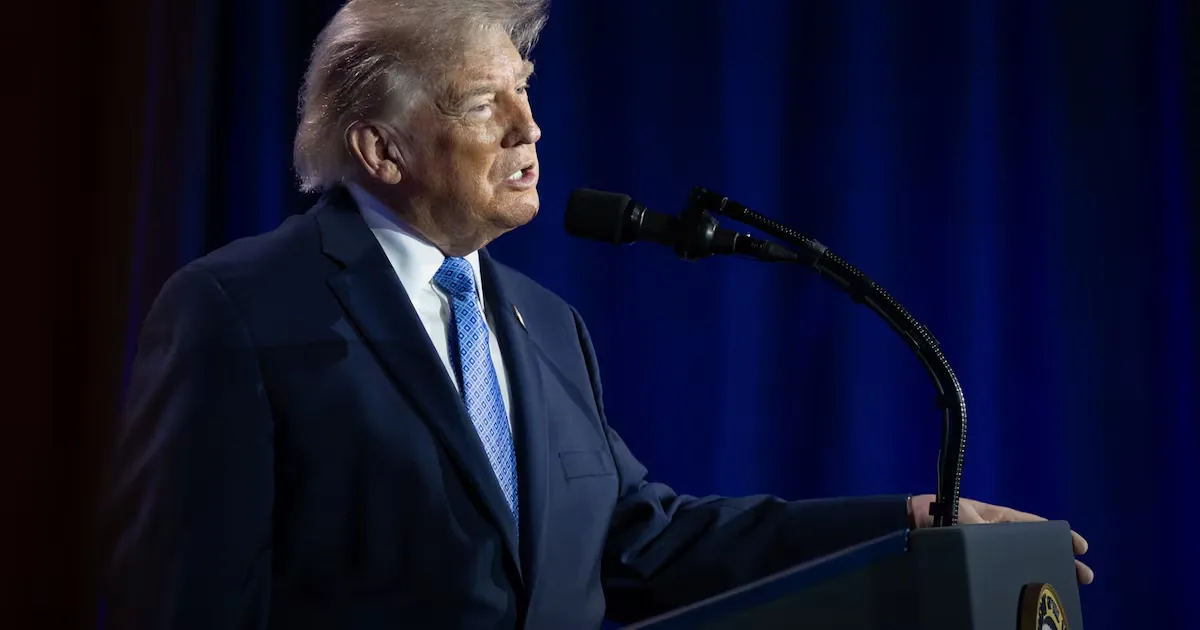
One of the most remarkable stories of the last decade has been how Donald Trump managed to take over the Republican Party and overturn many of its basic policies, from defending a liberal trade order to committing to military alliances like NATO. Traditional conservatives, nationalists, libertarians, evangelicals, and Neocons were made to coexist, essentially betting on the electoral success that Trump would bring them. Any person or institution that opposed was publicly condemned from the White House.
Now those fractures have begun to appear. The war with Iran opened a crack that goes far beyond foreign policy. For a significant sector of the MAGA movement, Trump broke one of his main promises, that of avoiding new wars and focusing on the internal interests of the United States. America First.
An example of this struggle can be seen in the Heritage Foundation, for decades the main intellectual laboratory of American conservatism. The institution is going through a deep crisis, which reached its peak last year when its president, Kevin Roberts, defended Tucker Carlson – the most visible figure of the rebellion – for having invited Nick Fuentes, a nationalist and white supremacist, to his podcast. Several employees resigned and Roberts was forced to issue a public apology.
The episode revealed the difficulty traditional republicanism has in navigating the new waters in the face of the growing power of figures like Carlson. Carlson has gradually – and especially after being fired from Fox News in 2023 – moved towards a more extreme, more populist, more anti-Semitic, more pro-Russian right: fundamentally, more conspiratorial. From that space, a pole has been created alongside figures like Marjorie Taylor Greene and Thomas Massie, accusing Trump himself of having betrayed the sector he himself created. Last week a photo of a small meeting appeared, from which talk began of a new political movement, further to the right than Trumpism.
The dispute reveals something that has been brewing for a while. Trump – unless he completely discards the constitution – will not run for re-election. His popularity is at rock bottom, a net approval of -25, according to YouGov. He has failed in Iran. He is becoming, in other words, a lame duck. What then will become of the Republican Party after Trump?
There are at least three different visions. An institutional right, represented by business sectors, the Wall Street Journal, and much of the Republican establishment. Then there is a more pragmatic Trumpism, willing to maintain the legacy, even if it means modifying positions, represented by Marco Rubio, Jared Kushner, and others close to the president. Finally, this new populist right, deeply nationalist, isolationist, and critical of economic elites, international alliances, and many of the traditional pillars of U.S. foreign policy. The post-Trump era is beginning to take shape, and the identity of the American right for the next generation. These are internal disputes, but with global reach.
By Robert Funk, Scholar at the Institute of Public Affairs, University of Chile.