







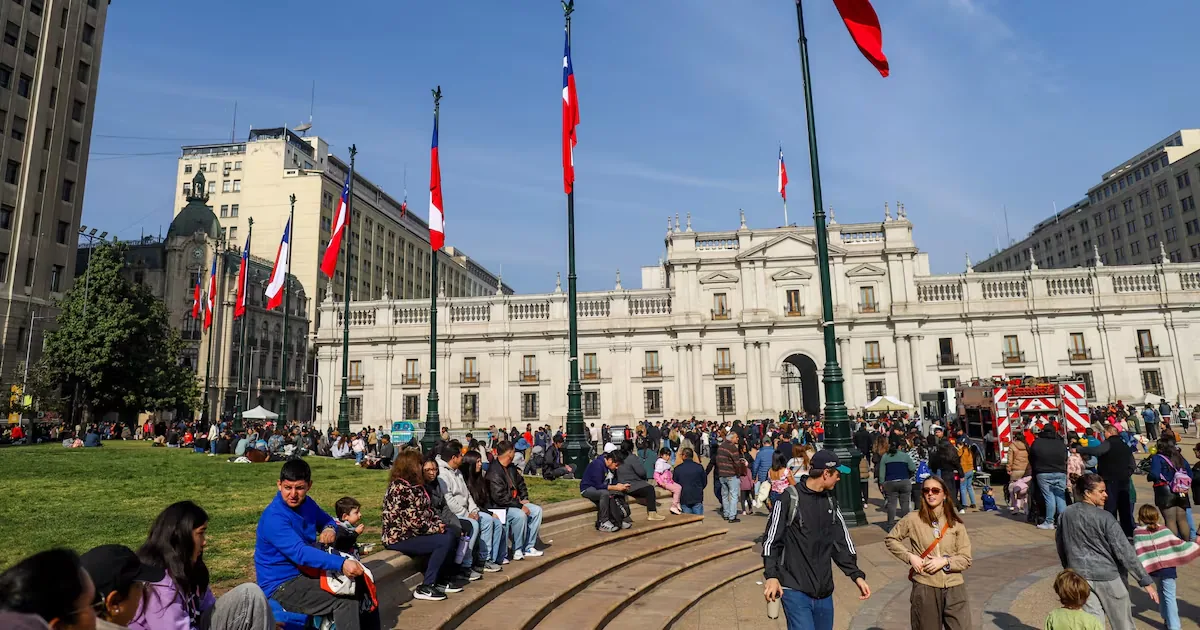
Cultural heritage consolidates its place on the public agenda and in the daily lives of Chileans, although its development still faces significant critical challenges. This is demonstrated by the latest edition of the study “Chile Speaks to Us: Heritage”, developed jointly by the Center for Public Policies and the Faculty of Architecture, Art and Design of the Universidad San Sebastián (USS).
Read more ¿Posuribisimo?: How Abelardo de la Espriella’s victory could mark a new stage for Colombian politics
The research, conducted in May of this year with nearly a thousand people nationwide, shows a rebound in interest and citizen participation, largely triggered by milestones such as Heritage Day. However, the diagnosis also raises alerts regarding barriers to access, information deficits, and a critical view of the regulatory institutional framework.
The data show quantitative progress in people’s connection with their historical environment. A 79% of respondents declared knowing some type of heritage in their municipality, representing an increase compared to the 75% recorded in the previous measurement.
The rooting of cultural activities also shows positive numbers. Those who say they have ever attended Heritage Day rose from 53.6% to 59.5%. Proximity to heritage spaces also grows, with 25.5% of those surveyed visiting a monument, historic site, or exhibition during the last month, surpassing the 19.8% of the previous measurement.
“Heritage not only speaks of our history, it also projects the way we build city, identity, and social cohesion,” analyzes Loreto Lyon, dean of the Faculty of Architecture, Art and Design at USS. In her view, the survey reflects “significant advances in citizen appreciation, but also the need to continue strengthening protection, access, and education tools.”
Despite the enthusiasm, Chileans recognize substantial difficulties in connecting with the cultural offer. When asked about the reasons that prevent more frequent visits, lack of information leads with 45.5%.
Following are scarce offerings in certain residential areas (35.3%), revealing a persistent territorial and centralism gap, and lack of time (31.5%).
Read more Def Leppard returns to Chile with Extreme as guest
One of the most complex points of the study addresses institutional matters. Only 30% of citizens evaluate the current heritage protection system in Chile as “adequate” or “very adequate”. Additionally, 56% rate the state processes and permits to intervene in heritage assets as “relatively” or “very complex.”
Regarding the classic tension between conservation and economic growth, public opinion is almost evenly divided, with 44% believing both objectives should be balanced, while 43% consider that heritage protection should be prioritized.
For Carlos Maillet, director of the Art and Heritage Conservation program at USS, the figures provide key insights for public policies: “The results show a citizenry that recognizes the cultural value of heritage, but also identifies access barriers and institutional improvement opportunities that need to be addressed.”
The USS report identifies a strong opportunity niche in the educational field. There is almost unanimous consensus on the need to raise awareness among new generations: the idea of incorporating heritage education content into the formal school curriculum scored 8.9 points out of a maximum of 10. Likewise, interest in specializing goes beyond mere curiosity, with 61% expressing interest in training related to the area. Meanwhile, 25%, that is, one in four respondents, would be willing to take university programs in the subject.
The university points out that this background reinforces the urgency to move towards a more solid and visible training offer in conservation, conceived not only as a technical discipline but as a strategic tool to modernize public management, streamline mediation processes, and strengthen trust in sector institutions.
Technical Sheet survey:
The survey was conducted between May 8 and 18, 2026, with a universe of 984 people over 18 years old, residing in the 16 regions of the country. The study has a margin of error of 3.12% and a confidence level of 95%.
Read more Keiko Fujimori and Roberto Sánchez’s statements in their only debate before the runoff in Peru