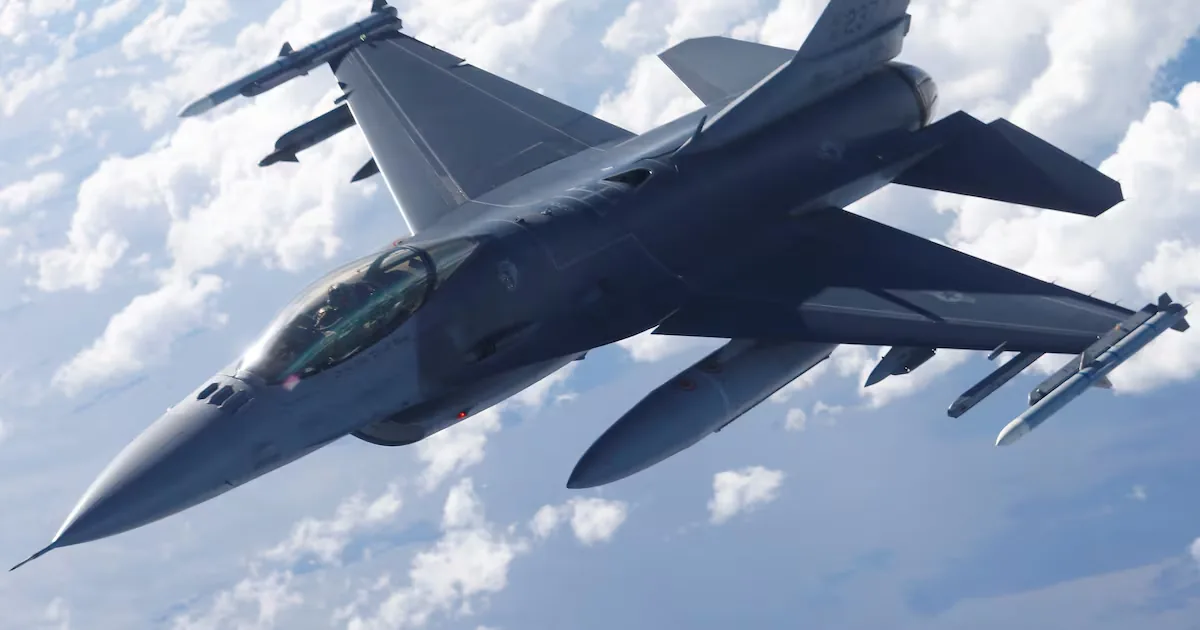









After so much time distancing itself, it seems that now the United States wants to strengthen NATO’s deterrence power. According to a report by the Financial Times, the Pentagon is discussing the possibility of expanding its nuclear weapons network in Europe, in a move that could increase the importance of the North Atlantic bloc. This is especially as fears on the eastern flank grow, both due to the Ukrainian war and the recent drones that have accidentally fallen in Romania.
Read more “Traitors to the homeland”: Lula accuses Bolsonaro’s sons of the U.S. tariff proposal on Brazil
The Financial Times article points out that U.S. officials have expressed their willingness to deploy military assets with nuclear capability in other European countries, in addition to the six NATO members that currently host nuclear sharing agreements with the United States. While no agreement seems imminent, it is reported that talks are taking place within the bloc.
The proposal would involve increasing the number of countries hosting U.S. dual-capable aircraft: military platforms capable of launching both conventional and nuclear weapons during a conflict.
According to the report, several countries on NATO’s eastern border, including Poland and the Baltic countries, have expressed interest in hosting dual-capable airbases. This is part of the alliance’s nuclear deterrence framework.
These talks come as NATO continues to reassess its defense posture after years of increasing tensions with Russia and growing concern about security in Eastern Europe. Just two days ago, Bucharest confirmed that a Russian drone entered its territory, injuring two people.
Although the Financial Times cited sources familiar with the talks, neither the White House, the Department of Defense, nor NATO immediately commented on the report. Neither Reuters nor other agencies have confirmed the situation.
Since the Russian invasion of Ukraine in 2022, several Eastern European countries have pushed for NATO to increase its military deployment and security guarantees. The nations closest to Russia’s borders have systematically advocated for a greater allied military presence, including requests for advanced missile defense systems, troop deployments, and enhanced air capabilities.
For NATO’s eastern flank countries, hosting aircraft with nuclear capability could strengthen deterrence by demonstrating a greater U.S. commitment to security in the region. For Russia, however, such a measure could be interpreted as a significant escalation. This, of course, could increase tensions between Moscow and the alliance and trigger new military responses.
This comes in a climate where NATO has already begun seeking alternatives to defend itself, especially from the European side.
The leaders of France and Norway announced last Wednesday that Oslo will join the nuclear deterrence plan led by Paris to strengthen security on the continent. “We are facing the most serious security situation since World War II,” said Norwegian Prime Minister Jonas Gahr Store, announcing alongside French President Emmanuel Macron in Paris the signing of a defense pact between the two countries.
Thus, Fox News highlighted, France has added a ninth European country to Macron’s growing nuclear deterrence initiative, as European governments seek to take a more significant role in their own defense after years of pressure from President Donald Trump to assume a greater share of NATO security responsibilities.
Norway thus became the latest country to participate in talks on how the French nuclear arsenal could contribute to European security. The French “advanced deterrence” initiative also includes Germany, Poland, the Netherlands, Belgium, Denmark, Sweden, Greece, and the United Kingdom.
Trump has repeatedly argued that European countries relied too much on U.S. military power, investing insufficiently in their own defenses. At the NATO summit held in The Hague in early 2026, alliance members agreed on a new target: to allocate 5% of GDP to defense and defense-related investments by 2035. This is a drastic increase from the 2% that NATO had long maintained as a benchmark.
For decades, Europe’s last nuclear resort has been the United States, which maintains nuclear weapons in several NATO countries, such as Germany, Belgium, and the Netherlands, as part of the alliance’s deterrence strategy. France’s proposal is less explicit and seeks to strengthen deterrence by making Russia consider the possibility that threats against European allies could affect French security interests.
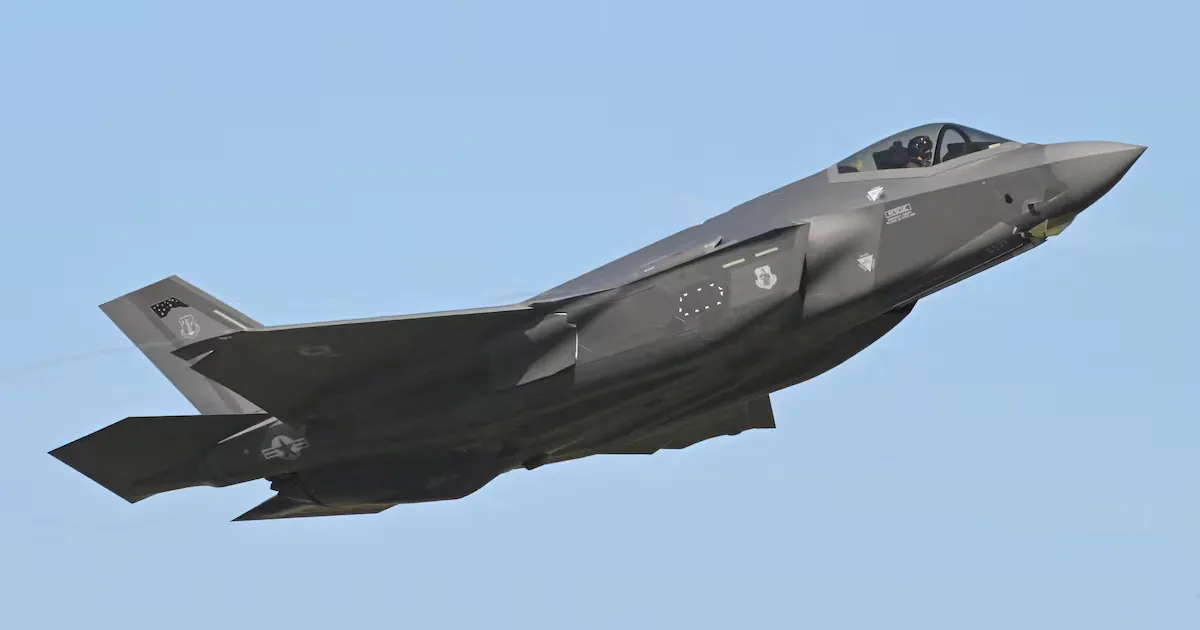
A key risk lies in the F-35A nuclear-capable fighters, which are already arriving in Poland and other allies. They are capable of carrying U.S. B61-12 thermonuclear gravity bombs for nuclear missions. Unlike older aircraft, the stealthy and versatile F-35A can seamlessly alternate between conventional and nuclear roles.
In a crisis, EUalive highlights, it would be extremely difficult for Russian intelligence to determine whether a Polish or allied F-35 taking off from a Baltic country is armed with conventional munitions or a nuclear bomb. This ambiguity lowers the nuclear threshold for Russia.
Every routine patrol, training flight, or defensive deployment of these aircraft could be interpreted as possible preparation for a nuclear strike. Russian early warning systems and doctrine would likely force a rapid shift to a maximum alert state, which could involve more frequent deployment of forces in “special combat readiness.”