

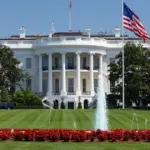




The President of the United States, Donald Trump, stated this Tuesday that his government is not trying to force Iran to negotiate and maintained that Washington is in a favorable position due to the control that – according to him – it holds over the Strait of Hormuz and the deterioration of the Iranian economy.
In a post made on his Truth Social account, the president responded to information attributed to ABC News that indicated that the United States would be seeking to bring Iran back to the negotiating table, a version that was rejected by Trump, who emphasized that he is not interested in Tehran signing an agreement.
“I am not trying to force Iran to the negotiating table,” he wrote, before stating that he cares little if both countries reach an agreement that, in his view, would be “useless” for Tehran, adding that “I like our position much more now, with almost total control of the Strait of Hormuz and its economy totally collapsing.”
The American president closed his message with a question directed at the Iranian people regarding the Islamic Revolutionary Guard Corps: “When will the Iranian people rise up and fight?”.
The post was released hours after the United States carried out new attacks against targets on Iranian territory and Tehran responded with a new offensive against U.S. facilities in the Middle East.
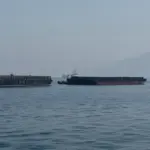
The new wave of attacks targeted sites linked to the Islamic Revolutionary Guard Corps of Iran, which Washington justified, stating that it sought to respond to Iranian actions against commercial maritime transport in the Strait of Hormuz and against U.S. military personnel deployed in the region.
Read more U.S. launches new attacks on Revolutionary Guard targets in Iran
Previously, Trump had indicated that the operation responded to the Persian nation’s attempts to place naval mines in the Strait of Hormuz, as well as launch eight missiles against a U.S. base in Jordan, which, according to his version, were intercepted.
Tehran, for its part, responded during Tuesday night and early Wednesday local time with attacks against U.S. positions in the region.
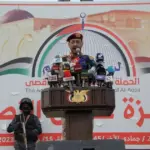
The Revolutionary Guard Corps claimed to have used heavy ballistic missiles against Camp Titin, a U.S. facility in Jordan, and drones against installations at the Sheikh Isa base, in Bahrain. Later reports also accounted for attacks against other points linked to the U.S. presence in the region.
Meanwhile, the Jordanian Army reported intercepting 10 Iranian missiles, while three others fell in areas far from populated centers, with no casualties reported from those impacts.
Read more Vice President of Bank of America dies after being stabbed in Times Square