


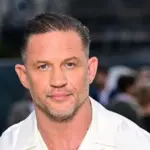


A resignation without an official explanation, but with a high impact on the U.S. Armed Forces.
Read more U.S. launches new attacks on Revolutionary Guard targets in Iran
Dan Driscoll, until now the country’s Army Secretary, submitted his resignation to President Donald Trump on Monday after speaking with him about the situation of the military institution, according to a U.S. official to the AP news agency and other sources familiar with the process. The White House confirmed the departure but has not yet outlined the reasons.
Presidential spokeswoman Anna Kelly chose to highlight Driscoll’s record and describe him as a “highly effective” official in executing Trump’s agenda. The White House especially emphasized his work to strengthen the Army’s readiness and operational capacity, as well as his involvement in diplomatic efforts related to Russia and Ukraine.
But the official praise contrasts with reports published over recent months about an increasingly tense and complex relationship between Driscoll and Defense Secretary Pete Hegseth. Sources cited by local media such as The Washington Post, The New York Times, and Politico place these disagreements at the center of the departure.
One point of friction was reportedly Hegseth’s decision to remove prominent Army officers, including General Randy George, who held the position of Chief of Staff.
George was dismissed in April without a detailed public explanation. Driscoll was considered an ally of his and later expressed regret before Congress about the departure. The New York Times reported that the Army Secretary had expressed to Trump his frustration over the dismissal of experienced military leaders and the blocking of promotions for officers linked to people Hegseth had removed.
The chain of replacements did not end with George. Other high-ranking officers also left their posts, including James Mingus and Christopher Donahue, commander of the U.S. Army in Europe and Africa. The succession of these decisions has fueled criticism from legislators of both parties and the perception of a deep reorganization of the command structure.
Now, with Driscoll’s departure, the Army is left without a stable leadership. The importance of the resignation goes beyond the departure of an official.
The armed institution now faces a simultaneous vacancy in its highest civilian and military positions. The secretary position awaits a new appointment, while the Chief of Staff remains in the hands of an interim since George’s dismissal. The Washington Post has described the situation as part of a broader purge of senior military leaders under Hegseth.
The circumstance is especially sensitive, as the Army holds central responsibilities in several theaters. Its forces participate in operations in the Middle East, and its structure in Europe plays a significant role in U.S. support for Ukraine and planning against Russia.
The change also occurs as the Trump Administration faces high turnover in the Pentagon’s top ranks and a shortage of senior leaders confirmed by the Senate. Driscoll’s resignation also adds to other significant departures, such as Navy Secretary John Phelan and senior Army officers.
The dispute was reportedly not only personal. The same sources point to a difference in approach regarding the future of the U.S. ground force.
Driscoll came into the role with the image of a “change agent” and focused much of his management on accelerating the incorporation of new technologies, especially drones, anti-drone systems, and capabilities developed by small tech companies. The Reuters news agency highlights that he advocated for greater agility in weapons acquisition and a reduction of bureaucratic obstacles to quickly incorporate new capabilities.
However, in recent months some of these initiatives were rolled back. Under the interim leadership of General Christopher LaNeve, the Army canceled a program through which a U.S. unit in Europe developed its own drones and redirected it back to a conventional infantry structure, according to officials cited by the U.S. news agency AP.
For several of Hegseth’s critics, the problem centers on the fact that the leadership renewal and abandonment of certain initiatives are undoing precisely the transformation that Driscoll and other officers had tried to promote.
More than an isolated resignation, Driscoll’s departure seems to be another episode of the reconfiguration of the Armed Forces undertaken by the Trump Administration.
Read more Vice President of Bank of America dies after being stabbed in Times Square
The decisive element now will be to see if the replacement consolidates Hegseth’s strategy — with greater centralization of control and a renewal of the military leadership — or if the White House seeks to preserve part of the technological modernization program advocated by Driscoll.
For now, the only officially confirmed explanation is that Driscoll leaves the post after talking with Trump about the state of the Army. The rest — his disagreements with Hegseth, the dispute over the dismissal of generals, and differences over modernization — come from sources and media reports describing the background of a departure that, although politically significant, has not yet received a full public explanation.
What does seem clear is that Driscoll’s departure leaves the U.S. Army at a moment of special institutional vulnerability: without a confirmed secretary and with its main military post still held by an interim, while its forces simultaneously face the challenges of the Middle East, Europe, and an accelerated technological transformation of the battlefield.
Driscoll’s position within the Administration was unique after emerging as a secretary with access to Trump and Vance. An Iraq veteran, tech investor, and former advisor to J.D. Vance, he maintained a close relationship with the vice president, whom he met during their studies at Yale.
Trump had presented him in 2024 as a “change agent” and “disruptor.” The Senate confirmed him in February 2025 with 66 votes in favor and 28 against, a result that reflected considerable support for a Trump Administration appointment.
This ability to maintain relationships with legislators from both parties also made Driscoll an unusual figure within the Pentagon. The New York Times highlights that Democrats and Republicans considered him an accessible interlocutor, even when they politically disagreed with him.
Democratic Senator Jack Reed, the top minority member on the Senate Armed Services Committee, praised his work and used his departure to criticize Hegseth’s management, accusing him of favoring personal loyalty over professional competence.
Driscoll’s departure occurs amid a broader debate about the leadership model Hegseth is imposing at the Pentagon.
His critics argue that the Administration has displaced experienced officers to place people considered closer to Trump and Hegseth’s political agenda. The Washington Post notes that among the tension factors was even Hegseth’s perception that Driscoll had not shown enough deference or courtesy toward him.
From this perspective, the resignation can be interpreted as the outcome of a dispute over who should define the Army’s priorities: the Secretary of Defense, with a strategy of deep leadership reorganization, or the Army Secretary, who advocated a technological and operational transformation partly supported by the displaced commanders.
However, there is no public statement from Driscoll formally attributing his resignation to a single conflict with Hegseth.
The timing of the resignation adds another layer of uncertainty. The United States remains militarily involved in the Middle East and maintains its commitment to European defense and support for Ukraine.
The loss of an Army Secretary under these circumstances forces Trump to quickly fill a position that also requires Senate confirmation.
Among the names mentioned to succeed Driscoll is Sean Parnell, the Pentagon’s chief spokesperson and a figure close to Hegseth. However, his potential nomination could face political obstacles in the Senate, according to officials cited by The New York Times.
Driscoll’s departure also coincides with the planned exit of Dave Fitzgerald, a senior civilian official who had worked on initiatives to attract private investment and accelerate technological innovation in defense.