








The very idea of thinking about a smartwatch for children can make many parents and guardians hesitate. The market for children’s wearables presents a constant technical challenge not only for manufacturers: the devices must be durable for daily use and also offer concrete safety tools for parents, with privacy limitations and other controls.
Read more Games coming to the PlayStation Plus catalog in July
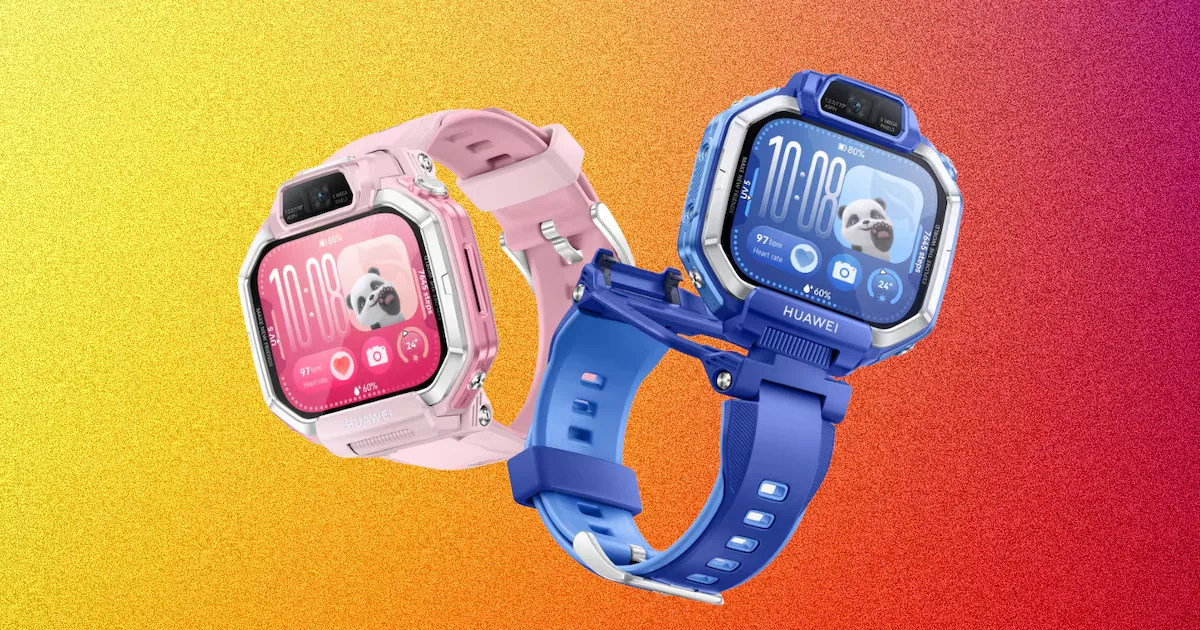
The recently launched HUAWEI Watch Kids X1 allows, through the HUAWEI FamCare app, not only to geolocate and talk to children via video call at any time (through its own SIM): it also measures their daily steps, heart rate, and even the emotional well-being of the minors.
At La Tercera we tested the new HUAWEI Watch Kids X1 for a week (there is also a Pro version), a smartwatch that aims to be an alternative to the first smartphone.
The team from the Asian firm HUAWEI stands out for its physical versatility. The model incorporates a 1.82-inch AMOLED screen and an ultra HD dual camera system capable of capturing selfies and surroundings.
A practical design feature is the possibility to remove the watch from its strap to hang it around the neck with an independent cord. This allows children to use it as a traditional handheld camera or adjust the viewing angle to improve the field of view during video calls.
Available in blue and pink, the basic model feels sturdy enough to be made of plastic. The silicone strap is comfortable, can be submerged, and has IP68 and IP69 resistance.
The performance of the tracking hardware is the core of this device. The watch uses five smart positioning modes, including dual-band GNSS satellite and dual-band Wi-Fi connectivity.
In our coverage tests in urban areas of Providencia, the positioning technology demonstrated high accuracy in environments with obstacles and tall buildings, in wide medians like parks, and in more complex indoor spaces, such as a mall.
The user’s location updates every second and maintains its accuracy.
It is controlled through the HUAWEI FamCare app, where the administrator can set “Safe Zones” (for example, the school) or “Forbidden Zones” (such as very busy avenues) on the map.
The system generates automatic alerts if the perimeter is crossed, with alerts sent directly to parents or guardians, and allows configuring these rules according to specific schedules.
Read more Set in present-day USA and with eight episodes: what the awaited Carrie series will be like
One of the strengths of the HUAWEI watch is communication through video calls that integrate a noise cancellation system operated by artificial intelligence, ensuring audio clarity.
Guardians manage the ecosystem completely from the app, which is compatible with iOS and Android platforms.
Safety management tools include automatic rejection of calls and messages from unknown numbers to protect against harassment, activation of “Class Mode” to limit watch functions during school hours, setting up an SOS alert button for emergencies, and remote management of battery autonomy and direct management of the contact book.
But it’s not all control. Adding friends is a function activated by shaking a HUAWEI Watch Kids alongside another similar watch, “this allows the devices to mutually share contact information, but it is necessary for the responsible adults to approve the inclusion of that contact in the approved contacts list,” explains Josefa Bernales, PR Manager of HUAWEI in Chile.
As we said at the beginning: the watch incorporates physical activity and personal well-being metrics. This means that the device intelligently identifies the user’s mood throughout the day and generates a detailed historical record.
According to Bernales, the watch can detect daily steps, heartbeats, and the mood of the children.
“Thanks to the two PPG sensors and Huawei’s TruSense technology, through the heartbeat reader, it is possible to capture the child’s emotions. This generates alerts in the HUAWEI FamCare app with notifications of their mood in real time, daily, and with weekly, monthly, and annual reports,” she explains to La Tercera.
Then, she concludes: “You see three types of moods in the app: cheerful, neutral, or down. This helps to understand at what times of the day the child is more down or not, and it can also help detect low mood in children, at ages when they do not talk much about their emotions and feelings outside the home.”
Read more Billie Holiday’s Last Night: Alone, Sick, and Under Police Surveillance