







Instead of focusing on military bases, Iranian missile and drone attacks have targeted critical infrastructure in Kuwait, especially desalination plants and power stations, highlighting how easy a target this Gulf nation is for Tehran.
Read more Zelensky dismisses Army chief after protests and appoints his replacement
According to the Institute for National Security Studies (INSS), Kuwait has been targeted by nearly 1,400 missile and drone attacks, second only to the United Arab Emirates, and has suffered the consequences of renewed attacks since the fragile weeks-long ceasefire between Washington and Tehran broke down this month.
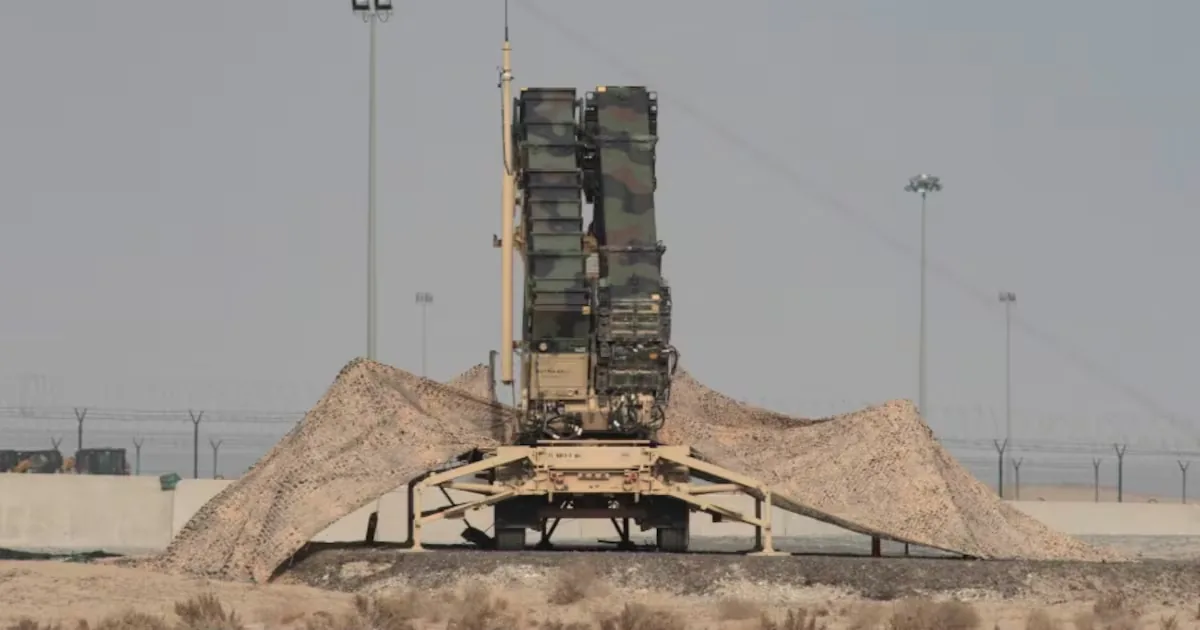
Over the past week, Iran has repeatedly claimed to have attacked US bases in Kuwait that typically house some 13,500 US military personnel.
On the other hand, attacks on desalination plants have raised concerns about water scarcity, as they are part of the system that produces approximately 90% of the country’s drinking water. According to the Financial Times, the sense of fear is particularly intense in Kuwait, which still suffers from the trauma of the 1990 Iraqi invasion, a unique experience that distinguishes it from other Gulf Arab states.
Kuwait stated that it was responding to a drone and missile attack on Tuesday afternoon. While Monday’s attacks on its power stations and water desalination plants forced several generating units offline as a precautionary measure, and repairs were already underway, authorities reported.
For its part, the Iranian Army claimed to have launched drone attacks against three US military bases in Kuwait on Tuesday.
For experts, Iran’s message is clear: civilian survival infrastructure is becoming a direct target on the battlefield. Kuwait relies on eight large desalination plants to supply its population. Because all eight plants are located directly on the Persian Gulf coast, approximately 160 kilometers from Iran, they are within immediate reach of Iranian saturation tactics, including the use of high-powered, low-flying drones and cruise missiles.
To completely disrupt Kuwait’s freshwater supply, Iran would only need to disable two or three of its largest desalination plants, which together produce between 70% and 80% of the country’s total daily desalinated water supply.
The time required to reactivate a highly centralized desalination plant after a military or drone attack varies enormously depending on the specific component of the facility that has been damaged, from several days for damage to electrical grid connections to one or two months for pipelines, and one to two years for the distillation tower or its cogeneration steam turbines, which must be custom-built.
Kuwait has national emergency water reserves of approximately 5 days in its reservoirs and distribution networks. With rationing, the emergency period can be extended up to about a month; exact estimates are impossible due to limited historical experience.
Qatar and Bahrain also rely on a very concentrated and vulnerable number of desalination plants, between 3 and 5 in each country. Saudi Arabia and the United Arab Emirates are less vulnerable, with 30 and 70 respectively, although these systems could suffer significant damage due to capabilities Iran has already demonstrated. Emergency storage in these countries is similar to Kuwait’s.
Read more French Parliament approves a widespread ban on social media for minors under 15
Experts believe that widespread destruction of desalination plants would likely create a humanitarian catastrophe rather than strengthen national resilience. Indeed, this has led authorities to urge the population to reduce energy consumption, a difficult request in the summer months when air conditioning is essential to cope with temperatures soaring to nearly 50 degrees Celsius.
Following the first Iranian attacks on Kuwait, the Iranian Revolutionary Guard issued a statement addressed to the Kuwaiti population, urging them to “take every opportunity to destroy the institutions of the American aggressors.” But the intensity and frequency of the attacks surprised some observers in Kuwait, a country that before the war maintained relatively cordial relations with Iran. Hundreds of pilgrims from the country’s Shia minority regularly traveled on direct flights to visit shrines in the Islamic Republic.
Kuwait has also refrained from adopting as belligerent a stance against Tehran as Bahrain and the United Arab Emirates, which previously indicated they might join a naval force to reopen the Strait of Hormuz and even launched secret airstrikes against Iran early in the war.
But the United Arab Emirates, which tried to reduce tensions with Iran in recent weeks, has not been targeted by direct Iranian attacks during the recent escalation. Iran has only launched missiles against Saudi Arabia once during this conflict, targeting a US base, and has instead concentrated its attacks on Kuwait, Bahrain, and Jordan, in addition to launching some attacks against Qatar and Oman.
“We find ourselves in an unenviable position due to geographical limitations that allowed Iran to carry out its agenda: we are one of the smallest states, where targets are concentrated and surrounded by each other,” Bader al-Saif, an assistant professor of history at Kuwait University, told the Financial Times. “Their repeated attacks on Kuwait seek to instill fear, but life goes on.”
Al-Saif added that “the scale of the last few days is unprecedented. It goes beyond the objectives of the current war. It’s as if they are venting their frustration. And it’s not so much about Kuwait as a country itself, but about the Gulf countries as a model.”
The Financial Times noted that Kuwait had tried to capitalize on a model that presented the Gulf as an oasis of stability and prosperity, attracting millions of foreign workers from the Arab world and the Indian subcontinent.
“But that effort has been severely hampered by the current conflict. The Kuwait Investment Authority, with a trillion dollars in assets – considered the world’s oldest sovereign wealth fund – has provided the oil-rich nation with a financial cushion, but the country is often seen as having lagged behind its peers in terms of modernization,” the newspaper added.
Kuwait has struggled to diversify its economy and reduce its reliance on oil exports, which typically account for approximately 90% of its revenue. Its crude production fell to 500,000 barrels per day – from nearly 2.5 million before the war – after its oil fields were attacked and the closure of the Strait of Hormuz restricted the main export route.
Read more U.S. grants permanent residency to fugitive Eduardo Bolsonaro for his “extraordinary abilities”