






Bárbara Enríquez, production designer of the series One Hundred Years of Solitude, acknowledges that the first season was made under the enormous pressure of adapting a classic of 20th-century literature and with the vertigo caused by not knowing whether the audience would receive it with enthusiasm or coldness.
Read more Keiko Fujimori’s ties with Chile
After years in which the possibility of seeing Macondo and the Buendía family on screen seemed like a utopia –due to other attempts that never came to fruition–, Netflix’s fiction released its eight episodes in December 2024 and, to the relief of the platform and creators, the reception was favorable. That paved the way to produce the second season with greater confidence and determination, Enríquez tells Culto, a key part of the creation and execution of the project filmed entirely in Colombia.
“Without a doubt, the second was an act of responsibility, to continue on that same path and improve it, if possible. And I believe we did. I think precisely this confidence gave us the chance to go even further with the second. And I think it shows, you’ll see,” she says via video call.
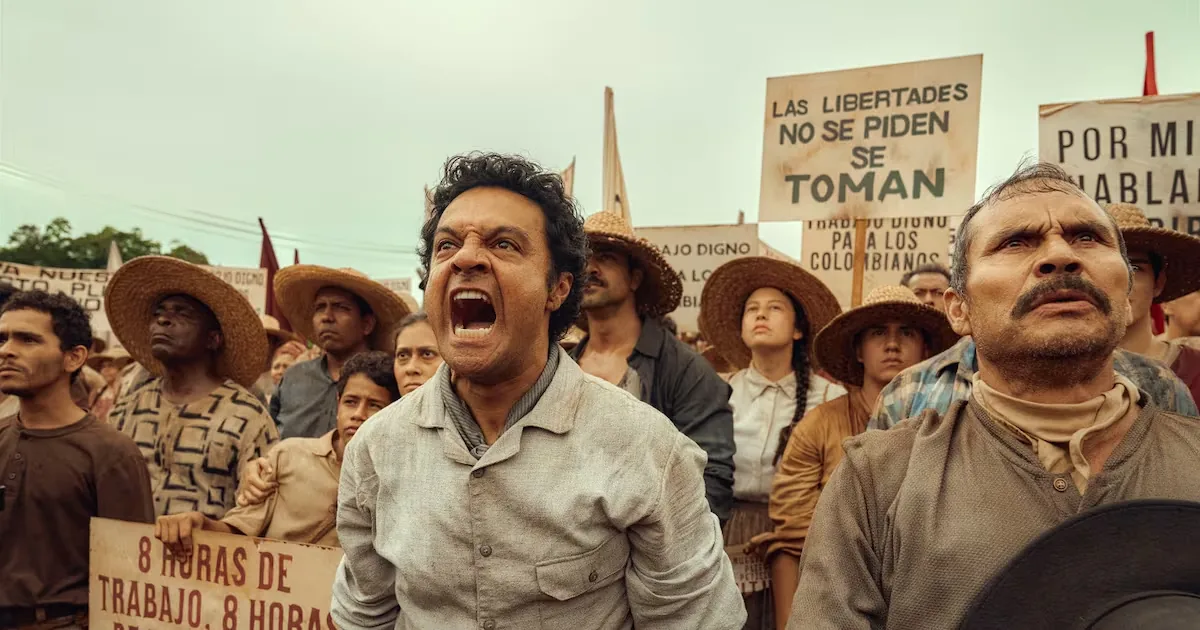
The result of that work will be seen globally starting next Wednesday the 5th, when the streaming service premieres seven episodes of the second installment (the eighth and final will arrive at the end of the month, Wednesday the 26th). A segment that acts as a continuation and conclusion of the story, that is, it will show the rise and fall of the town imagined by Gabriel García Márquez.
Colombian filmmaker Carlos Moreno received the offer to join the direction of the second season shortly after the debut of the first. “I hesitated, because it was like taming a giant horse, but I thought it was an offer I couldn’t refuse. It was a problem I loved to have,” he tells this outlet in a different interview.
The director compares his role to that of an athlete participating in a relay race. He, having not been part of the first season’s production and joining in the second, did not start the race but has to face and successfully complete the final sprint.
“The runners in the middle have the responsibility of not lowering the pace of the race even for a moment, because that’s where the victory lies. The runner who finishes is the one who makes the great final push,” Moreno explains, who is in charge of episodes three, four, and seven (the rest are handled by Laura Mora).
The director joined a team that had already thought through and executed the key decisions of the adaptation –camera movements that reflect an omniscient narration, full integration of magical elements, no reservations in showing violence– but which was not far from the vision he already had of García Márquez’s masterpiece.
“Production had already started and had made an aesthetic decision that had to be accompanied and supported. It’s a risky, very demanding aesthetic decision, of great depth. And it is not at all incompatible with some things I had imagined,” he warns.
Read more We tested the latest Ray-Ban Meta, now with AI available in Chile
And he concludes: “All the images I had in my first readings of One Hundred Years of Solitude are now these (those of the series). That is the arbitrariness one assumes.”
If the first season demanded the creation of four versions of Macondo, the second season required a different kind of work. The creators say that this time they only built one, but it underwent multiple transformations due to the passage of time and the changes the town experiences.
In the conclusion of the Buendía story, light, the telephone, and the train arrive, the United Fruit Company bursts in, and the theater and later the cinema are inaugurated. That is, progress arrives, with all the consequences associated with it.
“There are many changes in ‘Macondo 4’, as we call it,” notes Bárbara Enríquez, who specifies that “the five years of rain and the ten years of drought transform Macondo a lot.”
These particularities of the story made the task more complex. “It’s different, but probably more demanding,” says the production designer.
“Now everything was on the same set – huge and many square meters of construction – and we had to make very quick changes. While we went to the Buendía house to film things, we had to transform ten years of the town. We had to add many textures, changes, buildings that appeared; very big things in very little time, because those were the shooting times. You have to work very fast and there are many people at the same time to handle those speeds. In that sense, it’s very, very demanding,” she explains.
Enríquez is particularly eager for the moment when viewers finally encounter the world of the United Fruit Company and meet Fernanda del Carpio (played by Carla Baratta and Laura Taylor), the woman from Bogotá who arrives in Macondo and marries Aureliano Segundo, one of the twins of the bastard Arcadio.
“What happens with this second season is that the world opens up and we see other spaces. The world starts to get bigger,” she emphasizes. And then, as anyone familiar with the novel knows, comes the decline. “It’s a very crazy thing to see how (Macondo) is at its highest point and how it falls. As someone who made it with their own hands, it hurts,” she concludes.
Read more Review of the Xiaomi 17T Pro: power and Leica cameras tested at the heights of Valle Nevado