



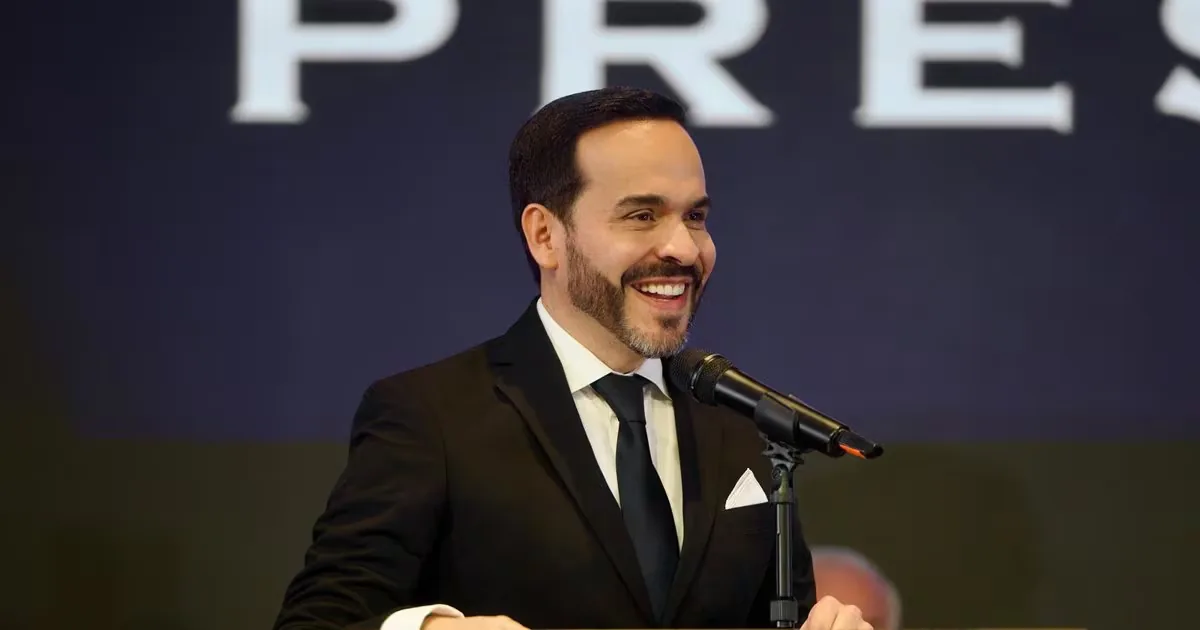
Colombia’s president-elect, Abelardo de la Espriella, announced this Sunday that his government, which will begin on August 7, will close at least 14 embassies, including those in Cuba, Haiti, and Nicaragua, as part of a reorganization of the country’s diplomatic network.
In a broadcast made this Sunday night through his social media, De La Espriella presented a series of announcements related to the foreign policy he will implement during the start of his administration, according to the EFE agency.
“In a first stage, I will close the embassies of Algeria, Azerbaijan, Barbados, Cuba, Czechia, Ethiopia, Ghana, Haiti, Hungary, Malaysia, Nicaragua, Romania, Senegal, South Africa”, he stated in a speech in which he also announced the suspension of the opening of the Colombian mission in Palestine and the closure of about 15 consulates.
The incoming president assured that these measures “do not mean breaking diplomatic relations” with the affected countries, except with Cuba and Nicaragua, since during his mandate “there will be no link whatsoever with tyrannies”.
Furthermore, he explained that Colombians in countries where embassies will be closed will continue to receive attention from other diplomatic missions in the region, assuring that this reorganization seeks to make the foreign service “more efficient”.
De la Espriella also announced that he will reopen the embassy in Israel, which will operate in Jerusalem, thus intending to fulfill a promise he made during his presidential campaign.
This will be joined by the opening of a diplomatic mission in Nigeria to reorganize Colombia’s presence in Africa.
He then reported that he will merge representations that, in his opinion, “duplicate functions”: the Colombian embassies in France and to Unesco in Paris, and those in Italy and the Food and Agriculture Organization of the United Nations (FAO), in Rome.
The president-elect declared that during the first 100 days of his government he will order a technical audit of the other diplomatic representations to evaluate their continuity.
He later noted that the saved resources will be allocated to strengthen areas such as security, health, education, and infrastructure.
“Every peso we save in bureaucracy will be a peso we can invest in security, health, education, infrastructure and, above all, opportunities for the poorest”, he declared.
Finally, he said that his administration’s diplomacy will be aimed at attracting investment, opening markets, and defending Colombia’s interests abroad.
During his speech, De la Espriella also announced that the presidential inauguration ceremony will be moved from Popayán to Cali, due to restrictions affecting the airport of the former city because of the activity of the Puracé volcano, which has increased its ash emissions in recent days.
“Initially, I had planned to hold it in Popayán (…) However, the climatic conditions derived from volcanic activity in the southwest of the country and the effects that the fall of that ash can generate on the air and logistical operation of the event force me to make a responsible decision,” he explained.
Then, he argued that this decision will allow him to “guarantee the necessary conditions” for an inauguration ceremony to be held that is “safe, organized, and worthy of the significance it represents for Colombia”.
Given this, De la Espriella requested the House of Representatives to convene the plenary session for his inauguration on August 7 in the city of Cali.
In the same speech, the incoming head of the Colombian State announced that he will move the permanent headquarters of the Presidency to the Palacio de San Carlos in Bogotá, where the country’s Ministry of Foreign Affairs is currently located.
In this way, he added, the Casa de Nariño will become an “open museum”.
“I will not dispatch from the Casa de Nariño, but I will go to Bogotá,” explained De la Espriella, adding that he instructed his Minister of Culture, Paola Holguín, that “the Casa de Nariño should become a museum open to the public.”
Finally, the new president expressed his intention that the Presidency also have “alternative headquarters” in the cities of Medellín and Cali, given that, in his opinion, “Colombia is built from its regions”.