






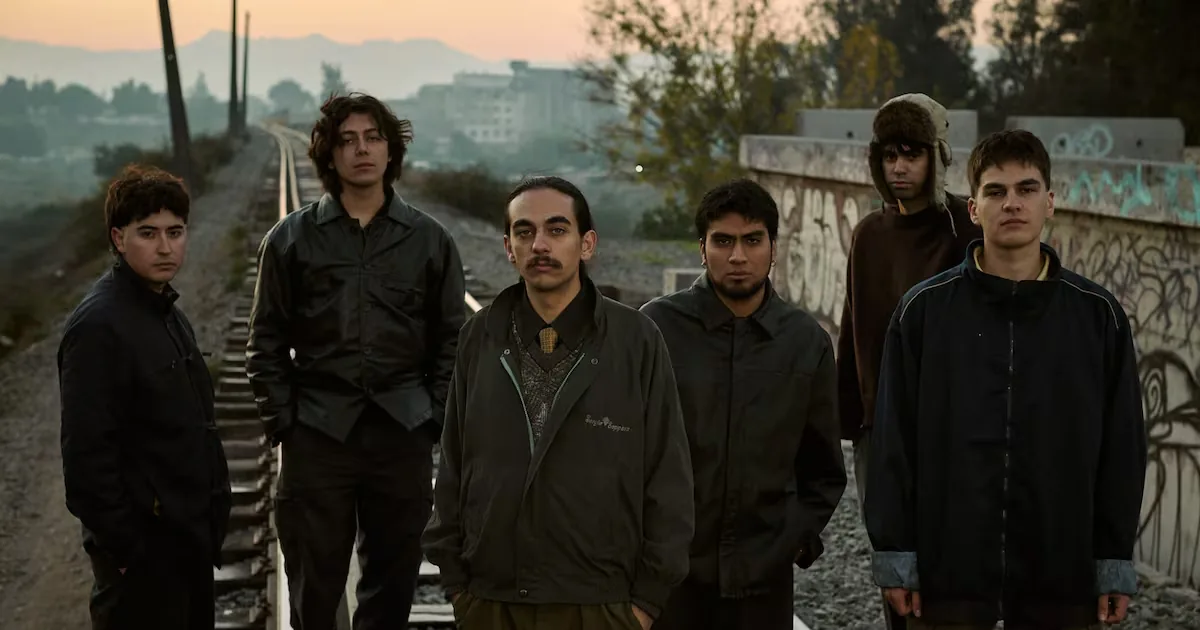
They had barely two minutes left. Diligently, the musicians of Hesse Kassel kept track of the total time their new album, Morir Saltando, was completing. They were working on Tulpa, the last song they recorded, and realized they were very close to completing the 45 minutes required for vinyl. That is, they needed the song’s ending not to expand much further. “We went through several ideas -recalls keyboardist Joaquín “chapa” González-. But we didn’t like them much. We had lunch to relax a bit and I was thinking a lot about Eclipse from Dark Side of the Moon, like a high ending. I put in the piano, we played it, and it stuck.”
Tulpa was recorded last April at Estudio Palo Quemado. The other 5 songs on the album had already been recorded in the same studio last January, but the musicians felt they needed one more song. Between their commitments as university students, they managed to make space and finally, closed the album. A much-anticipated step; Hesse Kassel gained critical and public attention thanks to their debut album, La Brea (2025), which positioned them as one of the key names in New Chilean Rock, thanks to their sound as delicate as it was heavy, crossed by Renatto Olivares’ deep spoken voice.
Therefore, in this second album, the sextet would receive greater attention. But contrary to what might be thought, they assure that they felt no pressure to meet any expectations. “I would even say it was the other way around -assures guitarist Mauricio Rosas-. The hardest part of making music and being in a scene is precisely the spotlight you get. And we already had the spotlight, so we just had to push forward. As an artist, all you ask is that at least one person listens to you. I would even say this one came out easier than the first.”
The album was financed with resources earned through their intense live performance schedule. In fact, it includes material the band was already playing live. The most informed fans already knew songs like Pornomiseria (dating back to the days of La Brea), Mariposa and Sancho Plagio. Others were composed in the winter of 2025, while the group rehearsed for their performance at Sala Metrónomo last August. In fact, Pornomiseria was the first song they worked on for the new album and is the one that sounds most similar to what they presented in their debut; it lasts 14 minutes and has extensive instrumental passages that alternate delicate and hard moments. “But from then on, we talked about making shorter songs, hopefully all songs more concise, no more long intros, no more long outros, just a song and that’s it,” they say.
Several reasons converged in that decision; the attention on the group allowed them to access better-caliber festivals and events, where times are more limited. The songs from the first album are extensive, which meant they could barely play three or four songs. “And to a certain extent, it was also very exhausting to play live -notes “Chapa” González- Playing a 10-minute song then moving on to another 10-minute song and another 10-minute song, plus the performance is delicate, you have to be very concentrated on the dynamics.”
Not only did they work on more precise and somewhat shorter songs, they also changed some lyrics. “Many of the album’s songs had very different lyrics from the ones that remained -says “Chapa”-. I remember that for the elections we were very attentive, Kast wins and we said ‘damn, we have to change the lyrics’, the conditions are no longer there to sing about peace and love, we have to say something.”
The song that underwent the most changes was No me puedo relajar; a bold and visceral composition originally called ¿Qué hay en la caja? “But, I didn’t like the title because I immediately thought of Seven, the movie with Morgan Freeman and Brad Pitt that ends with “what’s in the box”, like I couldn’t take it seriously because of that,” points out Mauricio Rosas. Over time, they changed the name to Senda Mayor, a title that didn’t entirely convince the group either. Finally, after a lyric change, it reached its definitive title. “The name change also responds to the lyric change,” he adds.
Read more Gadi Eisenkot, the former general who challenges Netanyahu in Israel’s elections
Once Hesse Kassel had the album ready, they still lacked a key step: the title. “We even lacked the cover, we lacked everything that wasn’t the music,” explains Rosas. With time running out, he thought of an idea. “I kept thinking about doing it with some saying or something that alluded to Chile. And I heard an expression that I’ve always liked a lot, which is ‘a medio morir saltando’, I find it very evocative. And not to put it whole, we called it Morir Saltando, which also evokes a very particular image and I think it has a lot to do with the music we make.”
The cover photo illustrates a butterfly, alluding to the title of one of the album’s songs. With a prism, it was taken in the insectarium of Parque O’Higgins and was worked on by Max Nadjar and María Ignacia Adell, although it doesn’t have too much post-production. “We saw that photo and said ‘this has to be the cover, let’s put it out’,” recalls “Chapa” González.
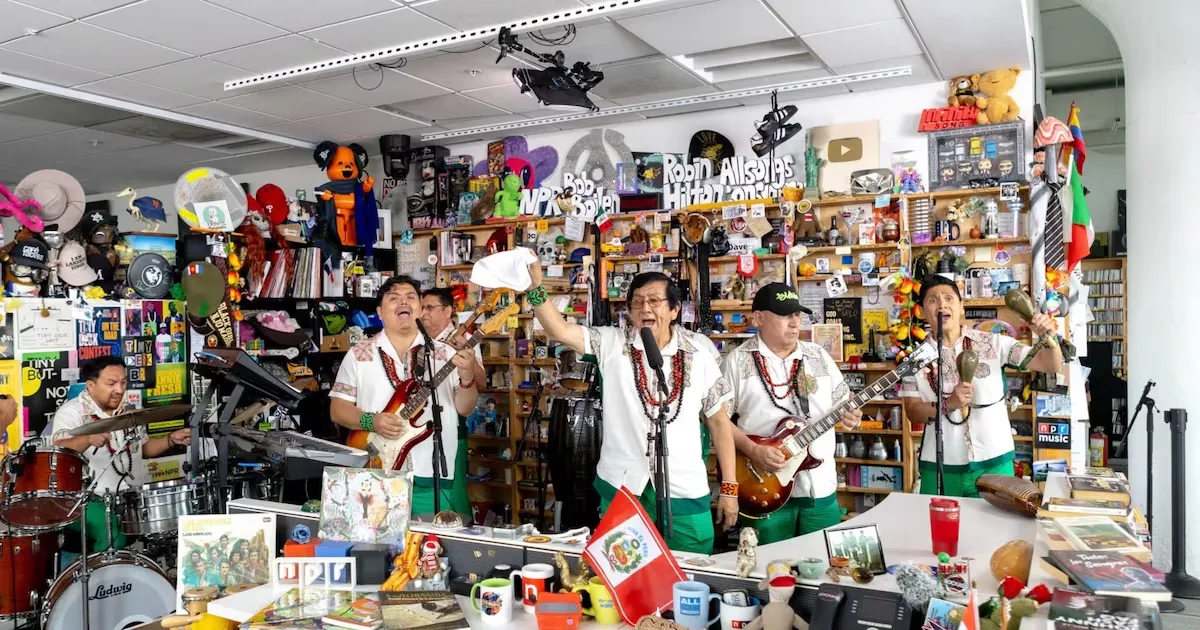
The growth allowed Hesse Kassel to access better stages. This year they had a much-talked-about performance at Lollapalooza, where more than one distracted person was surprised by the group’s peculiar proposal. “I arrived very pessimistic at Lolla because I didn’t expect much, it was Sunday afternoon too -recalls Rosas-. We were about to go on stage and from the side, no one was visible. Then we went up and of course, everyone was there.”
That presentation is also remembered for a harsh speech by Renatto Olivares against haters of Chilean bands on the internet. A decision triggered as support for Candelabro, who were harshly criticized for the visuals they projected in their show against the recently assumed president José Antonio Kast. “We were watching Candelabro, we realized when everything happened and when we got home we saw that they were being torn apart, they were saying very harsh things about them. That’s when it became mandatory to say something,” explains “Chapa”.
After Lollapalooza, the band took a plane to fly to Mexico for the first time. They had a sold-out performance at Foro Indie Rocks and the next day in Puebla. They also had a session scheduled for a cultural channel in Xochimilco that was canceled at the last minute. The trip coincided with the return to classes, so González and Rosas, classmates in psychology at UDP, had to notify their professors of their absence. All in all, they assure that the experience was remarkable. “It was crazy, we never expected there to be so many people at the Foro. So far, it’s the biggest solo gig we’ve had and it’s crazy to think it was in Mexico, it wasn’t even in Chile. The people in Mexico are very affectionate, they gave us several gifts. It’s one of the fondest memories I have with the band, by far.”
Read more The story of a Chilean nurse in the war in Ukraine